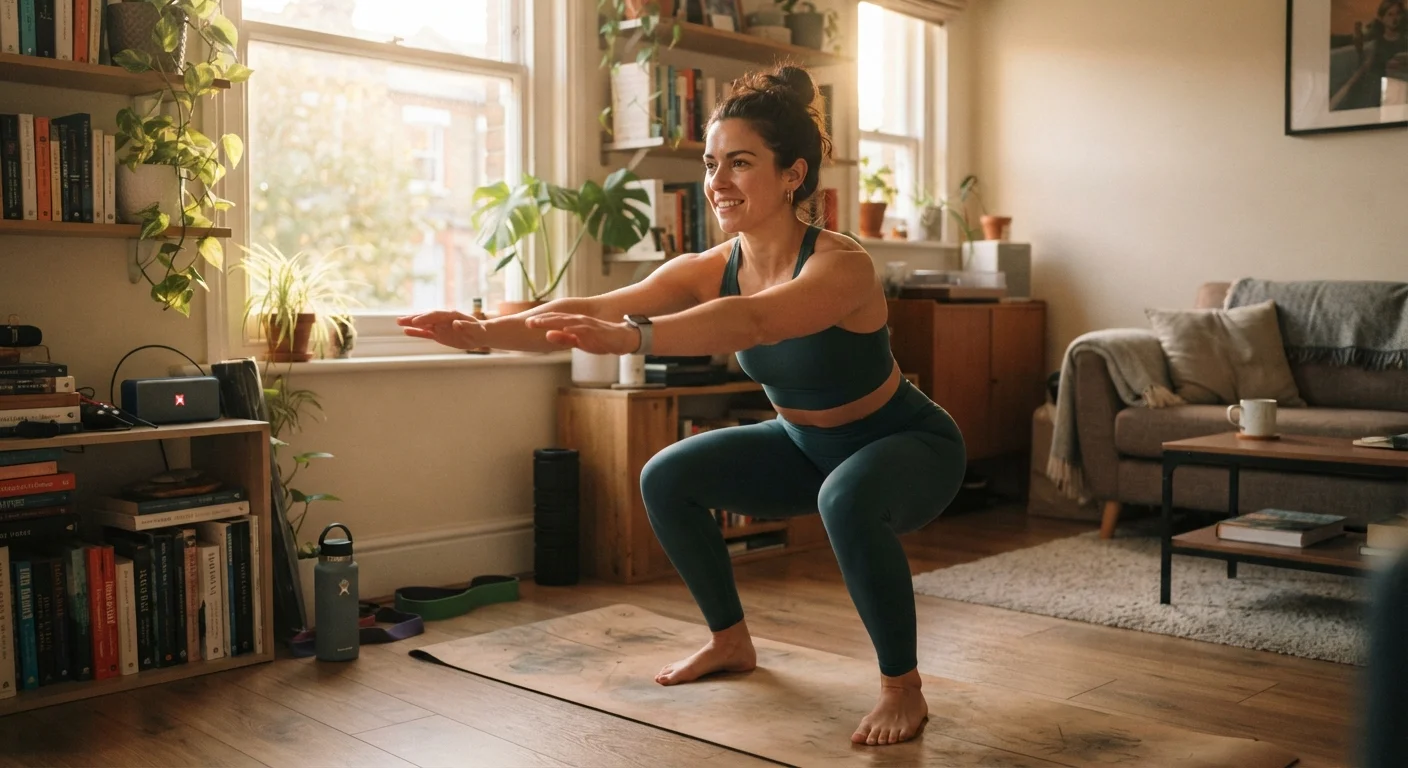

Why Exercise Needs Change With Age
Physical activity is one of the most reliably beneficial health behaviors at any age - but the how and why of movement shift considerably as your body changes. Hormones, bone density, recovery capacity, muscle mass, and cardiovascular efficiency all follow distinct trajectories over the decades. Understanding these changes helps you exercise smarter rather than harder - and keeps you active for life rather than sidelined by preventable injury.
General public health guidance from bodies such as the CDC recommends at least 150 minutes of moderate-intensity aerobic activity per week for adults, plus muscle-strengthening activities on two or more days. That framework holds across adulthood, but the types of movement that best serve those goals change with age.
~1% per year
Muscle mass decline rate after age 30
Research published in journals on aging physiology estimates adults lose roughly 3-8% of muscle mass per decade without resistance training, accelerating after 60.
150 min/week
Recommended moderate aerobic activity for adults
The CDC and U.S. Department of Health and Human Services Physical Activity Guidelines for Americans recommend this minimum for substantial health benefits.
~36%
Reduction in fall risk with balance training
A Cochrane review of exercise interventions for older adults found structured balance and strength programs meaningfully reduce fall rates in community-dwelling adults.
Your 20s: Building the Foundation
Your 20s are arguably your peak window for building the physical capital you'll draw on for decades. Bone density peaks around age 30, and aerobic capacity is typically at or near its highest. This is an excellent time to establish habits - not just fitness levels.
Variety serves you well here: mixing cardiovascular exercise with resistance training and flexibility work creates a broad fitness base. Competitive sports, hiking, cycling, group fitness, and weightlifting all fit naturally into this decade. The key mistake people make in their 20s is relying entirely on natural ability and skipping recovery - which can seed overuse injuries that show up later.
In your 20s, treat sleep as training infrastructure. Shortchanging sleep to add more workouts is counterproductive - muscle repair, hormonal regulation, and skill consolidation all happen during rest.
Sleep deprivation impairs recovery markers including growth hormone release and glycogen replenishment, undermining the adaptation you're training for.
Log your workouts even informally. A simple note of what you did and how you felt builds pattern awareness that helps you catch overtraining or identify what's actually working.
Self-monitoring is consistently associated with better adherence in behavior-change research, and training logs help you spot trends before they become problems.
If consistent scheduling is already a challenge, see our guide to building an exercise habit when life is unpredictable.
Your 30s: Maintaining Momentum Under Pressure
Careers, young children, and compressed schedules make the 30s one of the most common decades for activity to quietly decline. Metabolic rate begins a slow decrease, and muscle mass can start to dip if resistance training is absent. The physiological changes are modest at this stage - the bigger risk is cumulative inactivity.
Efficiency becomes a priority. Shorter, well-structured workouts that combine strength and cardio - such as circuit training or moderate interval work - can deliver meaningful benefits in 30-40 minutes. Sleep and stress management also begin to noticeably affect recovery quality, so treating rest as part of your fitness plan (not separate from it) is worthwhile.
Make Shorter Workouts Count in Your 30s
If 60-minute sessions aren't realistic, two focused 20-minute strength sessions and three 30-minute cardio efforts per week still meet core guidelines. The goal is keeping the habit alive through a demanding life phase, not achieving perfection. Even maintaining - rather than improving - your fitness level during high-stress periods is a genuine win.
Your 40s: Prioritizing Recovery and Injury Prevention
By your 40s, recovery genuinely takes longer, joint health demands more attention, and hormonal shifts (including declining estrogen and testosterone) accelerate muscle and bone changes. This doesn't mean pulling back - it means training with greater intentionality.
Strength training becomes more protective than it was in earlier decades, helping to offset natural muscle loss (a process called sarcopenia) and support bone density. Low-impact cardio options - swimming, cycling, brisk walking - can preserve aerobic fitness while reducing joint stress. Warm-ups and cool-downs, often dismissed in your 20s, now provide measurable injury-prevention value.
If you've taken a break from regular activity, the return process matters. Our overview on returning to exercise after illness or injury outlines a cautious, effective path back.
Don't Push Through Joint Pain in Your 40s
Muscle soreness after effort is expected; persistent joint pain during or after exercise is not something to train through. In your 40s, unaddressed joint issues can escalate into longer-term injuries that sideline you for months. If a movement consistently causes joint discomfort, consult a sports medicine physician or physical therapist before continuing.
Your 50s and Beyond: Strength, Balance, and Longevity
From the 50s onward, maintaining functional independence becomes a central goal of exercise - and the research strongly supports that it's achievable. Falls are a leading cause of injury in older adults, making balance training a genuine priority rather than an optional add-on. Activities like tai chi, yoga, single-leg exercises, and stability work have evidence behind them for reducing fall risk.
Muscle mass and strength remain highly trainable into your 70s and 80s. Resistance training two to three times per week - using bodyweight, resistance bands, or weights appropriate to current ability - is widely supported by geriatric health guidance. Aerobic activities should be sustained, but intensity targets may shift based on cardiovascular health and physician guidance.
Understanding what happens physiologically when you stop moving can be a useful motivator - see what happens to your body when you stop exercising for a grounded look at detraining.
“The goal of exercise in later life isn't to replicate what you did at 30 - it's to preserve what you'll need at 80. Functional strength, balance, and cardiovascular health are the currencies of independence.”
— American College of Sports Medicine, Guidance from ACSM's Exercise for Older Adults programming framework
This article is for general informational purposes only and does not constitute medical advice. Consult a qualified healthcare professional before making significant changes to your exercise routine, particularly if you have a chronic health condition, recent injury, or are new to regular physical activity.
Principles That Apply at Every Age
Despite the decade-by-decade shifts, several principles remain constant:
- Consistency beats intensity. Regular moderate activity over years produces better long-term outcomes than sporadic high-intensity effort.
- Strength training is non-negotiable. At every adult age, maintaining muscle mass supports metabolism, bone health, and functional capacity.
- Listen to your body, but distinguish discomfort from pain. Mild muscle fatigue is normal; joint pain, sharp sensations, or chest discomfort warrant medical evaluation.
- Movement is cumulative. Short walks, stair use, and active breaks all count toward your weekly total.
Whatever decade you're in, starting or restarting an exercise habit is worthwhile. The body responds to stimulus at every age - the timeline and approach simply need to match where you are now, not where you were at 25.
CDC Physical Activity Guidelines for Americans
The U.S. Centers for Disease Control and Prevention provides evidence-based weekly activity targets for adults, older adults, and special populations - useful as a baseline reference.
American College of Sports Medicine (ACSM) Exercise Guidelines
ACSM publishes detailed, research-backed exercise recommendations by age group and health status, including guidance for adults with chronic conditions.
National Institute on Aging: Exercise and Physical Activity
Specifically oriented toward adults 50 and older, this NIA resource explains different exercise types - endurance, strength, balance, flexibility - and their benefits for aging well.