
Why Standard Budgeting Advice Often Fails Variable Earners
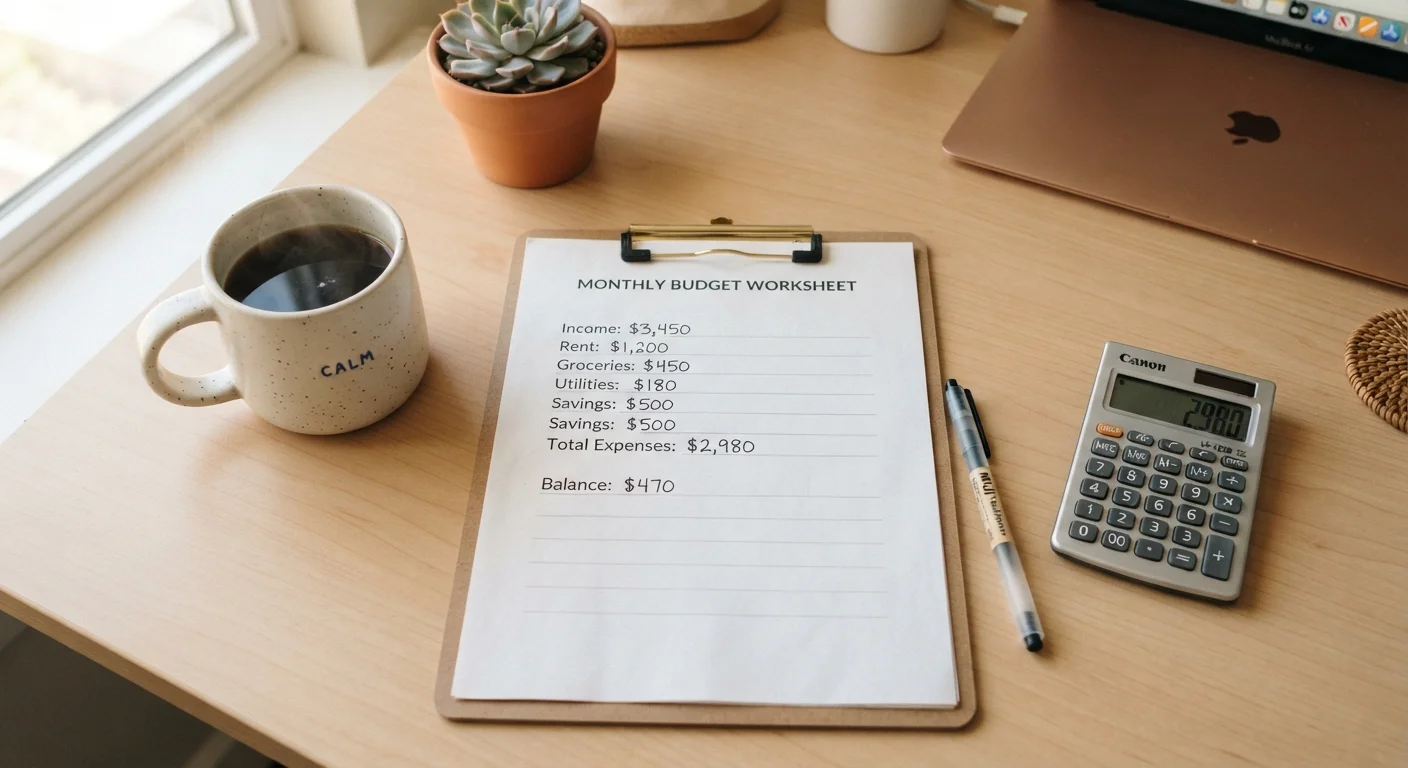
Most mainstream budgeting guidance assumes a steady, predictable paycheck. When you're a freelancer, gig worker, seasonal employee, or commission-based earner, that assumption breaks everything. A monthly budget built around an income that shifts $1,500 or more from one month to the next can collapse the moment a slow period arrives.
The core challenge isn't discipline-it's structural. Standard approaches like the 50/30/20 rule (50% to needs, 30% to wants, 20% to savings) are genuinely useful frameworks, but they require a reliable income figure to function. If you haven't worked with variable income before, our first-month budgeting guide covers foundational concepts before you layer in these strategies.
Variable earners need a system designed around income uncertainty-one that protects essential expenses first, captures surplus intentionally, and flexes without breaking when payments are delayed or months run dry.
Core Strategies That Work With Income Variability
The following practices are specifically suited to earners whose monthly income fluctuates. Each is designed to give you stability without requiring a fixed paycheck. Before applying them, it helps to understand how your expenses behave-see our guide on fixed vs. variable expenses for a clear breakdown.
Budget from your baseline income, not your average or peak earnings
Using your best month as a planning baseline sets you up to overspend during slower periods. Anchoring your budget to your lowest typical monthly income ensures essential expenses are always covered, regardless of what a given month produces.
Create an income buffer fund separate from your emergency savings
Variable earners face two distinct risks: unexpected emergencies and predictable income dips. An income buffer-typically one to three months of essential expenses-acts as a paycheck substitute during slow months without draining long-term emergency reserves.
Pay yourself a fixed monthly 'salary' from a single holding account
Funneling all client payments or gig earnings into one account, then transferring a set monthly amount to your spending account, mimics a regular paycheck. This removes the temptation to spend windfalls and prevents lifestyle inflation during high-earning months.
Categorize and prioritize expenses as 'must-pay,' 'should-pay,' and 'flexible'
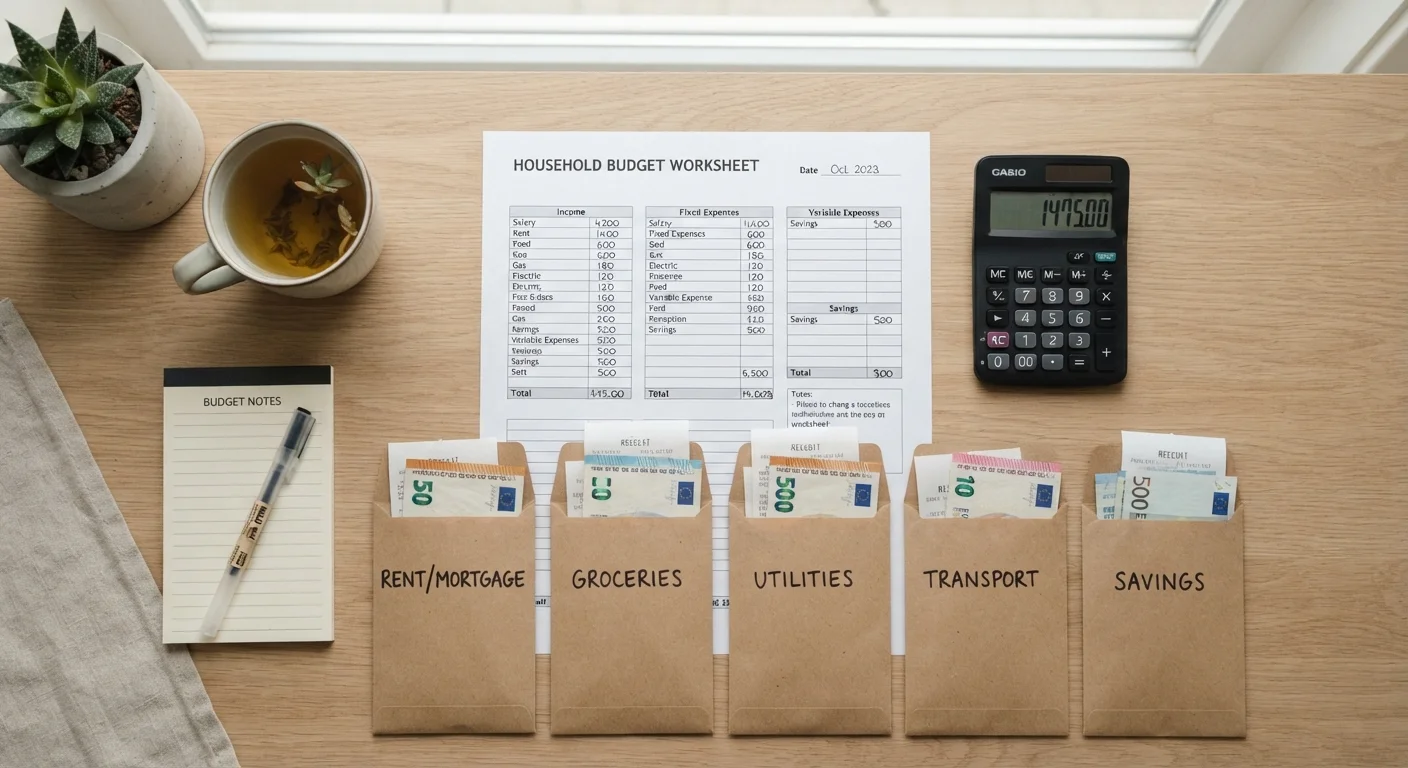
Not all expenses carry equal urgency. Clearly tiering your costs-housing and utilities as must-pay, insurance as should-pay, and dining out as flexible-gives you a pre-built spending hierarchy to execute instantly when income drops.
Set aside taxes from every payment before budgeting the remainder
Self-employed and gig workers generally owe self-employment tax plus income tax without automatic withholding. Failing to set aside tax money leads to a painful shortfall at filing time that disrupts the entire budget.
Conduct a monthly budget review rather than a one-time setup
Static budgets don't work for variable earners. A monthly review lets you recalibrate spending limits based on actual income received, catch overspending early, and shift surplus toward savings goals when income is strong.
If your household budget involves a partner with stable income alongside your variable earnings, the dynamics shift further-budgeting as a couple addresses how to align those different income streams.
Getting Started: Actions You Can Take Today
Restructuring a budget around variable income doesn't require a financial overhaul all at once. These immediate steps help you build the right foundation quickly, even mid-month.
This Is General Financial Education
The strategies in this article are informational and not personalized financial advice. Everyone's financial situation is unique. Consider consulting a licensed financial adviser or certified financial planner before making significant changes to how you manage your money.
Once your system is running, a regular monthly review is essential. Unlike salaried budgeters who can set a budget quarterly, variable earners benefit from checking in every month. A structured monthly budget audit helps you catch problems early and redirect surplus before it disappears into unplanned spending.
“Budgeting isn't about limiting yourself-it's about making the things that matter possible, even when your paycheck doesn't arrive on a predictable schedule.”
— Liz Weston, Certified Financial Planner and personal finance columnist
This article provides general financial information for educational purposes only and does not constitute personalized financial, tax, or legal advice. Consult a qualified financial professional for guidance specific to your situation.