Why Fiber Matters and Why Most Americans Fall Short
Dietary fiber - the indigestible portion of plant foods - plays a larger role in overall health than its modest reputation suggests. It supports regular digestion, helps moderate blood sugar response after meals, contributes to a sense of fullness, and is associated in research with reduced risk of cardiovascular disease and certain cancers. There are two primary types: soluble fiber, which dissolves in water to form a gel-like substance (found in oats, beans, and apples), and insoluble fiber, which adds bulk to stool and speeds transit through the digestive tract (found in whole wheat, vegetables, and nuts). Both matter. Our in-depth fiber overview covers the science behind each type in more detail.
Despite these well-documented benefits, fiber remains one of the most consistently under-consumed nutrients in the US diet - appearing alongside shortfalls in potassium, vitamin D, and calcium as noted in our reference guide to under-consumed nutrients. The primary reason is structural: the modern American diet leans heavily on ultra-processed foods that have had fiber-containing components stripped away. Convenience, cost, and habit all play a role - but the gap is closeable with practical, incremental changes rather than a dietary overhaul.
Increase Fiber Slowly to Avoid Discomfort
Adding large amounts of fiber to your diet too quickly is a common mistake that leads to bloating, gas, and cramping. Aim to increase your intake by no more than 5 grams per week, and pair every increase with adequate water intake. If you have a digestive condition such as irritable bowel syndrome or Crohn's disease, speak with a healthcare provider before significantly changing your fiber consumption.
How to Increase Your Fiber Intake: Step-by-Step
The following steps are designed to be practical and gradual. You do not need to adopt all of them simultaneously - in fact, a slow, phased approach is more sustainable and kinder to your digestive system. Begin with whichever step aligns most closely with your current eating habits.
What you will need
Nutrition Facts label
Used to check the dietary fiber content per serving of packaged foods.
Measuring cups and spoons
Helps gauge portion sizes when learning which servings provide meaningful fiber.
Meal planning notebook or app
Tracks daily fiber intake and helps identify gaps across meals.
Know your target and where you currently stand
Current U.S. Dietary Guidelines suggest most adult women aim for around 25 grams of fiber per day and most adult men around 38 grams, though needs vary by age and calorie intake. The average American gets roughly 10 to 15 grams daily - well below either target. Spend a day or two noting what you eat and cross-referencing fiber content using a nutrition label or a general food database. This gives you a realistic baseline before making changes.
Swap refined grains for whole grains
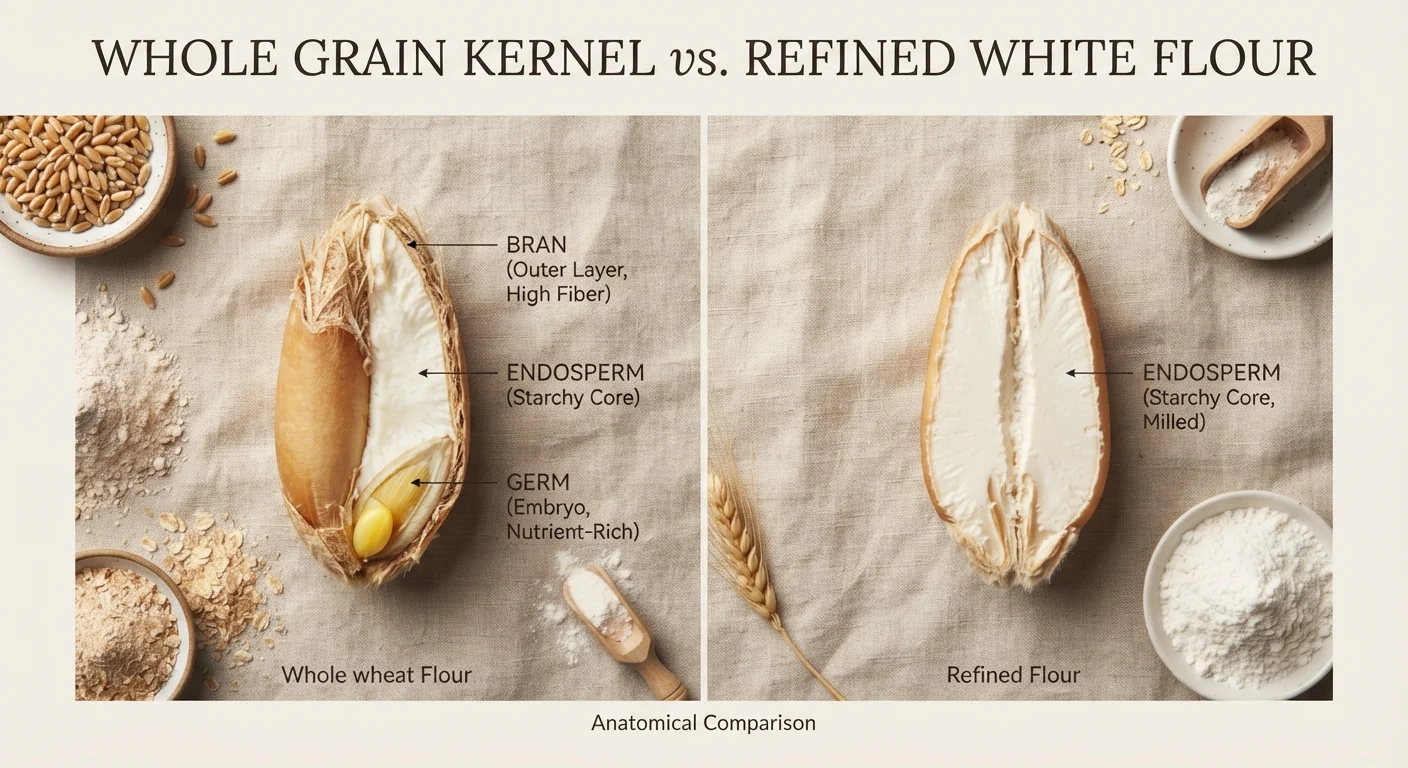
One of the most impactful single changes is replacing refined grain products with whole grain versions. White bread, white rice, and standard pasta have had the fiber-rich bran layer removed during milling. Whole grain bread, brown rice, oats, and whole wheat pasta retain that bran - and with it substantially more fiber. Check ingredient lists: the first ingredient should say "whole" (e.g., whole wheat, whole oat). For more on what milling removes, see our guide to whole vs. refined grains.
Add legumes to at least three meals per week
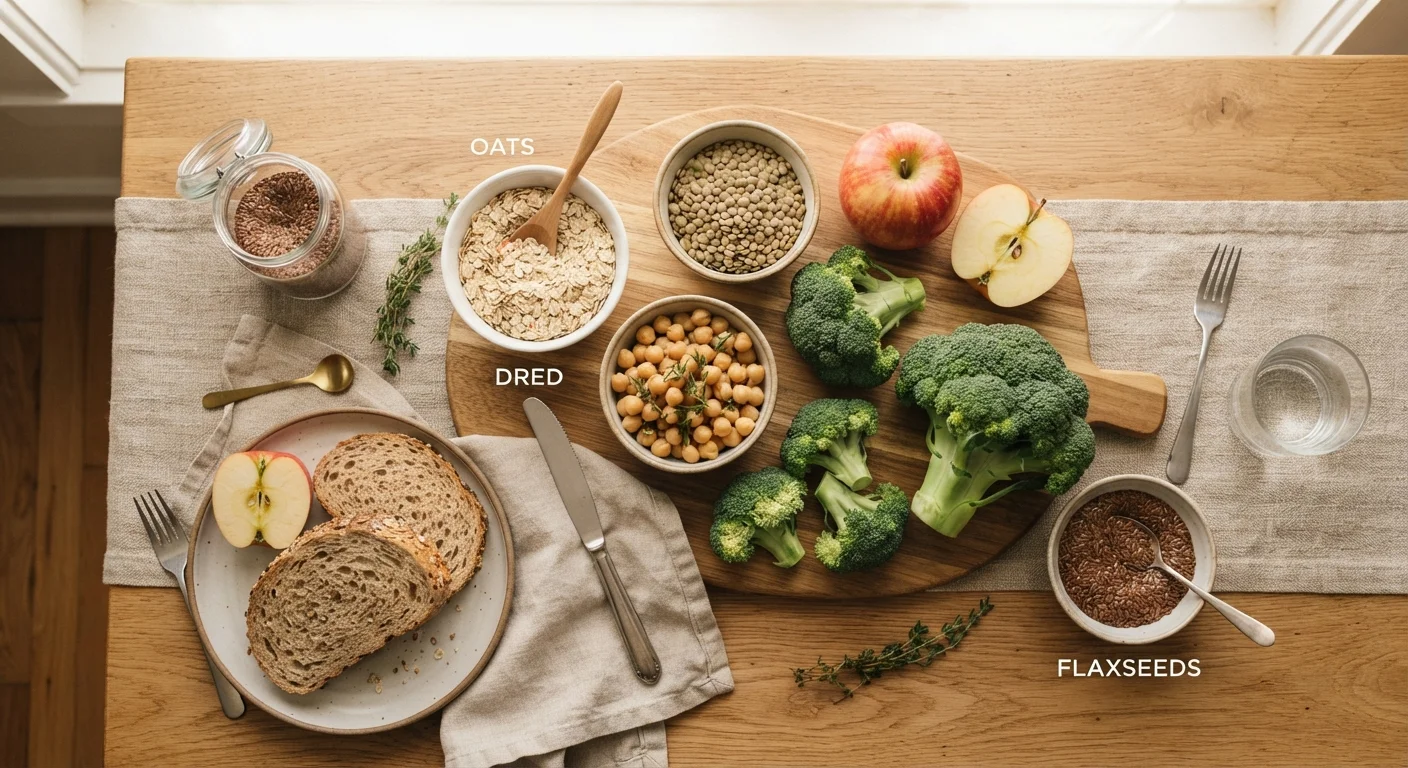
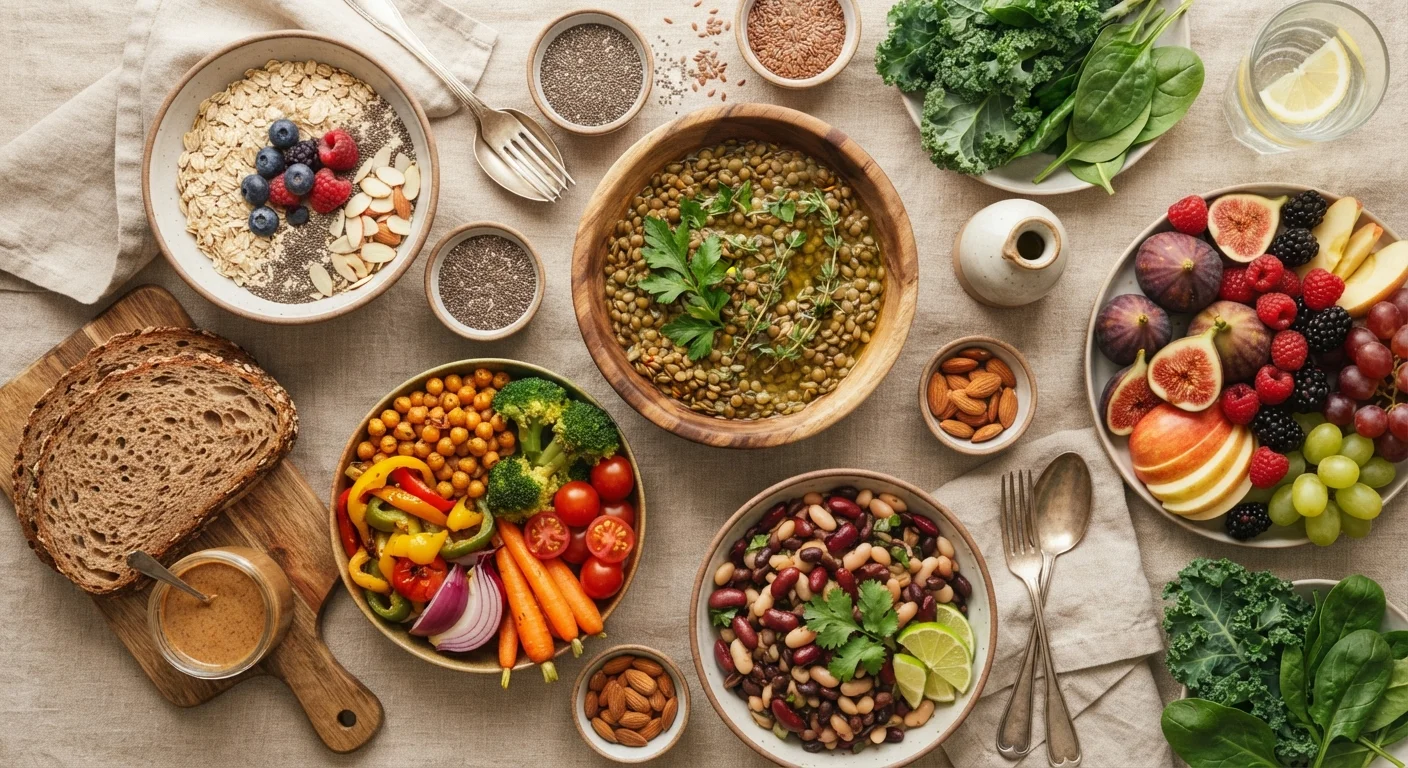
Beans, lentils, and chickpeas are among the most fiber-dense foods available - a half-cup of cooked black beans provides roughly 7 to 8 grams. They are also inexpensive and versatile. Stir them into soups and stews, use them as a base for grain bowls, or blend chickpeas into dips. Canned legumes work just as well as dried; simply rinse them to reduce sodium. This directly addresses the eating patterns that quietly undermine good nutrition by replacing low-fiber fillers.
Prioritize vegetables and fruit at every meal
Vegetables and fruit supply a mix of soluble and insoluble fiber, along with vitamins and phytonutrients not found in fiber supplements. Aim to fill at least half your plate with vegetables at lunch and dinner. High-fiber options include broccoli, Brussels sprouts, artichokes, carrots, peas, and leafy greens. Among fruits, pears, raspberries, apples (with skin), and avocados are particularly fiber-rich. Eating the whole fruit rather than drinking its juice preserves far more fiber.
Choose high-fiber snacks over low-fiber alternatives
Snack choices represent an often-overlooked fiber opportunity. Swapping chips or crackers for a small handful of nuts, a piece of fruit, raw vegetables with hummus, or whole grain crackers can add 3 to 5 extra grams per day with minimal effort. This is also where label reading pays off - see the [tip_callout] above for how to quickly identify fiber content on packaging. For a broader look at how packaged food reliance affects nutritional quality, our article on eating patterns that undermine nutrition is useful context.
Drink more water as fiber intake rises
Fiber - especially soluble fiber - absorbs water in the digestive tract. Without adequate hydration, increasing fiber can contribute to constipation rather than relieve it. General guidance recommends most adults aim for around 8 cups of fluid per day from all sources, though needs vary with body size and activity level. Water is the best choice; unsweetened beverages count toward hydration as well.
Read Nutrition Labels for Fiber Content
The Nutrition Facts panel on packaged foods lists dietary fiber per serving. A food providing 5 grams or more per serving is considered an excellent source; 2.5 to 4.9 grams qualifies as a good source. Checking labels is a practical way to compare options and identify surprisingly fiber-rich - or fiber-poor - products.
Fiber Supplements Are Not a Substitute
Isolated fiber supplements (such as psyllium husk or inulin powders) can support intake in specific circumstances, but they do not replicate the full nutritional package - vitamins, minerals, antioxidants, and varied fiber types - that whole foods deliver. Use supplements only as a complement to a food-first approach, and consult a healthcare provider if you are considering them for a specific health goal.
This article provides general nutrition information for educational purposes and is not a substitute for personalized medical or dietary advice. Consult a registered dietitian or qualified healthcare provider for guidance tailored to your individual health needs.