Why a Seasonal Schedule Makes Sense
US drivers face a wider range of conditions than most vehicle ownership guides account for. A car that performed flawlessly in July can struggle badly in January - and vice versa. Temperature swings affect battery voltage, tire pressure, fluid viscosity, and rubber seals in predictable, manageable ways. The key is acting before each season arrives rather than reacting after something fails.
This calendar breaks vehicle upkeep into four seasonal windows. Each group of tasks targets the specific demands of that time of year. For a broader overview of how regular upkeep pays off long-term, see the long-term case for scheduled maintenance.
Tire pressure gauge
Used in every season to verify inflation levels before and after temperature changes.
Battery load tester
Checks whether the battery can hold a charge under demand, especially important before winter.
Coolant test strips or hydrometer
Measures the freeze point and condition of your antifreeze before cold weather arrives.
Tread depth gauge
Accurately measures remaining tire tread to determine whether replacement is needed.
Funnel and fluid collection tray
Useful for topping off or draining fluids without spills during DIY checks.
Roadside emergency kit
A stocked kit covering jumper cables, a flashlight, reflective triangles, and seasonal essentials.
Your Season-by-Season Maintenance Checklist
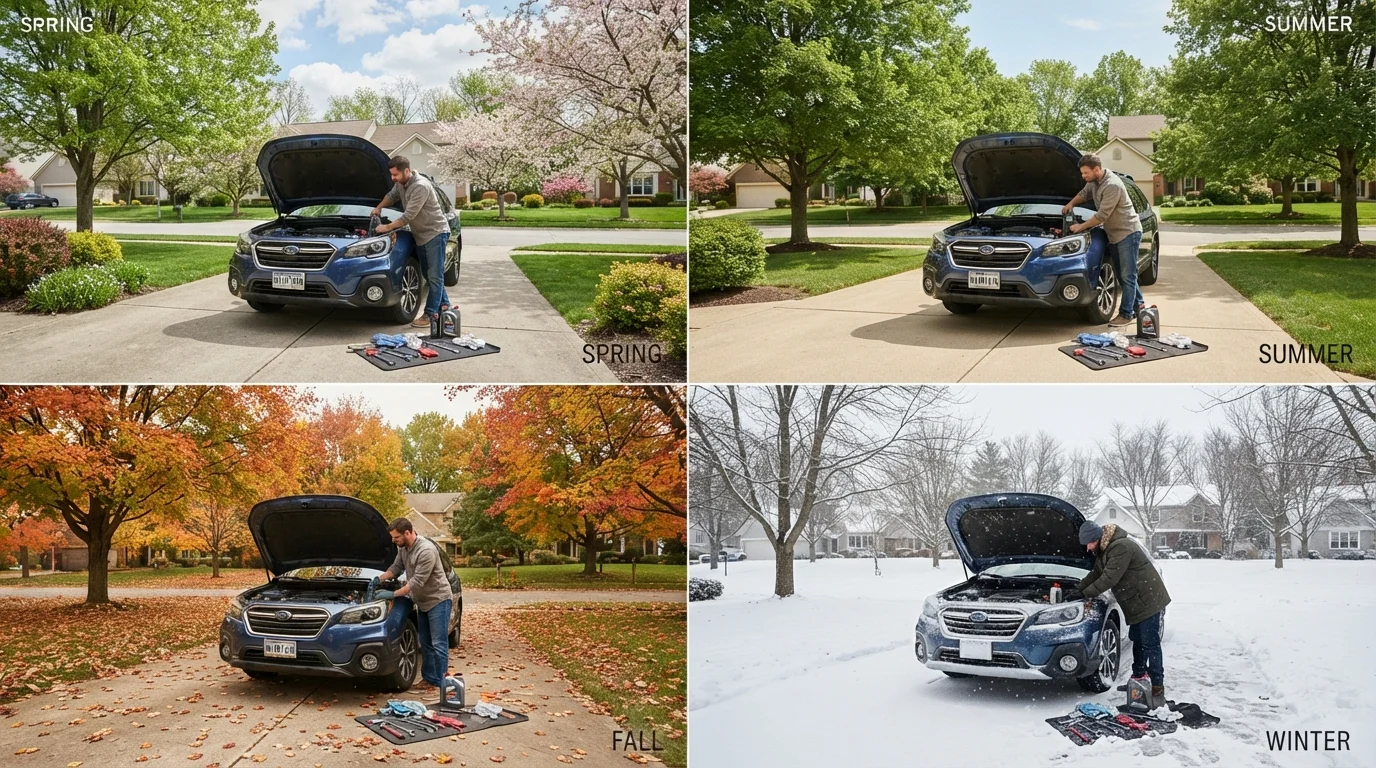
Work through each seasonal group as that time of year approaches - ideally a few weeks before the weather shifts. Items marked must are non-negotiable for safety or reliability; should items are strongly recommended; nice-to-have items are worthwhile if time and budget allow.
Spring (March-May)
Summer (June-August)
Fall (September-November)
Winter (December-February)
Never Ignore Battery Warnings Before Winter
A battery that starts sluggishly in October is very likely to fail completely in January. Cold temperatures dramatically reduce a battery's available cranking power - often by 30-50% in extreme cold. Have any battery older than three years load-tested at a shop before the first hard freeze. Replacement is far less costly than an emergency tow.
What You Can Do Yourself - and What You Should Hand Off
Many of the checks on this calendar - inspecting wiper blades, topping off fluids, checking tire pressure - are genuinely beginner-friendly. Others, particularly brake inspections, suspension checks, and coolant system flushes, involve safety-critical systems where an error can be dangerous. Before diving in, review which DIY tasks are worth learning vs. those best left to a mechanic.
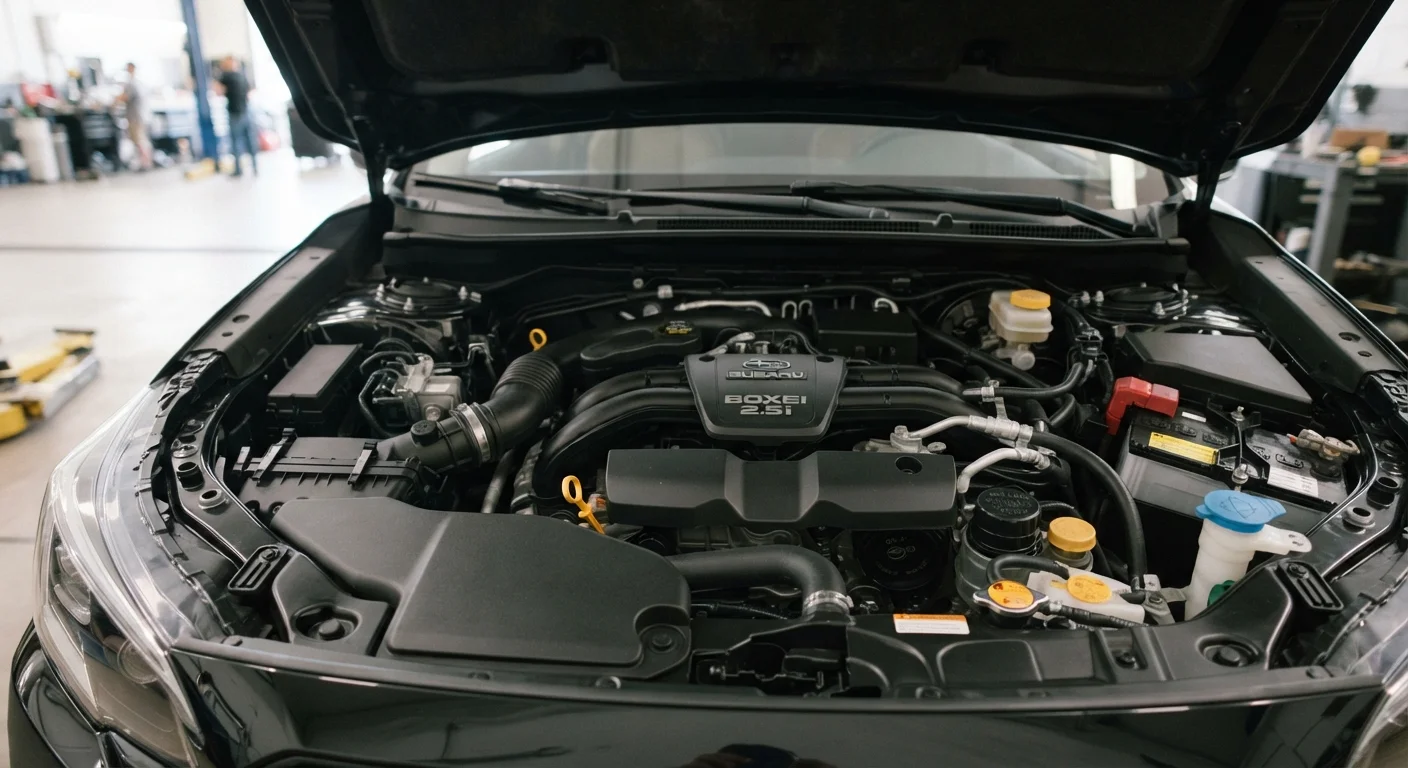
For fluid-specific questions - what each reservoir contains, what color changes mean, and when to act - this guide to under-hood fluids breaks it down system by system. And if you're heading into a long road trip at any point in the year, run through this pre-trip vehicle safety check before you leave the driveway.
Don't Skip Brake and Suspension Inspections
Brakes and suspension components are safety-critical and should be inspected by a qualified mechanic if you're unsure about their condition. Attempting a brake job without proper tools and training can result in brake failure. If you notice grinding noises, pulling to one side, or a spongy pedal feel, stop driving and have the vehicle inspected promptly.
Ultimately, the goal of a seasonal calendar isn't perfection - it's consistency. A vehicle that receives basic attention four times a year will almost always outlast and outperform one that only sees a mechanic when something breaks. This checklist is part of a larger framework covered in our complete car maintenance guide for everyday drivers.