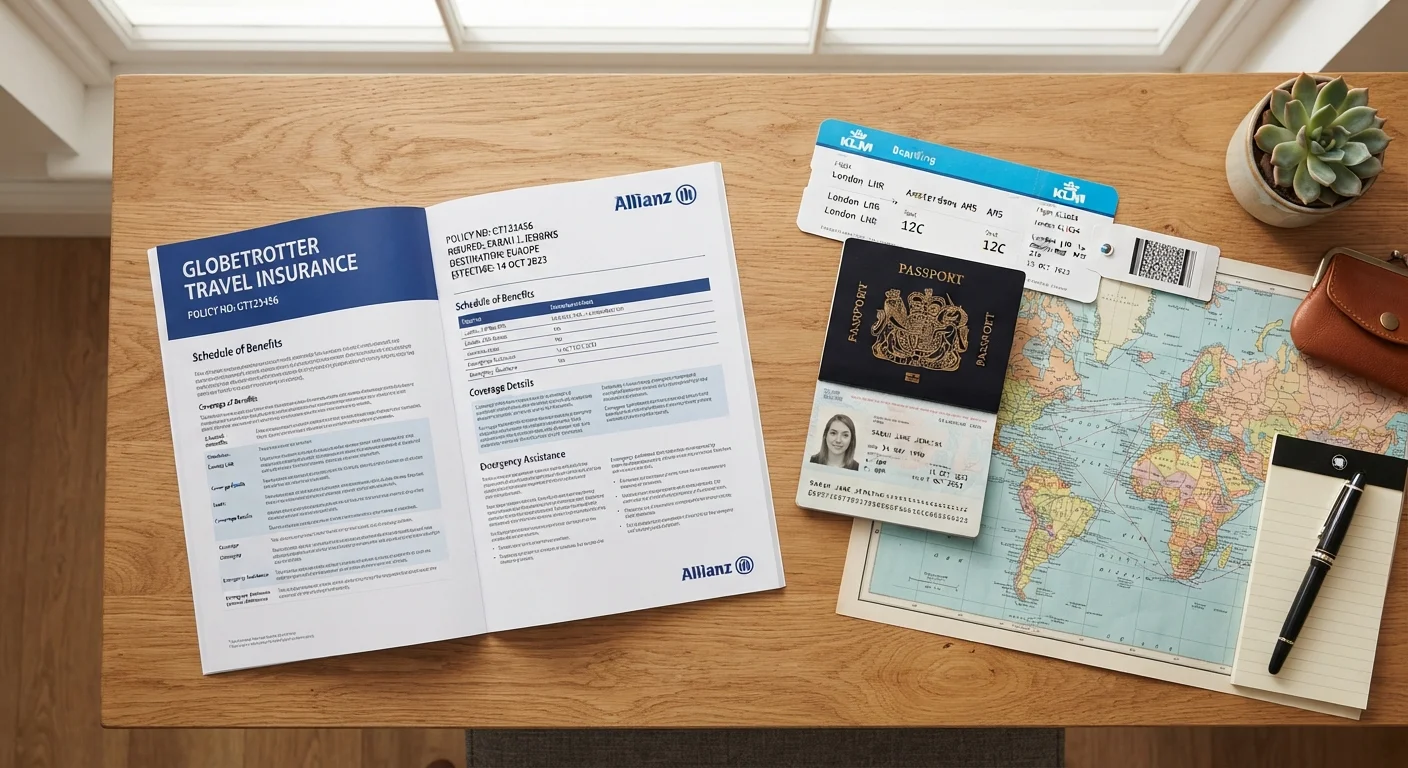

What Travel Insurance Actually Covers
Travel insurance bundles several distinct protections into one policy. Understanding each type helps you evaluate whether a policy fits your trip-and avoid surprises when something goes wrong.
Trip Cancellation and Interruption
This is typically the largest financial benefit. Trip cancellation reimburses non-refundable, pre-paid costs-flights, hotel deposits, tour packages-if you must cancel before departure for a covered reason. Common covered reasons include serious illness or injury (yours, a traveling companion's, or a close family member's), jury duty, or a natural disaster affecting your destination. Trip interruption covers similar costs if you must cut a trip short mid-travel.
Travel Medical Coverage
Your domestic health insurance often provides limited or no coverage abroad. Travel medical insurance steps in to cover emergency doctor visits, hospital stays, and urgent care costs incurred during your trip. This is especially important in countries where upfront payment is required before treatment.
Emergency Medical Evacuation
If you experience a serious medical emergency in a remote location or a country with inadequate medical facilities, evacuation coverage pays to transport you to the nearest appropriate hospital-or back home. Medical evacuations can cost tens of thousands of dollars without coverage.
Baggage Loss and Delay
Baggage coverage reimburses you if your luggage is permanently lost, damaged, or stolen. Baggage delay coverage provides funds for essential items (clothing, toiletries) if your bags are delayed beyond a set threshold, typically six to twelve hours.
Travel Delay
If a covered event-such as severe weather or a mechanical issue-delays your departure, this benefit reimburses reasonable meals and accommodation expenses during the wait, usually after a minimum delay period of six to twelve hours.
$35,000+
Average cost of emergency medical evacuation
The U.S. State Department notes that international medical evacuations can exceed this figure, and some cases run into six figures depending on location and complexity.
~40%
Travelers who purchased travel insurance pre-pandemic
The U.S. Travel Insurance Association has tracked steady growth in travel insurance adoption, with pandemic-era disruptions accelerating awareness among leisure travelers.
14-21 days
Typical window to buy pre-existing condition waiver
Most insurers require purchase of a pre-existing condition waiver within 14 to 21 days of the traveler's initial trip deposit to qualify for that benefit.
Common Exclusions You Need to Know
What a policy doesn't cover matters just as much as what it does. These exclusions catch travelers off guard more often than any other aspect of travel insurance.
- Pre-existing medical conditions: Most standard policies exclude claims related to conditions diagnosed or treated before the policy purchase date. A pre-existing condition waiver-available on many policies if purchased early enough-can remove this exclusion.
- Voluntary cancellations: Changing your mind, work conflicts (unless your employer requires you to cancel), and fear of travel are not covered under standard trip cancellation. A "cancel for any reason" (CFAR) upgrade addresses this, but reimburses only a portion of costs.
- High-risk activities: Adventure sports such as skydiving, scuba diving beyond recreational limits, or off-piste skiing are frequently excluded unless you add a specific adventure sports rider.
- Known events: If you purchase a policy after a named storm or civil unrest has already been reported, losses related to that event are typically not covered.
- Alcohol or drug-related incidents: Claims arising from accidents or emergencies where intoxication is a contributing factor are usually excluded.
Buy Early to Unlock Time-Sensitive Benefits
Purchasing travel insurance within two to three weeks of your first trip payment unlocks benefits unavailable to late buyers-most importantly, pre-existing condition waivers and coverage for events that become "known" after purchase. Even if your departure is months away, early purchase protects you from the moment money is at risk.
For a deeper look at how coverage gaps affect other types of insurance, see our guide on travel insurance fine print.
How to Evaluate a Policy Before You Buy
Comparing travel insurance policies requires looking beyond the price tag. Here's what to focus on when reviewing your options.
“The time to read an insurance policy is before you need it. Most coverage disputes arise not because the insurer acted in bad faith, but because the traveler assumed coverage that the policy never actually provided.”
— Insurance Consumer Advocacy Guidance, General principle cited across consumer insurance education resources
Match Coverage to Your Trip Profile
A domestic long weekend requires a different policy than a two-week international itinerary. Consider: How much in non-refundable costs are at stake? Are you traveling to a country with limited medical infrastructure? Does your itinerary include adventure activities? Your answers should shape the coverage limits you prioritize.
Check the Medical Coverage Limits
For international trips, travel medical coverage of at least $100,000 is commonly suggested as a starting benchmark, with higher limits for destinations where treatment costs are elevated. Verify whether the policy coordinates with your existing health insurance or serves as primary coverage.
Read the Covered Reasons List
Trip cancellation policies list specific covered reasons-not all policies cover the same events. A policy that lists "cancel for work reasons" as covered is meaningfully different from one that does not. Read this list carefully before purchasing.
Understand the Claims Process
Know the insurer's notification requirements. Many policies require you to report a claim-or even notify the insurer-within a specific time window after the triggering event. Missing this window can result in a denied claim even when the underlying event is covered.
Understanding how insurance products work in adjacent areas can sharpen your evaluation skills. The principles behind understanding renters insurance coverage gaps-reading what's excluded as carefully as what's included-apply equally to travel policies.
This article is for general informational purposes only and does not constitute insurance or financial advice. Coverage terms, exclusions, and claim procedures vary by policy and provider. Always review the full policy documents and verify entry, health, and safety requirements with official government and provider sources before traveling.