The Three Components and What Each One Does
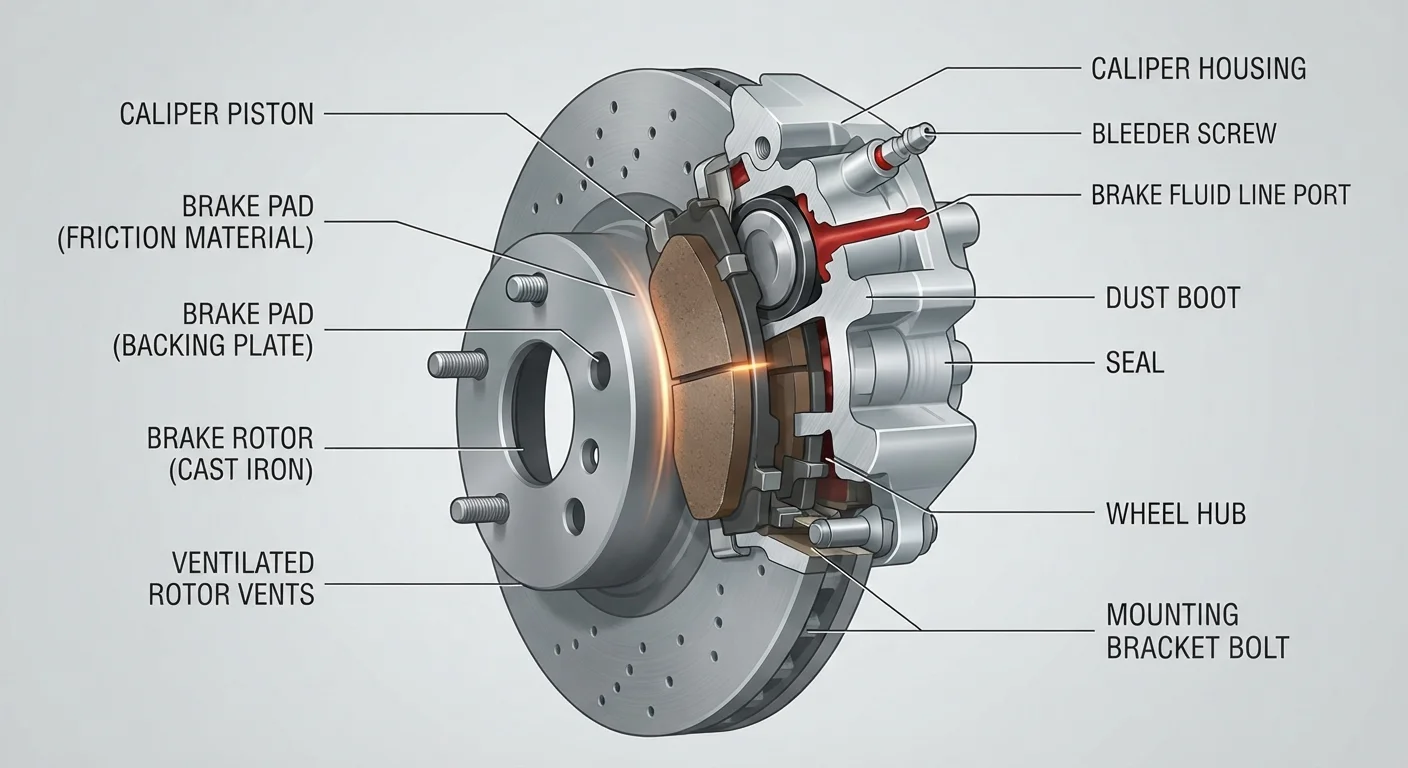
Your vehicle's disc brake system relies on three core parts working in concert: the rotor, the caliper, and the brake pads.
- Rotor: A flat metal disc bolted to the wheel hub that spins with the wheel. When you brake, friction is applied to its flat faces to slow rotation.
- Caliper: A hydraulic clamp that straddles the rotor. When you press the brake pedal, hydraulic pressure pushes pistons inside the caliper outward, squeezing the pads against the rotor.
- Brake pads: Friction material mounted inside the caliper that makes direct contact with the rotor. They are the consumable part of the system - designed to wear down gradually and be replaced.
Think of it this way: the caliper is the mechanism, the rotor is the surface, and the pads are what actually do the stopping work. Remove any one of them and the system fails entirely.
Drum Brakes: The Older Design
Some vehicles - particularly at the rear axle - still use drum brakes instead of discs. Drum brakes use curved brake shoes that press outward against the inside of a spinning drum rather than pads clamping a flat rotor. The wear and warning signs are similar, but the inspection and service process differs. Your owner's manual will specify which type your vehicle uses.
How Wear Happens - and Why It Cascades
Brake pads wear steadily with every stop you make. Heat, friction, and the weight of the vehicle all accelerate the process. The problem is that wear rarely stays contained to just one component.
When pads thin past their usable limit, the metal backing plate begins contacting the rotor directly. This causes the grinding sound drivers dread - and it scores the rotor surface, creating grooves that compromise braking efficiency and often require full rotor replacement. What starts as a straightforward pad replacement can become a significantly more expensive job if left too long.
Calipers can also develop problems over time. A seized caliper - one whose piston no longer retracts properly - keeps the pad in partial contact with the rotor even when you're not braking. This causes rapid, uneven pad wear and can generate enough heat to warp the rotor. A seized caliper often shows up as the vehicle pulling to one side when braking.
30,000-70,000 mi
Typical brake pad lifespan range
Industry guidance suggests pad life varies widely based on driving style, vehicle weight, and urban vs. highway use.
~70%
Braking force handled by front brakes
Weight transfer toward the front during deceleration means front brakes bear the majority of stopping load on most passenger vehicles.
Understanding this cascade effect is the main reason brake inspections matter. See our comprehensive maintenance guide for where brakes fit into a full vehicle upkeep schedule.
Warning Signs You Shouldn't Dismiss
Your braking system gives you clear signals when something is wrong. Knowing what each one means helps you act before a minor issue escalates.
Check Pads During Tire Rotations
Every tire rotation is a natural opportunity to have pad and rotor condition checked visually. Since the wheel is already off the car, a technician can inspect the braking hardware with minimal extra time or cost. Building this habit means you're unlikely to be caught off guard by sudden brake wear.
- Squealing or squeaking: A built-in wear indicator making metal-on-metal contact with the rotor. This is the system's first alert - pads are getting low.
- Grinding: The pad material is gone. Metal is now contacting the rotor directly. Schedule service immediately.
- Pulsating pedal or steering wheel vibration: Usually indicates warped rotors. The uneven surface causes rhythmic pad contact as the rotor spins.
- Soft or spongy pedal: Often related to air in the brake lines or degraded brake fluid. This can also indicate a failing caliper piston seal.
- Vehicle pulling to one side when braking: May point to uneven pad wear or a seized caliper on one side.
A dashboard brake warning light can accompany several of these issues. Decoding what your warning lights mean is a useful complement to knowing how the hardware works.
Stopping distance is the real-world consequence of brake condition. For a deeper look at how all these factors translate to actual safety margins, see the science behind stopping distance.
When to Have Brakes Professionally Inspected
Most vehicle manufacturers recommend a brake inspection at least once a year or with every tire rotation - whichever comes first. Technicians measure pad thickness, check rotor surface condition and thickness, inspect caliper function, and assess brake fluid quality.
Brake fluid deserves its own mention here. It's the hydraulic medium that transfers pedal force to the calipers. Over time it absorbs atmospheric moisture, lowering its boiling point and making it less effective under hard braking. Understanding all your vehicle's fluids - including brake fluid - is part of keeping the full system healthy.
If you're uncertain about your brakes, don't wait for a scheduled service. Any of the warning signs described above warrants a prompt visit to a qualified mechanic. Brake repairs performed early are almost always less costly - and safer - than those delayed until a problem is acute.
This article provides general educational information about vehicle braking systems and is not a substitute for professional mechanical inspection or advice. Always consult a qualified mechanic for diagnosis and repair of your specific vehicle.