
Why Movement Patterns Matter More Than Specific Exercises
Most people build workouts around specific exercises - bicep curls, crunches, leg presses - without stepping back to ask whether those exercises collectively train the body in a balanced way. Movement pattern-based training takes a different approach: instead of picking exercises at random, it ensures your routine covers the fundamental ways the human body is designed to move.
There are six widely recognized foundational movement patterns: push, pull, hinge, squat, carry, and rotation. Together, they engage all major muscle groups, support joint health, and reduce the risk of overuse injuries caused by training some muscles heavily while neglecting others.
Whether you exercise at a gym, at home, or somewhere in between, organizing your workouts around these patterns gives you a reliable framework. If you prefer low-structure movement, see how these principles can still apply - explore activity options beyond the gym.
| Number of foundational patterns | 6 (Widely recognized in exercise science and strength coaching literature) |
| Most commonly neglected pattern | Carry (loaded carries) |
| Minimum sessions to cover all patterns weekly | As few as 2-3 full-body sessions |
| Equipment required | None - bodyweight versions exist for all six patterns |
| Primary benefit | Balanced muscle development and reduced overuse injury risk (General consensus in physical therapy and strength training practice) |
The Six Foundational Movement Patterns Explained
Understanding what each pattern targets helps you spot gaps in your current routine.
Posterior chain
The group of muscles running along the back of the body - including the glutes, hamstrings, and spinal erectors. These muscles are critical for posture, hip power, and injury prevention.
Sagittal plane
The plane of motion that divides the body into left and right halves. Forward and backward movements - like walking, squatting, and hinging - occur in the sagittal plane.
Anti-rotation
Exercises that train the core to resist twisting forces rather than produce them. They develop stability that protects the spine during everyday and athletic movements.
Functional movement
Movement patterns that mirror actions used in daily life - bending, lifting, carrying, pushing, and pulling - making exercise directly relevant to real-world physical demands.
Progressive overload
The gradual increase of stress placed on the body during exercise over time. Applied to movement patterns, it means advancing from bodyweight to loaded variations as strength improves.
Push
Pushing movements drive force away from the body - horizontally (as in a push-up) or vertically (as in an overhead press). They primarily train the chest, shoulders, and triceps.
Pull
Pulling movements bring resistance toward the body - rows target horizontal pulling; pull-ups and lat pulldowns target vertical pulling. These train the back and biceps, counterbalancing push exercises to protect shoulder health.
Hinge
The hinge is a hip-dominant movement where the spine stays neutral while the hips drive back and forward. Deadlifts and Romanian deadlifts are classic examples. This pattern builds posterior chain strength - glutes, hamstrings, and lower back - that is critical for everyday tasks like lifting objects off the floor safely.
Squat
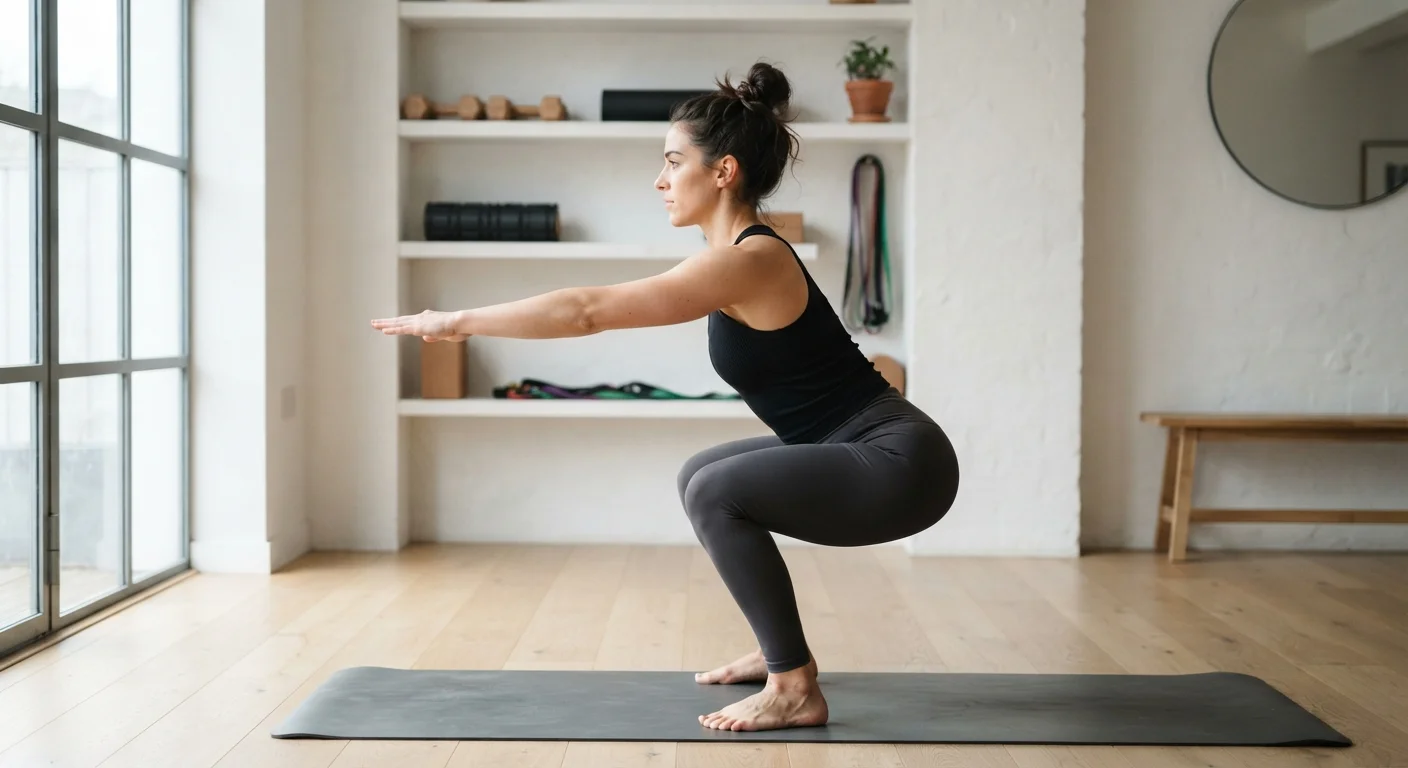
Squatting patterns involve the knees and hips bending simultaneously to lower and raise the body. Goblet squats, bodyweight squats, and lunges all fall here. They build leg strength and support joint mobility throughout the lower body.
Carry
Carrying - walking while holding a load, such as in a farmer's carry - develops core stability, grip strength, and whole-body coordination. It is one of the most functional patterns and one of the most overlooked in standard gym programming.
Rotation and Anti-Rotation
The torso rotates constantly in real life - when you swing a bag, turn to check traffic, or swing a golf club. Rotation exercises (like cable woodchops) and anti-rotation exercises (like Pallof presses) build core strength in all planes of motion, not just the sagittal plane targeted by crunches.
Movement Patterns Apply at Any Age
The six patterns are appropriate across the adult lifespan, though the load, range of motion, and exercise selection will vary. Older adults may benefit most from hinge and squat patterns, which directly support fall prevention and functional independence. For a broader look at how activity needs shift over time, see how exercise priorities evolve across decades.
Building a Balanced Routine Around These Patterns
A practical approach is to include at least one exercise from each pattern per week, distributed across your sessions. A simple three-day structure might pair push and pull on Day 1, hinge and squat on Day 2, and carry and rotation on Day 3. Alternatively, full-body sessions can each include one or two patterns from every category.
The specific exercises you choose within each pattern are flexible and can be adjusted for fitness level, available equipment, and physical limitations. A hinge can be a single-leg Romanian deadlift or simply a kettlebell swing. A squat can be a chair-supported sit-to-stand for someone just starting out.
If you are returning to exercise after a period of inactivity or injury, starting conservatively with bodyweight-only versions of each pattern is generally a sensible approach. Learn how to ease back into movement safely before progressing load or intensity. Adults over 40 may also want to consider how recovery and mobility shift with age - read about what changes after 40 before ramping up.
Even a busy or irregular schedule can accommodate this framework. Strategies for exercising on an unpredictable schedule can help you apply movement pattern thinking without requiring rigid weekly plans.
This article is for general informational purposes only and is not a substitute for personalized advice from a qualified fitness professional or healthcare provider. Consult a professional before beginning any new exercise program, especially if you have existing health conditions or injuries.