How the Glycemic Index Works
The glycemic index was developed in the early 1980s by researchers at the University of Toronto as a way to bring some scientific rigor to the question of how different carbohydrates affect blood sugar. Rather than treating all carbs as equivalent, GI acknowledges that a bowl of lentils and a slice of white bread deliver very different physiological responses - even if their calorie counts are similar.
The scale runs from 0 to 100. Pure glucose is the benchmark at 100. Foods are tested by having participants consume a portion containing 50 grams of available (digestible) carbohydrate, then measuring blood glucose at intervals over two hours. The resulting curve is compared to the glucose reference curve to produce a GI number.
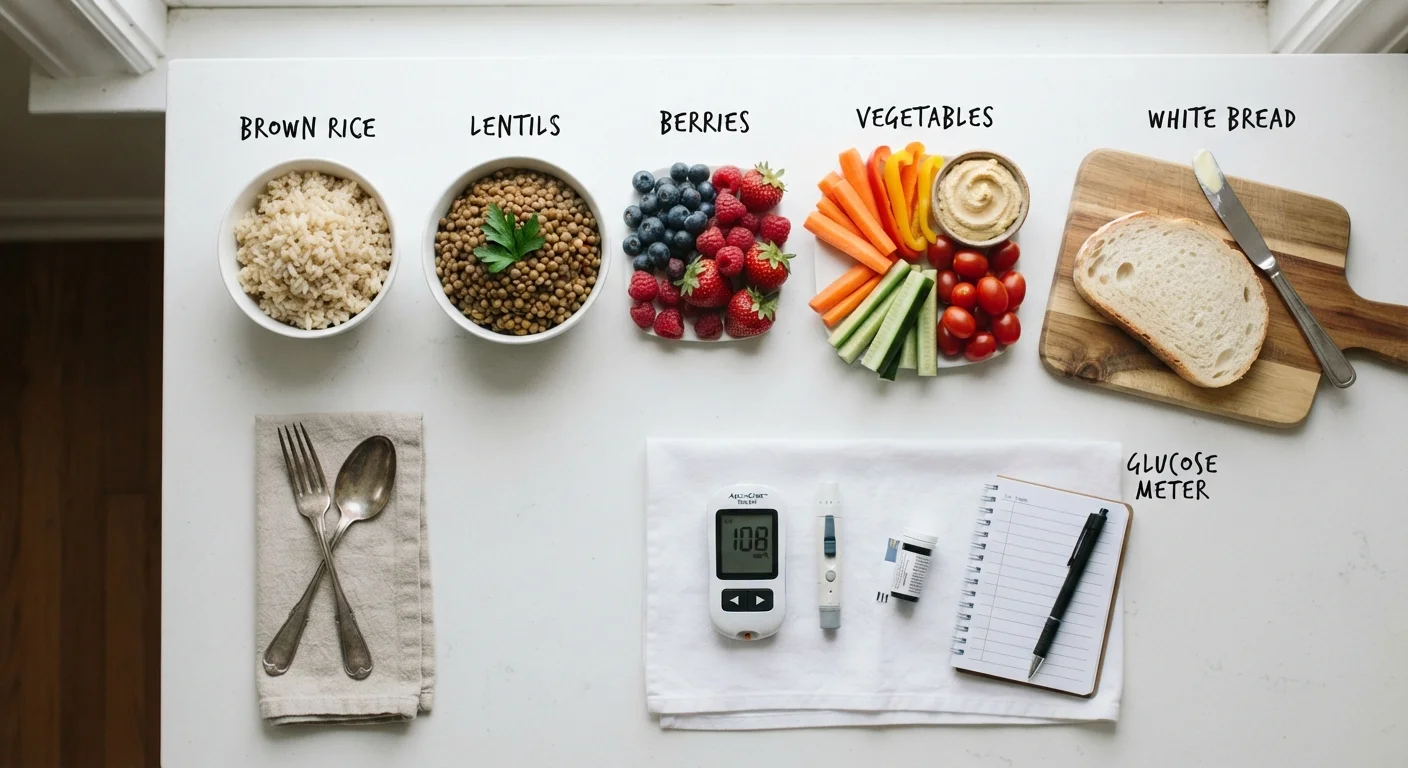
- Low GI (55 or below): Lentils, most vegetables, oats, many fruits
- Medium GI (56-69): Whole wheat bread, brown rice, sweet potato
- High GI (70+): White bread, instant rice, most processed breakfast cereals
Generally, foods with more fiber, protein, or fat tend to score lower because these nutrients slow digestion and blunt the glucose curve.
Where GI Falls Short
The glycemic index is a useful concept, but it has real limitations that make it unreliable as a standalone dietary tool.
GI Values Can Differ by Source
Different databases - including the University of Sydney's GI database and the USDA - may list slightly different GI values for the same food due to variations in testing methodology, food variety, or geographic origin. Treat published GI numbers as useful approximations rather than precise constants.
Portion size is ignored. GI is calculated on a fixed 50-gram carbohydrate portion, which doesn't reflect how much of a food people actually eat. Watermelon has a high GI of around 72, but a typical serving contains so few carbohydrates that its actual blood sugar impact is modest. This is why researchers developed glycemic load (GL), which multiplies GI by the grams of carbohydrate in a realistic serving and divides by 100.
Individual responses vary. Research published in journals such as Cell has shown that people respond to identical foods quite differently based on gut microbiome composition, genetics, and metabolic health. A population-average GI number may not predict your personal response.
Food combinations change everything. Eating a high-GI food alongside protein, fat, or fiber significantly lowers the overall blood sugar response. A potato eaten with olive oil and a protein source behaves very differently than the same potato eaten alone. For more on how ingredient composition shapes nutrition, see how ingredient lists reveal food composition.
When GI Is Actually Useful
Despite its limitations, the glycemic index has genuine practical value in specific contexts.
~10%
Of US adults have diagnosed diabetes
According to CDC estimates, approximately 38 million Americans live with diabetes, making blood sugar management a significant public health concern.
15-20 points
GI reduction from cooking method alone
Research has shown that cooking pasta al dente versus soft can reduce its glycemic index by roughly 15-20 points, illustrating how preparation affects GI in practice.
Blood sugar management: For people with type 2 diabetes or prediabetes, choosing lower-GI carbohydrates as part of a supervised dietary plan can help reduce post-meal blood sugar spikes. Major health organizations, including the American Diabetes Association, acknowledge low-GI eating as one evidence-supported dietary pattern - though it's not the only effective approach.
Athletic performance and recovery: Some endurance athletes use high-GI foods strategically during or immediately after intense exercise to rapidly replenish muscle glycogen, then rely on lower-GI foods for sustained energy during training.
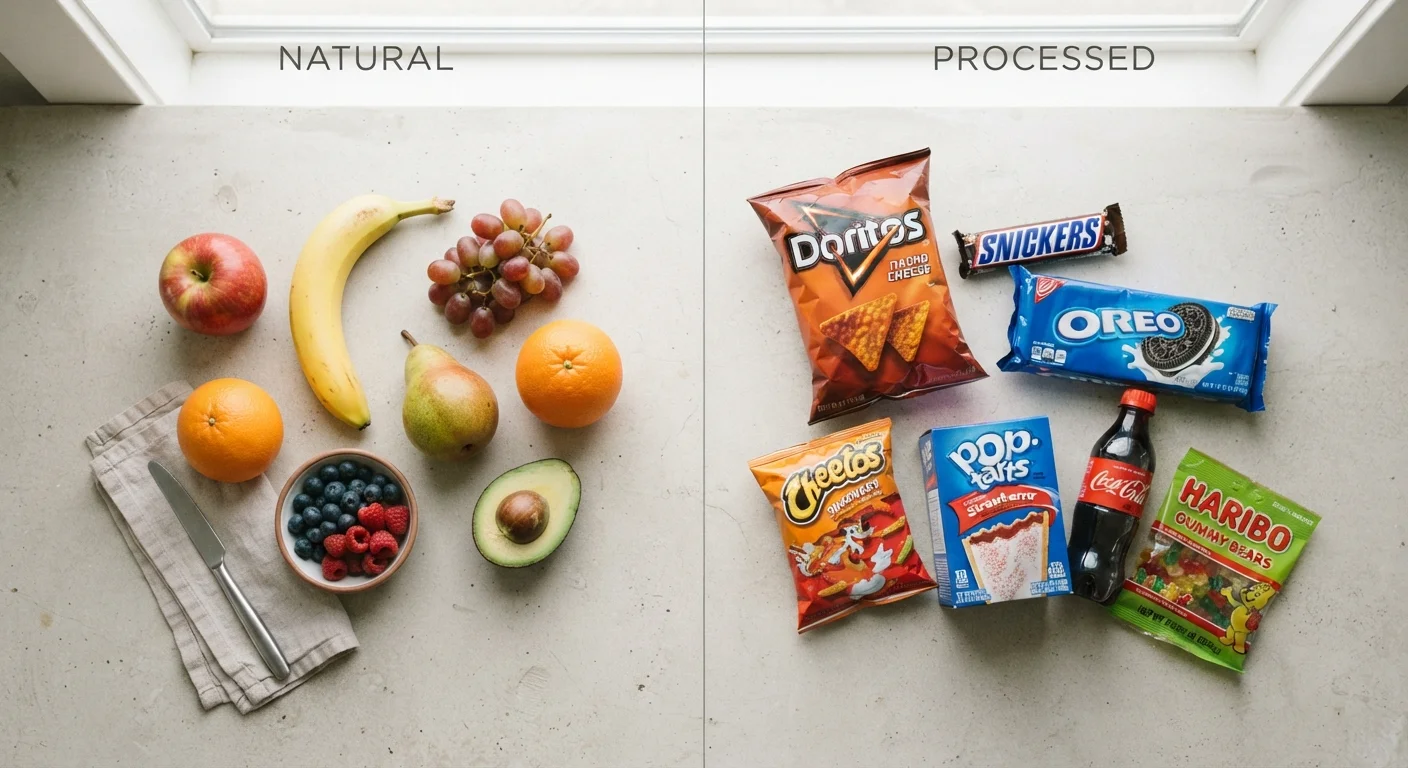
As a rough quality signal: Even without calculating scores, the general principle behind GI - favoring whole, minimally processed foods over highly refined carbohydrates - is well-supported by nutritional evidence. Understanding that added sugars and refined starches tend to drive rapid glucose responses is practical knowledge even without looking up specific numbers. Our article on added sugar versus natural sugar covers that distinction in more depth.
Pair Carbs With Protein or Fat
If you're concerned about blood sugar response, combining carbohydrate-rich foods with a source of protein, healthy fat, or fiber is one of the most practical strategies available. This naturally lowers the overall glycemic impact of a meal without requiring you to memorize GI numbers or overhaul your diet.
This article is for general informational and educational purposes only and is not a substitute for professional medical or dietary advice. If you have a health condition affecting blood sugar, consult a qualified healthcare provider before making significant dietary changes.