
Why the Ingredient List Deserves Your Attention
The Nutrition Facts panel gets most of the attention at the grocery store, but the ingredient list tells a different story. While the panel shows you quantities - calories, sodium, fat - the ingredient list shows you composition: what the food is actually made of, and in roughly what proportions.
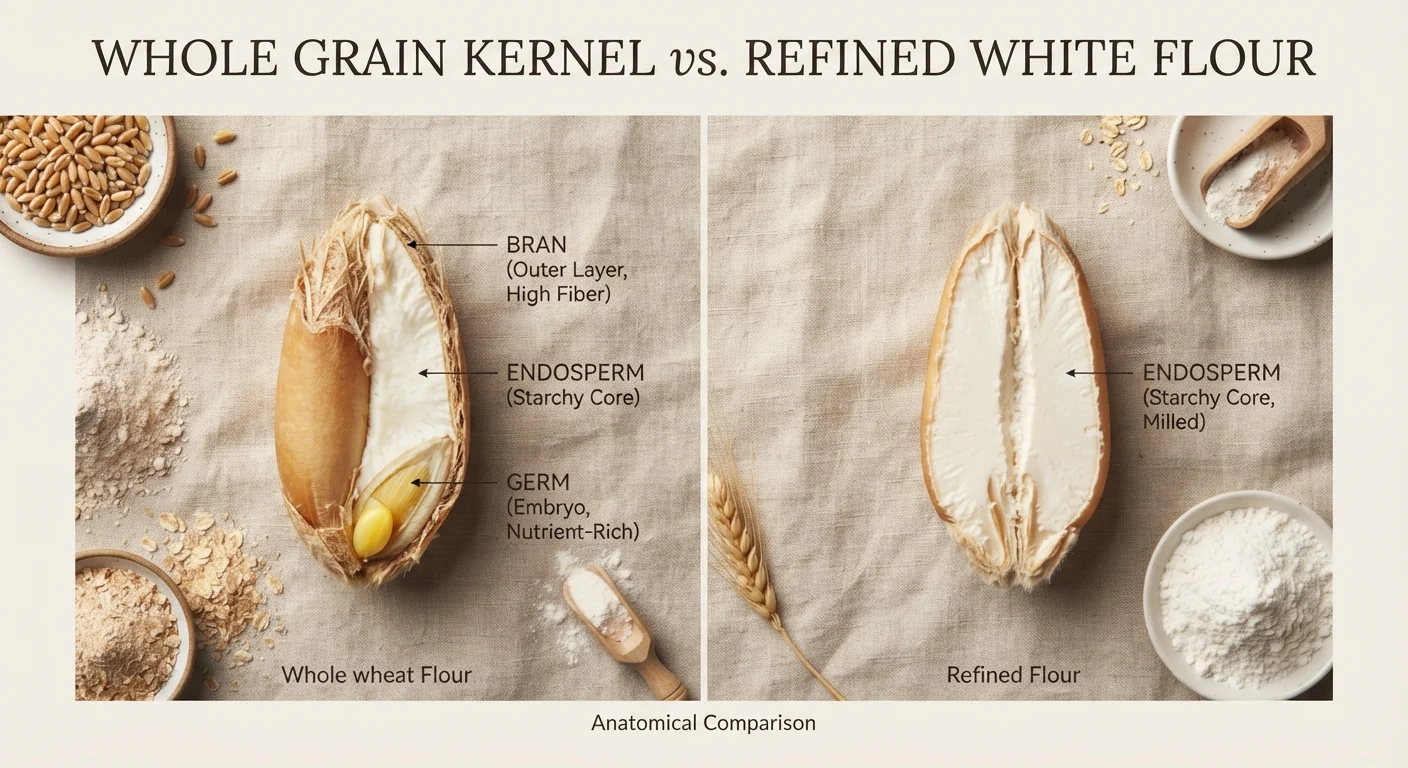
Under FDA rules, manufacturers must list every ingredient in descending order by weight. That means the first ingredient contributes the most to the product, and the last contributes the least. A bread listing whole wheat flour first is fundamentally different from one listing enriched bleached flour first - even if the front of the package says "made with whole grains." For a deeper look at how processing changes grain nutrition, see our article on whole grains vs. refined grains.
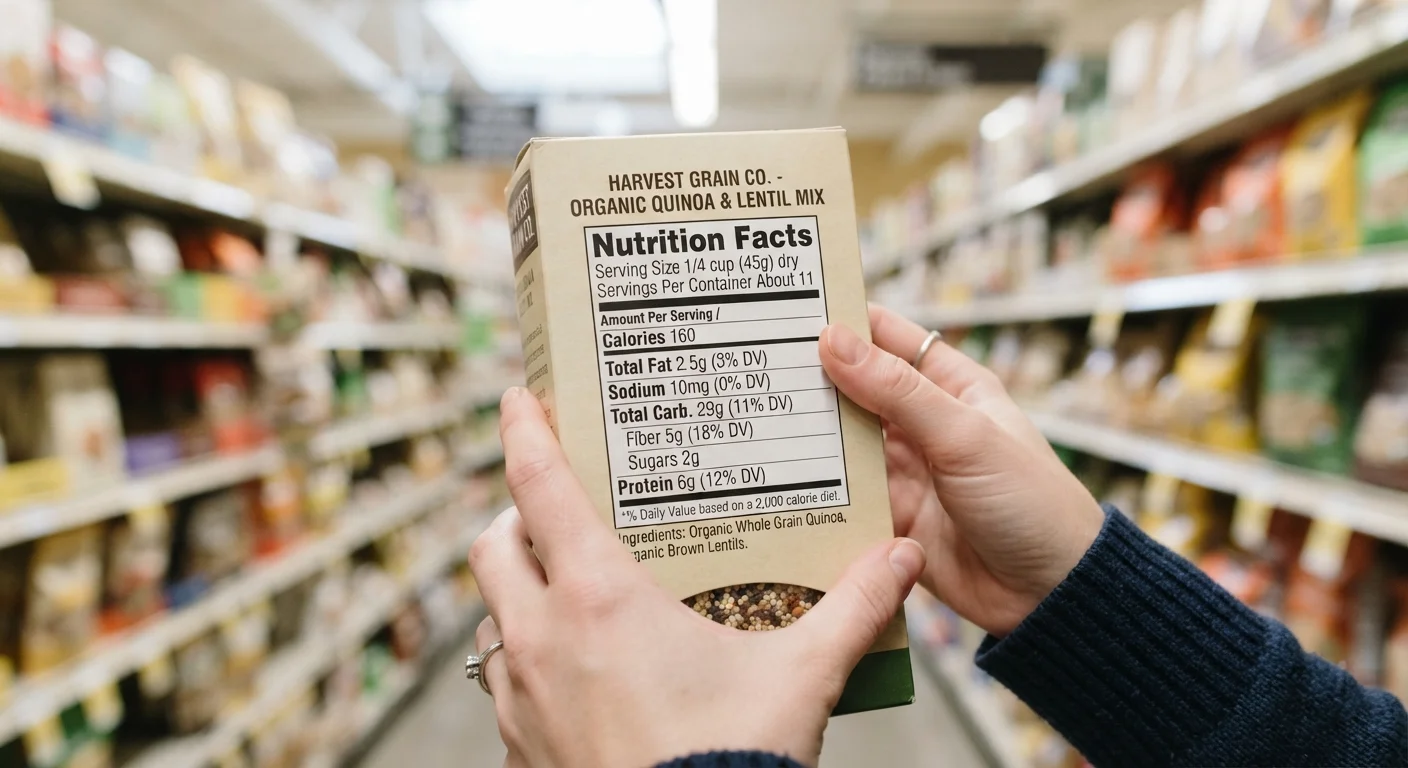
The ingredient list and the Nutrition Facts panel are designed to complement each other. Our plain-language guide to Nutrition Facts labels covers the numbers side in detail. This article focuses on what the words reveal.
Best Practices for Reading Ingredient Lists
These habits won't make you a food scientist, but they will make you a more informed shopper - without resorting to any all-or-nothing food rules.
Check the first three ingredients before anything else
Because ingredients are listed by descending weight, the first three typically account for the bulk of the product. If a sweetener, refined starch, or saturated fat appears in that top tier, it's a meaningful signal about the product's overall composition - not a dealbreaker, but worth noting.
Recognize sugar's many names on a label
Sugar can appear under more than a dozen names - including cane syrup, dextrose, maltose, evaporated cane juice, and fruit juice concentrate. Manufacturers sometimes use multiple forms across the list, which effectively spreads sweeteners out and keeps any single one from appearing near the top.
Use list length as a rough proxy for processing level - not as a verdict
A very short ingredient list often indicates minimal processing, but length alone isn't a reliable quality measure. Some longer lists include functional additives like vitamins, minerals, and preservatives that are benign or beneficial. Conversely, a short list can still feature highly refined ingredients.
Look for 'whole' before the first grain ingredient
Words like 'enriched,' 'bleached,' or 'degerminated' signal that the grain has been refined - meaning the bran and germ have largely been removed. Only terms like 'whole wheat,' 'whole oats,' or 'whole grain corn' reflect the complete grain. This distinction affects fiber content and the food's effect on blood sugar.
Note where salt appears in the list relative to other ingredients
Salt is dense, so even small amounts by weight can contribute significant sodium. If salt appears near the top of a list on a product that doesn't seem especially salty, it's a useful prompt to cross-check the sodium figure on the Nutrition Facts panel.
Don't let unfamiliar chemical names trigger automatic concern
Ingredients like ascorbic acid (vitamin C), tocopherols (vitamin E-related preservatives), and lecithin (an emulsifier derived from soy or sunflower) sound technical but are widely used and generally recognized as safe by the FDA. Dismissing a product solely because of an unpronounceable ingredient can lead to overlooking genuinely well-formulated foods.
Quick Wins You Can Apply on Your Next Trip
You don't need to overhaul your entire shopping routine. A few targeted habit changes can significantly improve how much useful information you're pulling from labels.
Front-of-Pack Claims vs. What's Inside
Terms like 'natural,' 'made with real fruit,' and 'multigrain' are marketing descriptions with limited or no regulated definitions under current FDA rules. They tell you nothing reliable about ingredient quality or order. Always check the ingredient list itself rather than relying on front-of-package language to assess a product's composition.
Putting It All Together
Reading ingredient lists well is a learnable skill, not an innate talent. The goal isn't to reject every product with a long list or an unfamiliar word - it's to understand what you're buying well enough to make choices that align with your preferences and needs.
Pair this habit with a look at the Nutrition Facts panel, and you'll have a reasonably complete picture of any packaged food. For broader guidance on building a more nutritious shopping routine, the grocery shopping habits that support consistent healthy eating article offers practical approaches from list-making to produce selection.
You can also explore the full Nutrition & Diet hub for straightforward guidance on eating patterns and nutrients.
This article is for general informational purposes only and is not a substitute for advice from a registered dietitian or other qualified healthcare professional.