What the Milling Process Actually Removes
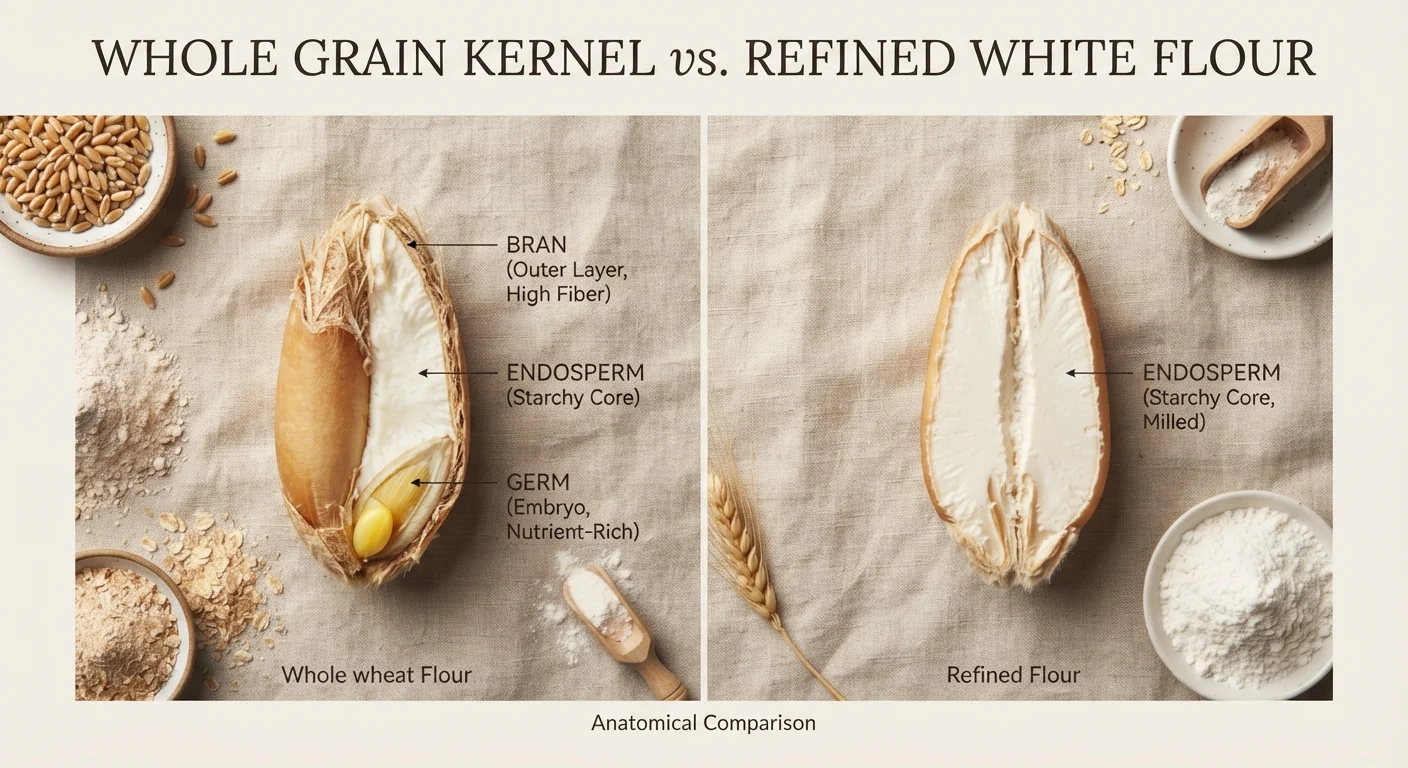
A grain kernel has three parts: the bran (the outer layer), the germ (the embryo of the plant), and the endosperm (the starchy inner core). Whole grains keep all three. Refined grains - including white flour, white rice, and most commercial bread products - are milled to remove the bran and germ, leaving only the endosperm.
That processing step is not cosmetic. The bran contains most of the kernel's dietary fiber, along with B vitamins like thiamine, niacin, and folate. The germ contributes vitamin E, healthy fats, and additional B vitamins. What remains in the endosperm is primarily starch, with a fraction of the original nutrient content.
To partially offset this, many refined grain products in the US are labeled enriched - meaning manufacturers add back certain B vitamins and iron lost during milling. However, fiber is not restored through enrichment, and several micronutrients and phytochemicals present in the bran and germ are not replaced. For a deeper look at why fiber specifically matters, see why fiber is the nutrient most Americans under-eat.
| Criterion | Whole Grains | Refined Grains |
|---|---|---|
| Parts of kernel retained | Bran, germ, endosperm | Endosperm only |
| Dietary fiber | High (intact) | Very low (mostly removed) |
| B vitamins | Naturally present | Partially added back (enriched) |
| Vitamin E | Present (from germ) | Largely absent |
| Phytochemicals | Lignans, phenolic acids present | Minimal |
| Glycemic impact | Lower, slower glucose rise | Higher, faster glucose spike |
| Shelf life | Shorter (oils in germ go rancid) | Longer, more shelf-stable |
| Common examples | Oatmeal, brown rice, whole wheat bread | White bread, white rice, pasta |
What Research Links to Whole Grain Consumption
Decades of epidemiological research associate higher whole-grain intake with meaningfully better health outcomes. Major findings, including those cited in the DGA and research published in journals such as The BMJ and JAMA Internal Medicine, point to reduced risks of cardiovascular disease, type 2 diabetes, and colorectal cancer among populations with consistently high whole-grain diets.
< 5%
Americans meeting whole grain recommendations
Research using NHANES data has found that fewer than 5% of US adults consistently meet federal whole-grain intake guidelines of at least three servings per day.
~20-30%
Reduced cardiovascular disease risk
A meta-analysis published in The BMJ found that the highest whole-grain consumers had roughly 20-30% lower rates of cardiovascular disease compared to the lowest consumers.
25g
Daily fiber recommended for most adults
The USDA Dietary Guidelines for Americans recommend approximately 25-38 grams of fiber per day for adults, depending on age and sex - a target most Americans do not reach.
The mechanisms are reasonably well understood. Soluble fiber from oats and other whole grains can help lower LDL cholesterol. The slower digestion rate of intact grain structures reduces post-meal blood glucose spikes. Fermentation of fiber by gut bacteria produces short-chain fatty acids that support colon health. Phytochemicals in the bran - including lignans and phenolic acids - have antioxidant properties that refined grains largely lack.
These findings reflect population-level patterns. Individual responses to dietary changes vary, and this content is general health information, not personal medical guidance. Speak with a qualified healthcare professional about diet changes relevant to your own health situation.
How to Identify Whole Grains on a Label
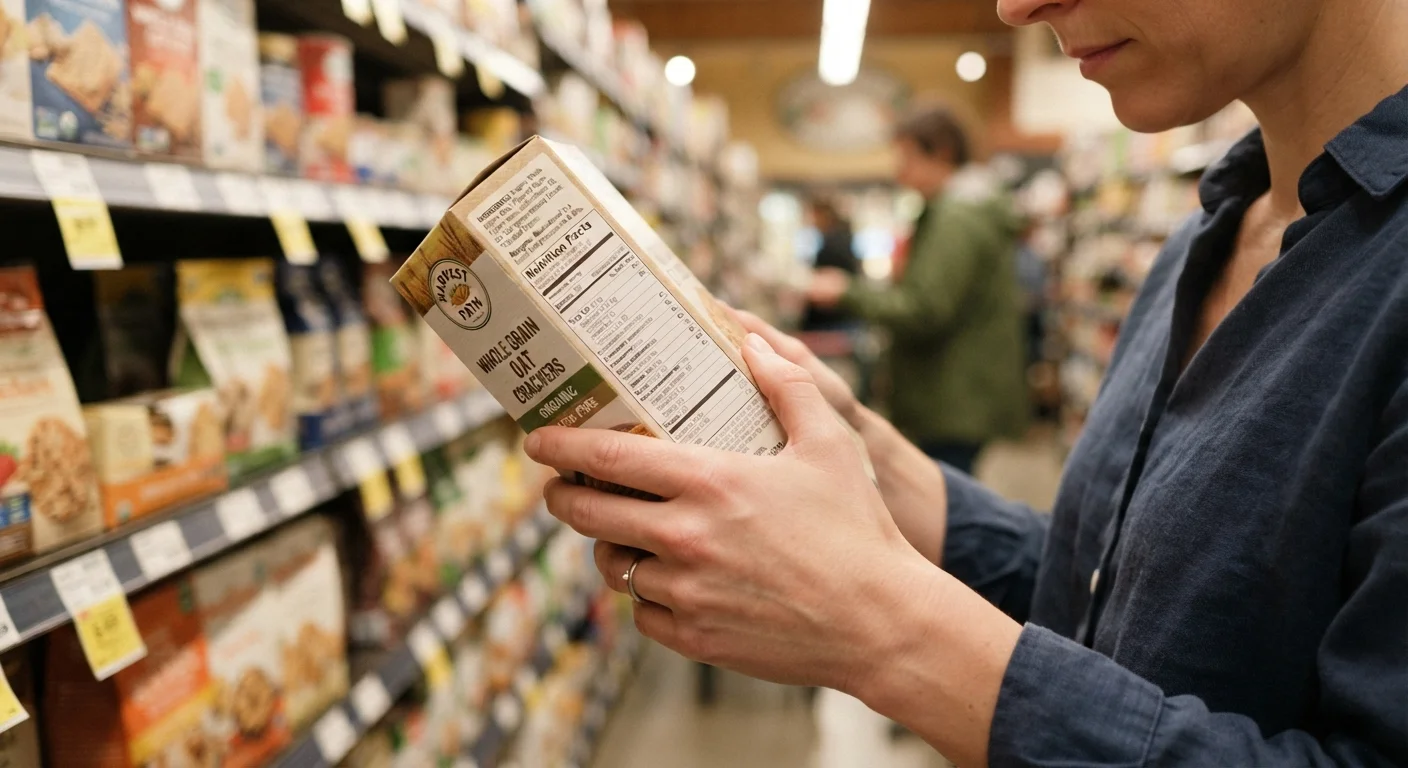
Marketing language on grain products is frequently misleading. Terms like multigrain, stone-ground, made with whole grain, or wheat bread do not guarantee a product is predominantly whole grain. The only reliable signal is the ingredient list.
Look for the word whole preceding the grain name as the first ingredient - for example, whole wheat flour, whole oats, or whole grain corn. If the first ingredient is simply wheat flour, enriched flour, or unbleached flour, the primary grain component is refined, regardless of other claims on the packaging.
The habits that make ingredient lists less confusing can help you apply this logic consistently across product categories. Similarly, if you want to build grain-smart choices into your weekly routine, grocery shopping habits that support healthy eating offers practical navigation strategies.
What 'Enriched' Actually Means
When you see 'enriched' on a flour label, it means iron and certain B vitamins - thiamine, riboflavin, niacin, and folic acid - were added back after milling. This practice reduces some of the nutritional gap created by refining. However, fiber, vitamin E, magnesium, potassium, and various phytochemicals are not part of the enrichment standard and remain largely absent from refined grain products.
This article is for general informational and educational purposes only and does not constitute medical or dietary advice. Consult a qualified healthcare professional before making significant changes to your diet, especially if you have a chronic health condition.