
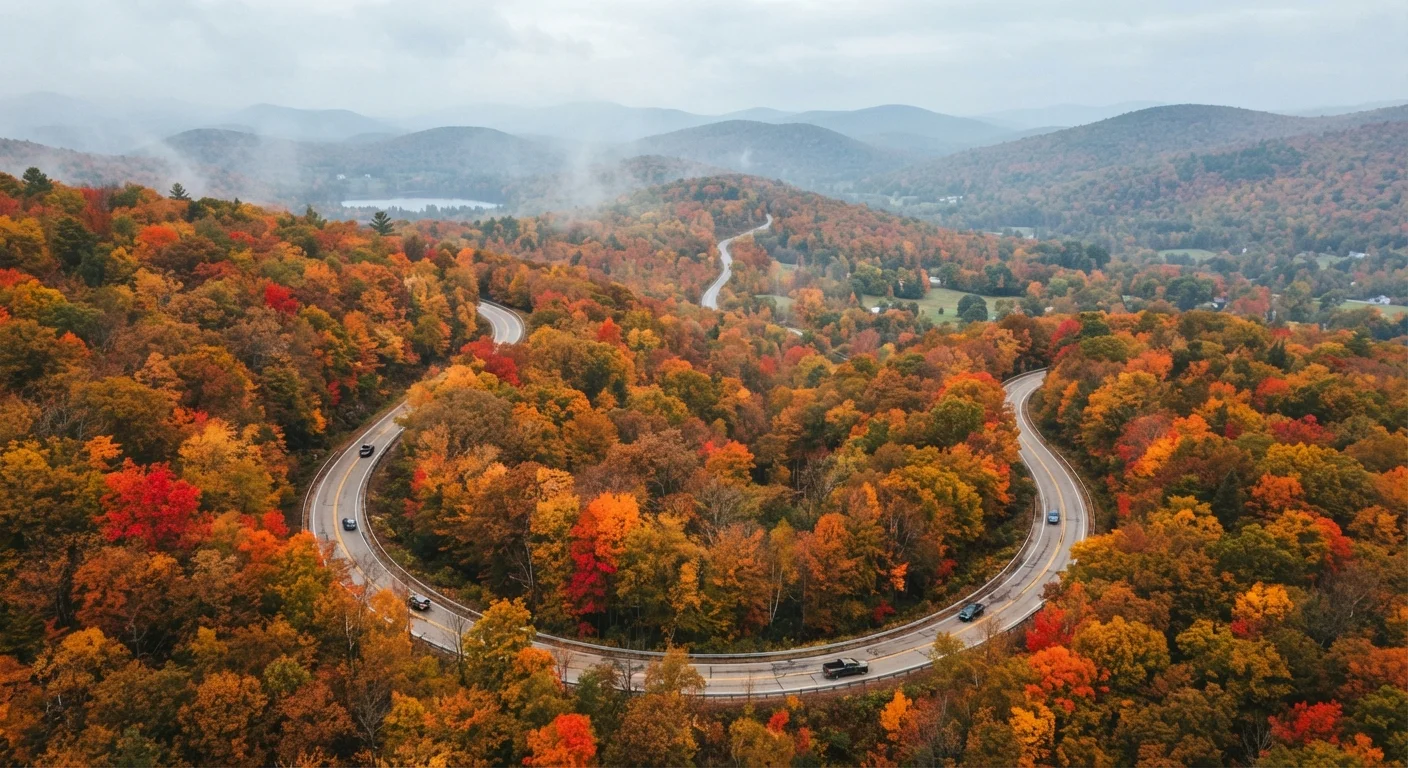
How Foliage Timing Differs Across New England
New England's six states don't change color all at once. The fall foliage season sweeps from north to south and from high elevation to low valley over the course of roughly six weeks. Understanding this progression is the most useful planning tool a traveler can have.
| Peak season window (region-wide) | Mid-September through late October (Based on historical foliage tracking data from state tourism agencies) |
| Earliest peak state | Maine (northern regions peak late September) |
| Latest peak state | Connecticut (color often peaks mid-to-late October) |
| Primary color drivers | Sugar maple, red maple, birch, beech, and oak (Common foliage species across New England) |
| Key factor affecting timing | Elevation gain - higher terrain peaks 1-2 weeks earlier |
| Best conditions for vivid color | Warm sunny days, cool (not freezing) nights, adequate summer moisture (Widely cited by foliage researchers and state forestry departments) |
Northern Maine's interior forests typically show the first significant color in mid-September, while coastal Connecticut may not reach peak until the third week of October. This stagger means a well-timed road trip can effectively chase peak color south across the region over two to three weekends.
Elevation plays an equally important role. A hiker at the summit of Vermont's Mount Mansfield may see peak color two full weeks before the farmlands at its base. Keep this in mind when choosing between mountain drives and valley routes - both offer spectacular foliage, just at different moments in the season.
State-by-State Foliage Breakdown
Maine
Maine's vast interior - particularly Aroostook County, Baxter State Park, and the Rangeley Lakes region - peaks earliest, typically between September 20 and October 5. The state's enormous sugar maple and birch forests produce deep reds and clear yellows. Coastal areas around Acadia National Park peak slightly later, often early to mid-October, with the added visual bonus of ocean backdrops framing the color. Roads can become congested near Acadia on peak weekends; mid-week visits or early morning starts help significantly.
New Hampshire
The White Mountains are New Hampshire's foliage centerpiece. High-elevation routes - including the Kancamagus Highway, one of the country's most scenic fall drives - typically peak from late September into early October. The Lakes Region and southern NH follow one to two weeks later. Color here skews toward brilliant oranges and scarlet reds from dense sugar maple stands.
Vermont
Vermont is perhaps the most iconic foliage destination in the country, and for good reason. The Northeast Kingdom in the state's northeastern corner peaks in late September; the Mad River Valley and Champlain Valley reach peak in early-to-mid October. Vermont's rolling pastoral landscape - farmhouses, church steeples, covered bridges - frames the color in a way that feels distinctly composed. Expect heavy traffic on Route 100 on peak weekends.
Massachusetts
The Berkshires in western Massachusetts mirror Vermont's timing, typically peaking in early to mid-October. Central and eastern MA - including the Pioneer Valley and Greater Boston's suburbs - follow in mid-to-late October. The Charles River Basin and North Shore can offer surprisingly vivid color without the drive times required for mountain destinations.
Rhode Island & Connecticut
Both states are often overlooked for foliage but offer genuinely lovely color in a more compact format. Rhode Island's forests peak between mid and late October, with the Blackstone Valley and Arcadia Management Area offering accessible woodland walks. Connecticut's Litchfield Hills and the Quiet Corner reach peak from mid-to-late October, with rolling farmland and classic New England village greens providing scenic context that rivals any northern destination.
Foliage Forecasts Are Estimates, Not Guarantees
State foliage trackers and apps provide weekly updates based on field observations, but exact peak timing shifts year to year depending on temperature swings, drought, and storm events. Always check a current foliage report - from sources like your state's tourism office or university extension programs - within a week of your trip. Booking accommodations with flexible cancellation policies gives you room to adjust timing if conditions shift.
What Affects Color Quality - and What to Realistically Expect
Foliage color intensity isn't guaranteed. The vividness of any given fall depends on summer precipitation levels, the timing of the first hard frost, and whether early storms strip leaves before peak. A dry summer can dull color; an early hard freeze can kill leaves before they fully turn.
~$3 billion
Annual fall tourism revenue across New England
Foliage season is one of the most economically significant tourism periods in the northeastern United States, according to regional tourism studies.
1-2 weeks
Typical peak foliage window per location
Most individual locations experience their most vivid color concentration for a brief period before leaves begin to drop.
3,000+ feet
Elevation of New Hampshire's Presidential Range
High-elevation areas like the White Mountains see color change two to three weeks before valley towns at comparable latitudes.
In a typical year, sugar maples produce the most vivid scarlet and orange tones. Birches contribute clear butter-yellow. Oaks turn russet and bronze later in the season and hold their leaves longest, extending the visual window into November in southern New England. Even in a mediocre foliage year, the region's combination of forest density, rural architecture, and terrain makes fall travel worthwhile.
Travelers should also plan for crowds. Popular corridors - the Kancamagus Highway, Route 100 in Vermont, and Route 7 through the Berkshires - see heavy traffic on peak-color weekends. A midweek visit, or a willingness to explore secondary roads and lesser-known state forests, often yields a more relaxed and equally scenic experience.