Why Monsoon Patterns Differ So Much Across the Region
Southeast Asia spans over 3,000 miles from Myanmar in the northwest to the eastern Philippines - a geographic range that means no single weather pattern governs the entire region. Two primary monsoon systems take turns dominating different coastlines and mainland areas throughout the year.
The Southwest Monsoon sweeps in from the Indian Ocean between May and October, drenching Thailand's Gulf coast, Myanmar, Laos, Cambodia, and western Malaysia. The Northeast Monsoon takes over from November to February, pushing rain onto Vietnam's central and southern coasts, the eastern Philippines, and eastern Malaysia. This seasonal alternation is precisely why savvy travelers can almost always find a dry pocket somewhere in the region, regardless of the month.
Monsoon Timing Is Shifting Slightly
Climate patterns influence monsoon onset and duration year to year, meaning historical averages are useful guides but not guarantees. Meteorological agencies in each country - such as Thailand's Thai Meteorological Department or Vietnam's National Centre for Hydro-Meteorological Forecasting - publish seasonal outlooks worth consulting before travel.
Country-by-Country Breakdown: What Wet Season Actually Looks Like
Thailand - The Gulf of Thailand's eastern coast (Koh Samui, Koh Phangan) peaks in rain from October to December, while the Andaman Sea side (Phuket, Krabi) is wettest from May to October. Bangkok receives heavy rains from June through September but rarely floods unless storms are severe. Mornings typically remain clear enough for temple visits even mid-monsoon.
Vietnam - Vietnam's elongated shape creates dramatically different weather zones simultaneously. When Hanoi and the north are dry and cool (October-April), Ho Chi Minh City and the south may be in their wet season. Central Vietnam around Hoi An and Da Nang is driest in February through August, but takes the hardest hit from the Northeast Monsoon October-December.
Bali & Indonesia - Bali's dry season runs June through September - peak travel season for good reason. Java and Sumatra follow a similar pattern, though the vast archipelago creates microclimates. The wet season brings daily tropical downpours, but even December and January have stretches of sunny mornings.
Philippines - The Philippines' typhoon corridor makes rainy season planning especially important. The western side (Palawan, Coron) is best visited November through May. The eastern Visayas (Siargao, Leyte) experience less typhoon exposure and can be pleasant year-round, though November through January brings the Northeast Monsoon.
Cambodia & Laos - Both countries follow a straightforward May-October wet season. In Cambodia, the Mekong and Tonlé Sap lake swell dramatically, which creates stunning scenery around Angkor Wat - temples reflected in flooded plains - but road access to some remote sites becomes difficult. Laos similarly becomes lush and green, with waterfalls at their most spectacular.
Myanmar - The Southwest Monsoon hits hard from June to September. Inle Lake and Bagan become humid and muddy, though tourist infrastructure handles it reasonably well. Coastal areas like Ngapali Beach close entirely during peak wet months.
~11 ft
Tonlé Sap Lake water level rise during monsoon
Cambodia's Tonlé Sap lake can rise from roughly 3 feet to over 11 feet in depth during peak wet season, temporarily tripling in surface area.
20+
Typhoons that can affect the Philippines annually
The Philippines experiences an average of 20 or more tropical cyclones per year, according to the Philippine Atmospheric, Geophysical and Astronomical Services Administration (PAGASA).
6-7 months
Duration of Thailand's Andaman coast wet season
The Andaman Sea side of Thailand - including Phuket and Krabi - experiences its heaviest monsoon rainfall from May through October, roughly half the year.
How to Use the Rainy Season to Your Advantage
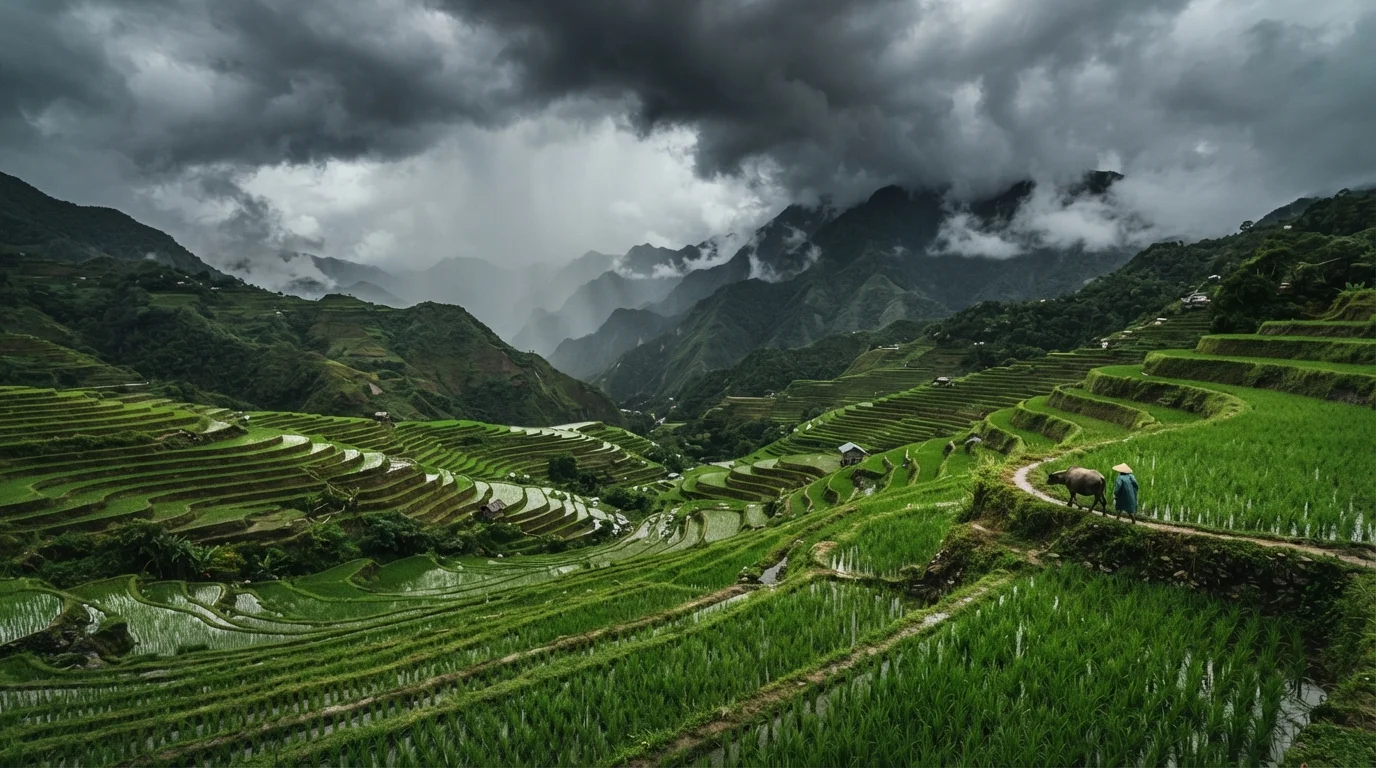
Many experienced travelers deliberately plan trips around shoulder or low season precisely because rain can be a feature rather than a flaw. Waterfalls run at full power, rice paddies glow brilliant green, and popular sites like Angkor Wat and Bali's rice terraces reach their photographic peak during or just after the rains.
Practically speaking, afternoon showers in Thailand or Bali rarely derail a full day of plans - mornings are typically clear, and rain usually subsides by early evening. Packing a compact rain jacket, choosing accommodations with covered outdoor areas, and front-loading outdoor activities in the morning are simple ways to minimize disruption.
Time Outdoor Activities for the Morning
In most of Southeast Asia during the wet season, rain arrives most reliably in the mid-to-late afternoon. Scheduling hikes, temple visits, and outdoor excursions before noon dramatically increases the chance of clear skies. Save meals, museums, and shopping for afternoon downpours - they're the perfect activity buffer.
For travelers concerned about flooding or severe weather, Cambodia's flat terrain around Siem Reap and Vietnam's coastal lowlands carry more real flood risk during peak monsoon than highland destinations like Chiang Mai or Dalat, which tend to drain quickly due to elevation.
Travel conditions, entry requirements, and weather patterns can change. Always verify current information through official government travel advisories and local tourism boards before making bookings.