
Why Good Intentions Can Backfire
Most stress-related behaviors that make things worse aren't reckless - they're logical-seeming responses that feel helpful in the moment. The problem is that stress distorts our judgment about what actually works, making counterproductive habits feel like sensible coping strategies.
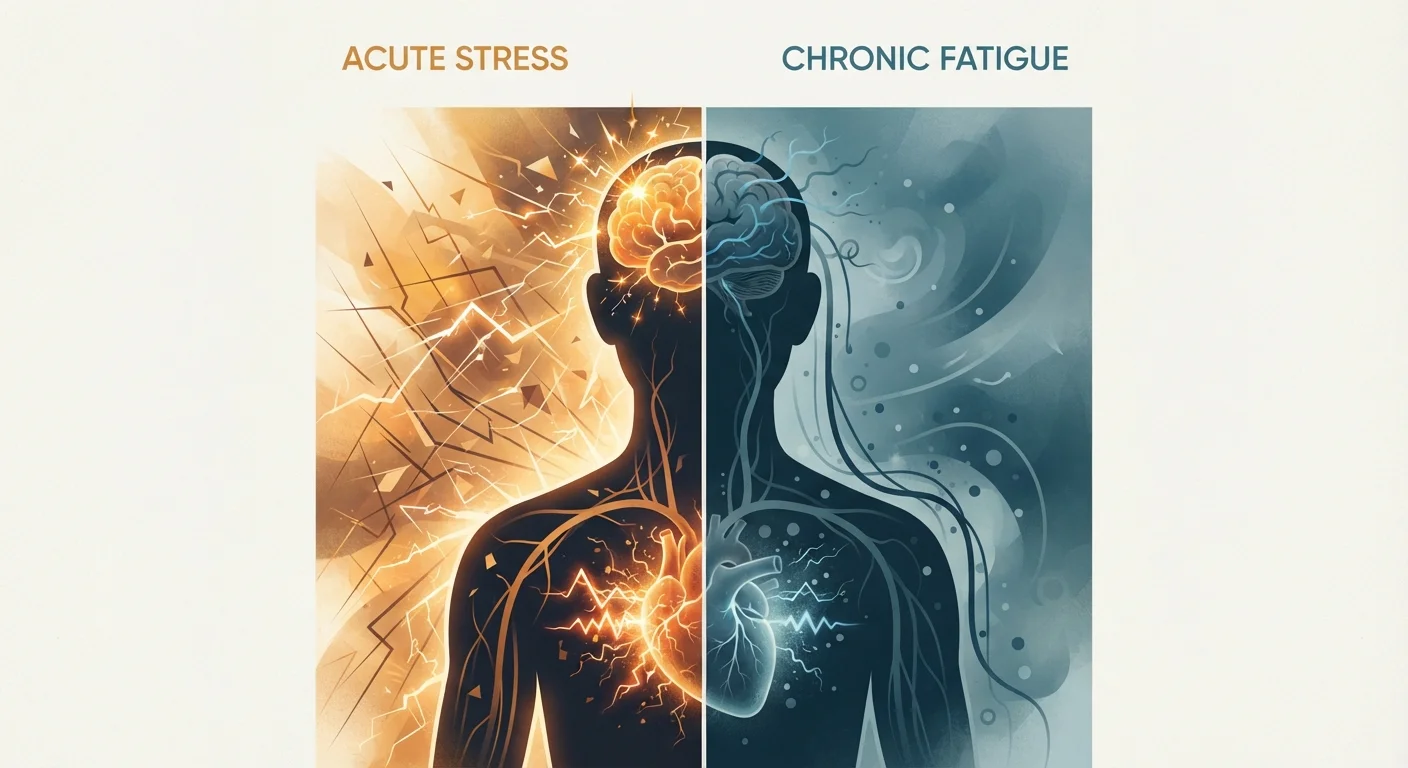
Understanding what stress actually does to your body and mind helps explain why: the same physiological response designed to protect you in short bursts can, when chronically triggered, narrow the mental bandwidth needed to assess your own coping strategies clearly.
The mistakes below are common, understandable - and worth reconsidering.
Venting about stress repeatedly without working toward resolution.
Why it happens: Talking about problems feels productive and emotionally validating, so it's easy to assume more venting equals more relief.
Sacrificing sleep to manage a heavy workload or pressing responsibilities.
Why it happens: When time feels scarce, sleep is often treated as a luxury rather than a biological need, making it the first thing cut from the schedule.
Avoiding or procrastinating on the source of stress rather than addressing it.
Why it happens: Avoidance provides immediate short-term relief, which reinforces the behavior even when it causes longer-term problems.
Using caffeine to compensate for fatigue caused by stress.
Why it happens: Caffeine offers a readily available energy boost, and its connection to the body's stress hormones is not widely understood.
Expecting willpower alone to manage stress without changing underlying conditions.
Why it happens: Cultural messaging often frames stress management as a matter of mindset or mental toughness, minimizing the role of environment and habits.
Patterns Worth Examining More Closely
Beyond the specific mistakes above, several broader patterns deserve attention. One is the tendency to treat stress management as purely internal - something to resolve through thinking harder or feeling differently. In reality, external factors like social support, workload structure, and physical environment play a significant role. Research on meditation and stress illustrates this well: while mindfulness practices have real benefits, they work best as one part of a broader approach, not a standalone fix.
Another overlooked pattern is the role of low-level, chronic stressors - inbox overload, cluttered living spaces, unresolved interpersonal friction - that individually seem trivial but accumulate. Interestingly, some of the same cognitive habits that lead to disorganized environments can mirror those that amplify stress; the myths that make homes harder to manage often reflect the same all-or-nothing thinking that makes stress management harder, too.
This Is Information, Not Medical Advice
The content in this article is general health education and is not a substitute for professional mental health care. If stress is significantly affecting your daily life, relationships, or physical health, please consult a qualified healthcare provider. Do not delay or avoid seeking professional support based on what you read here.
If you notice that stress feels persistent, out of proportion, or is affecting your sleep, relationships, or ability to function, those may be signs worth paying attention to. Signs that stress has become something worth addressing offers a clear look at which patterns signal it's time to seek professional support rather than continue adjusting strategies on your own.
This article is for general informational purposes only and does not constitute medical or mental health advice. Please consult a qualified healthcare professional for guidance specific to your situation.