
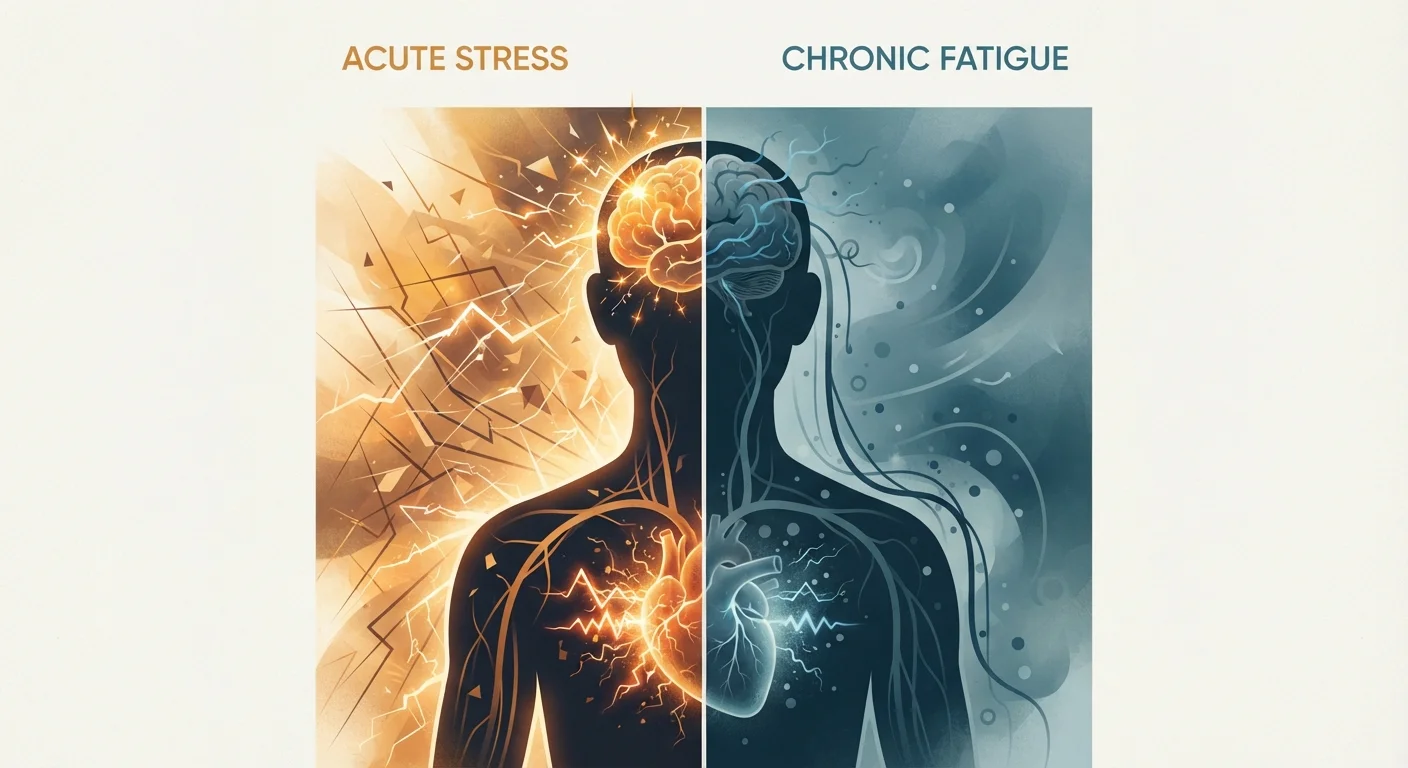
The Biology Behind the Stress Response
When your brain perceives a threat - whether physical danger or a looming deadline - it triggers the fight-or-flight response. The hypothalamus signals the adrenal glands to release adrenaline and, shortly after, cortisol. Heart rate rises, breathing quickens, muscles tense, and digestion slows. These changes are designed to help you act fast.
In short bursts, this system is adaptive. Problems emerge when it stays switched on. Persistent cortisol elevation disrupts sleep architecture, suppresses immune function, raises blood pressure, and impairs the gut's ability to absorb nutrients properly.
77%
Adults reporting physical stress symptoms
According to the American Psychological Association's Stress in America survey, a large majority of US adults regularly experience physical symptoms they attribute to stress.
2-3×
Elevated cardiovascular risk under chronic stress
Studies published in cardiology literature suggest that individuals with high chronic stress levels face meaningfully elevated risk of major cardiovascular events compared to low-stress counterparts.
~50%
Of immune response suppressed by cortisol
Research in psychoneuroimmunology indicates that sustained cortisol elevation can significantly blunt natural killer cell activity, a key component of immune defense.
What Chronic Stress Does to Your Brain
Sustained stress physically alters brain structure. Research using neuroimaging has documented that prolonged stress can reduce gray matter volume in the prefrontal cortex - the region responsible for planning, decision-making, and emotional regulation. At the same time, the amygdala (the brain's alarm system) can become hyperactive, making people more prone to anxiety and emotional reactivity.
Cortisol also interferes with the hippocampus, the area central to memory formation. This is why chronic stress is often associated with forgetfulness, difficulty concentrating, and a sense of mental fog. The effects are real and measurable, not just subjective feelings.
“The brain under chronic stress is not just a stressed brain - it is a structurally altered brain. Understanding this helps explain why willpower alone rarely resolves the effects of prolonged stress.”
— Robert Sapolsky, Neuroendocrinologist and author of 'Why Zebras Don't Get Ulcers'
If you're noticing cognitive or emotional changes that seem tied to sustained pressure, these warning signs may help clarify when stress has crossed into something worth addressing more formally.
How Stress Ripples Through the Rest of the Body
Stress doesn't stay in the brain. Its effects reach nearly every organ system:
- Cardiovascular: Elevated heart rate and blood pressure over time increase wear on arterial walls. Chronic stress is recognized as a contributing factor to heart disease risk.
- Immune: Cortisol is anti-inflammatory in the short term, but prolonged elevation suppresses immune surveillance, making the body more susceptible to illness.
- Digestive: The gut-brain axis means stress can accelerate or slow digestion, worsen conditions like irritable bowel syndrome, and alter the gut microbiome.
- Sleep: Elevated evening cortisol disrupts the natural hormone rhythm that initiates sleep, creating a damaging cycle - stressed people sleep poorly, and poor sleep heightens stress reactivity. The relationship between sleep and mental health runs in both directions.
Simple, Evidence-Informed Steps Worth Considering
Understanding what stress does is the first step toward managing it more effectively. General health guidance - not individualized prescriptions - points toward several well-studied approaches:
Start With Awareness, Not Overhaul
You don't need to restructure your life overnight. Simply tracking when stress peaks - time of day, triggers, physical sensations - builds the self-awareness that makes other interventions more effective. A brief daily note in a journal or phone app is enough to start identifying patterns.
Physical movement is one of the most consistently supported tools. It reduces cortisol over time and promotes neuroplasticity. What's actually happening in the brain during exercise goes deeper than the popular "endorphin" explanation.
Mindfulness-based practices have a growing evidence base. What the research actually says about meditation separates well-supported findings from overstatement.
Social connection is also a meaningful buffer. Isolation amplifies stress reactivity, while strong relationships appear protective - the costs of isolation extend well beyond mood alone. It's also worth examining whether any habitual coping strategies are quietly making things worse; some common instincts backfire more than people expect.
This article is for general informational purposes only and is not a substitute for professional medical advice, diagnosis, or treatment. If you are experiencing significant or persistent stress symptoms, please consult a qualified healthcare provider.