Why Most Americans Fall Short on Fiber
Despite fiber being one of the most studied and consistently beneficial components of a healthy diet, most Americans fall well short of recommended intake levels. Research from the USDA and national dietary surveys consistently shows average daily consumption hovering around 15 grams - roughly half of what general guidelines recommend for adults.
The gap isn't mysterious. The modern American diet leans heavily on ultra-processed foods - white bread, packaged snacks, fast food - which have had most of their naturally occurring fiber stripped away during manufacturing. Fiber-rich foods like whole grains, beans, and vegetables have steadily given way to more refined options on plates across the country.
This shortfall matters more than many people realize. Fiber is one of those nutrients that quietly does a lot of work - and its absence tends to show up not as a dramatic deficiency, but as a slow accumulation of digestive discomfort, blood sugar swings, and elevated cardiovascular risk over time. It's also one of the nutrients frequently under-consumed in the US diet alongside potassium and vitamin D.
~15g
Average daily fiber intake for US adults
According to USDA dietary data, most Americans consume roughly 15 grams of fiber per day - about half the recommended amount for adults.
25-38g
Recommended daily fiber intake for adults
The Institute of Medicine recommends 25 grams per day for adult women and 38 grams per day for adult men based on calorie intake research.
95%
Americans falling short of fiber recommendations
Nutrition researchers estimate that approximately 95% of Americans do not meet recommended daily fiber intake levels, making it one of the most widespread dietary shortfalls.
Soluble vs. Insoluble: Two Types, Two Jobs
Not all fiber behaves the same way in your body. The two main categories - soluble and insoluble - each serve distinct purposes, and a well-rounded diet ideally supplies both.
Soluble Fiber
Soluble fiber dissolves in water and forms a thick, gel-like substance as it moves through the digestive tract. This gel slows the absorption of sugar into the bloodstream, which helps moderate blood glucose levels after meals. It also binds to cholesterol-containing bile acids in the gut, helping the body excrete them rather than reabsorb them - a mechanism associated with lower LDL ("bad") cholesterol levels over time.
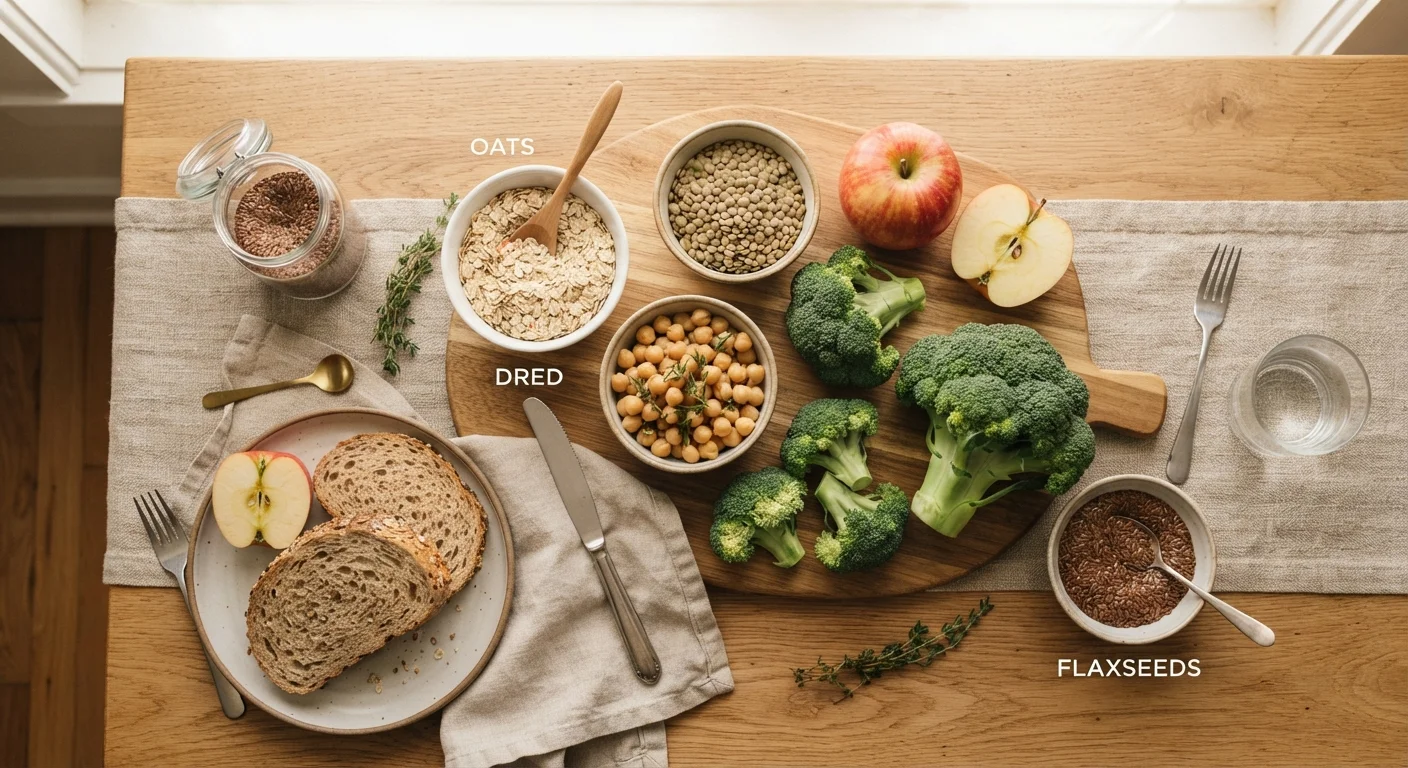
Good sources of soluble fiber include oats, barley, apples, citrus fruits, carrots, and legumes such as lentils and black beans.
Insoluble Fiber
Insoluble fiber does not dissolve in water. Instead, it adds bulk and weight to stool and speeds up its passage through the colon. This is the type most commonly associated with preventing constipation and supporting regularity. It also plays a role in gut health by reducing the time potentially harmful substances spend in contact with the intestinal wall.
Whole wheat products, bran, nuts, and many vegetables - including broccoli, cauliflower, and green beans - are rich in insoluble fiber.
Increase Fiber Gradually to Avoid Discomfort
If your current diet is low in fiber, adding large amounts quickly can cause bloating, gas, and cramping as your digestive system adjusts. A gradual approach - adding one or two high-fiber foods per week - gives your gut microbiome time to adapt. Drinking plenty of water alongside fiber-rich foods also helps keep things moving comfortably.
The Health Benefits Backed by Evidence
Fiber's benefits extend beyond digestive comfort. A substantial body of research links higher dietary fiber intake to several meaningful health outcomes - though it's worth understanding these as population-level associations rather than guaranteed individual effects.
- Heart health: Higher fiber diets, particularly those rich in soluble fiber from oats and legumes, have been associated with lower LDL cholesterol levels in multiple studies reviewed by health authorities including the American Heart Association.
- Blood sugar regulation: Soluble fiber slows carbohydrate digestion, which can help moderate post-meal blood glucose rises - a factor relevant both for people managing blood sugar and for general metabolic health.
- Digestive regularity: Insoluble fiber reduces constipation by adding bulk to stool and accelerating transit time through the colon.
- Gut microbiome support: Fermentable fibers feed beneficial gut bacteria, which produce short-chain fatty acids that support colon lining health and immune function.
- Weight management: High-fiber foods tend to be more filling, which can help with satiety - though fiber is not a weight-loss solution on its own.
“Dietary fiber is one of the most consistent findings in nutrition science - populations that eat more fiber from whole plant foods tend to have better long-term health outcomes across a wide range of conditions.”
— Walter Willett, Professor of Epidemiology and Nutrition, Harvard T.H. Chan School of Public Health
It's worth noting that much of the research on fiber's benefits comes from observational studies, which identify associations rather than direct cause-and-effect. Still, the consistent pattern across decades of nutrition research makes fiber one of the better-supported dietary recommendations available. Learn more about separating nutrition evidence from myth to put these findings in context.
Practical Ways to Get More Fiber From Food
Boosting fiber intake doesn't require a dramatic diet overhaul. Small, consistent substitutions add up quickly - and they tend to stick because they're built around real, satisfying foods rather than supplements or restrictive rules.
Start with Breakfast
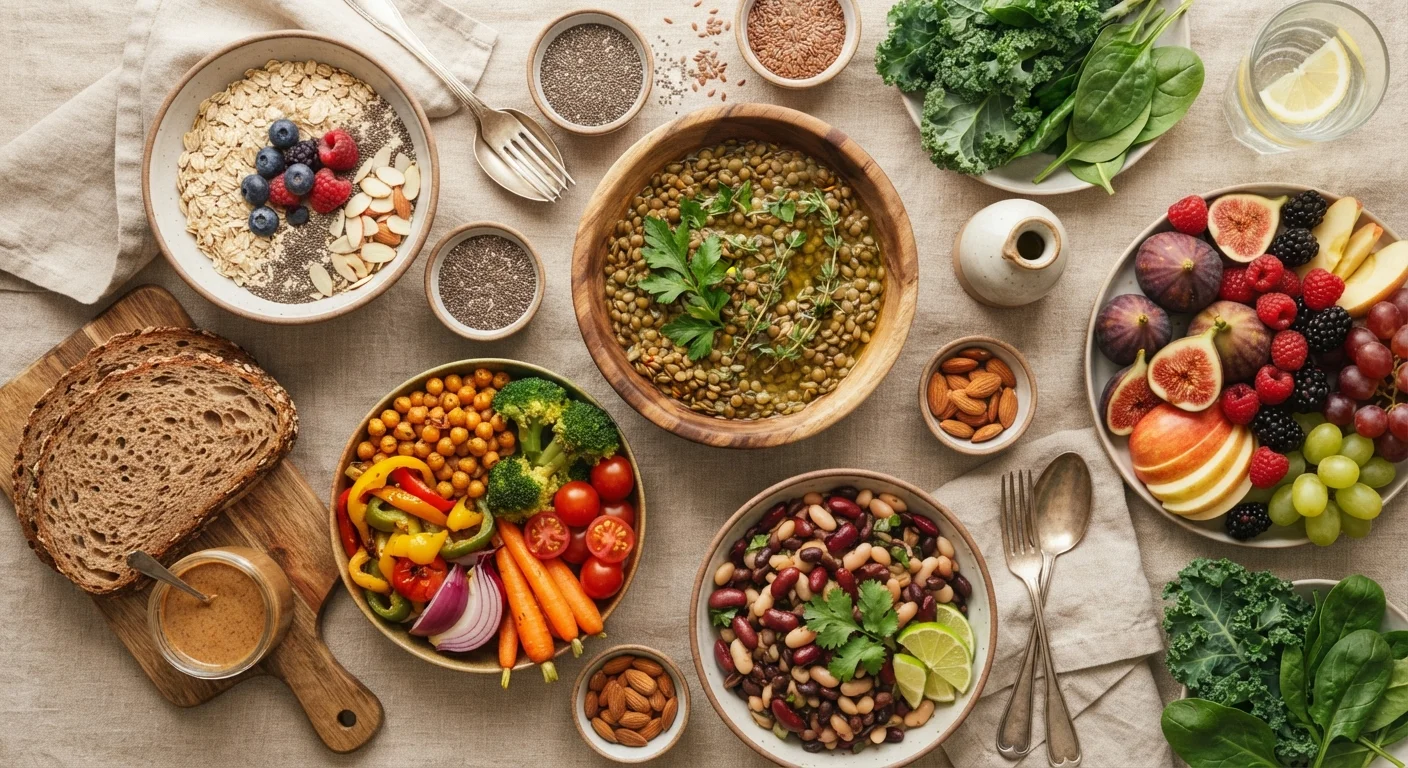
Swapping refined breakfast cereals or white-flour pastries for rolled oats, bran-based cereals, or whole-grain toast is one of the fastest ways to increase daily fiber. Topping oatmeal with berries or sliced banana adds another 2-4 grams without much effort.
Make Legumes a Habit
Lentils and beans are among the most fiber-dense foods available - a half-cup of cooked lentils provides roughly 8 grams of fiber. Adding them to soups, grain bowls, or salads a few times a week makes a measurable difference.
Choose Whole Grains Over Refined
When shopping for bread, pasta, or rice, look for products where a whole grain is listed as the first ingredient. Refined grains have the bran and germ removed - along with most of their fiber content.
Keep Skins On Where Possible
Much of the fiber in apples, potatoes, cucumbers, and pears sits in or near the skin. Keeping skins on when cooking or eating raw preserves this fiber and often adds flavor too.
What About Fiber Supplements?
Fiber supplements such as psyllium husk are commonly available and can help some people meet their intake goals. However, most nutrition authorities recommend getting fiber from whole foods where possible, because food sources come bundled with vitamins, minerals, and phytonutrients that supplements don't provide. If you're considering a supplement, it's worth discussing with a healthcare provider or registered dietitian first.
For additional context on how fiber fits into the broader landscape of nutrient gaps in the American diet, the practical guide to eating more fiber offers actionable steps worth exploring.
This article is for general informational and educational purposes only and is not a substitute for advice from a qualified healthcare professional or registered dietitian. Individual dietary needs vary - consult a professional for guidance specific to your health situation.