
Why Diet Advice Seems to Contradict Itself
One week, fat is the enemy. The next, carbohydrates are to blame. Keto devotees eat butter and bacon; plant-based advocates call animal products harmful. Low-fat guidelines dominated for decades, then gave way to high-fat, low-carb movements. For everyday Americans trying to eat well, the noise can feel overwhelming.
The confusion is partly structural. Diet research is genuinely hard to conduct. Long-term randomized controlled trials on food are expensive, difficult to blind, and prone to self-reporting errors. Short-term studies in specific populations get amplified into universal dietary laws, and social media accelerates the cycle. What looks like scientific chaos is often a mix of preliminary findings, ideological framing, and selective interpretation of real data.
The good news: beneath the surface disagreements, a surprising amount of consensus exists. For a broader look at how eating patterns compare on the evidence, see how major eating patterns compare.
Common Myths - and What the Evidence Actually Shows
The most persistent diet conflicts often stem from oversimplification. Here are the most widespread misconceptions - and what research supports instead.
Myth
One diet is scientifically proven to be the best for everyone.
Fact
No single dietary pattern has been shown to be universally optimal across all populations and health goals.
Large reviews of diet research consistently find that multiple eating patterns - Mediterranean, plant-based, low-carb - can support health outcomes. Individual variation in genetics, gut microbiome composition, activity level, and underlying health status means responses to the same diet can differ significantly between people. The research supports finding a sustainable, whole-food-based pattern that works for the individual, not a universal prescription.
Myth
Carbohydrates are inherently fattening and should be minimized.
Fact
Carbohydrate quality matters far more than quantity; whole-food carbohydrates are associated with positive health outcomes.
The low-carb movement conflates refined carbohydrates (white bread, sugary drinks) with carbohydrates broadly. Yet populations that derive the majority of their calories from whole grains, legumes, and vegetables - such as those in traditional Japanese or Mediterranean diets - show low rates of obesity and metabolic disease. Fiber-rich carbohydrates feed beneficial gut bacteria, support blood sugar regulation, and are linked to reduced cardiovascular risk. The issue is processing and added sugar, not carbohydrates as a category. For more on this, see nutrition myths that keep circulating.
Myth
Eating fat makes you fat and raises your heart disease risk.
Fact
Dietary fat type matters greatly; unsaturated fats are associated with reduced cardiovascular risk.
The low-fat guidelines popularized in the 1980s led many Americans to replace fat with refined carbohydrates - a substitution that research later suggested worsened metabolic outcomes for many. Current evidence distinguishes clearly between fat types: unsaturated fats (from nuts, olive oil, fatty fish, and avocados) are associated with cardiovascular benefit, while trans fats are harmful. Saturated fat remains a nuanced area with ongoing research. Blanket fat avoidance is not supported by the current body of evidence.
Myth
A detox or cleanse diet is necessary to 'reset' the body.
Fact
The liver and kidneys continuously perform detoxification; no diet or supplement product has been shown to enhance this process.
The concept of dietary detoxification lacks a credible biological mechanism. The human body maintains dedicated detox systems in the liver, kidneys, lymphatic system, and skin that operate continuously. Commercial cleanse products and juice fasts are not supported by clinical evidence as means of removing toxins or 'resetting' metabolism. What they may do is reduce overall calorie intake temporarily - an effect achievable without expensive products or extreme restriction.
Myth
Intermittent fasting is a proven superior method for weight loss compared to regular calorie reduction.
Fact
Research shows intermittent fasting produces similar results to continuous calorie restriction for most people when calories are matched.
Several well-designed trials comparing intermittent fasting to continuous calorie restriction find comparable outcomes in weight loss and metabolic markers when total caloric intake is equivalent. Intermittent fasting works for some people because it simplifies eating decisions and naturally reduces intake - not because of unique metabolic superiority. It is not suitable for everyone; people with certain conditions, histories of disordered eating, or specific medication schedules should consult a clinician before starting. What the evidence says about intermittent fasting covers this in greater depth.
What the Research Actually Agrees On
57%
of US adults' calories from ultra-processed foods
A study published in BMJ Open estimated that ultra-processed foods account for more than half of daily caloric intake for the average American adult.
30+
countries where Mediterranean diet shows benefits
Large-scale studies including the PREDIMED trial found the Mediterranean dietary pattern associated with reduced cardiovascular events across diverse populations.
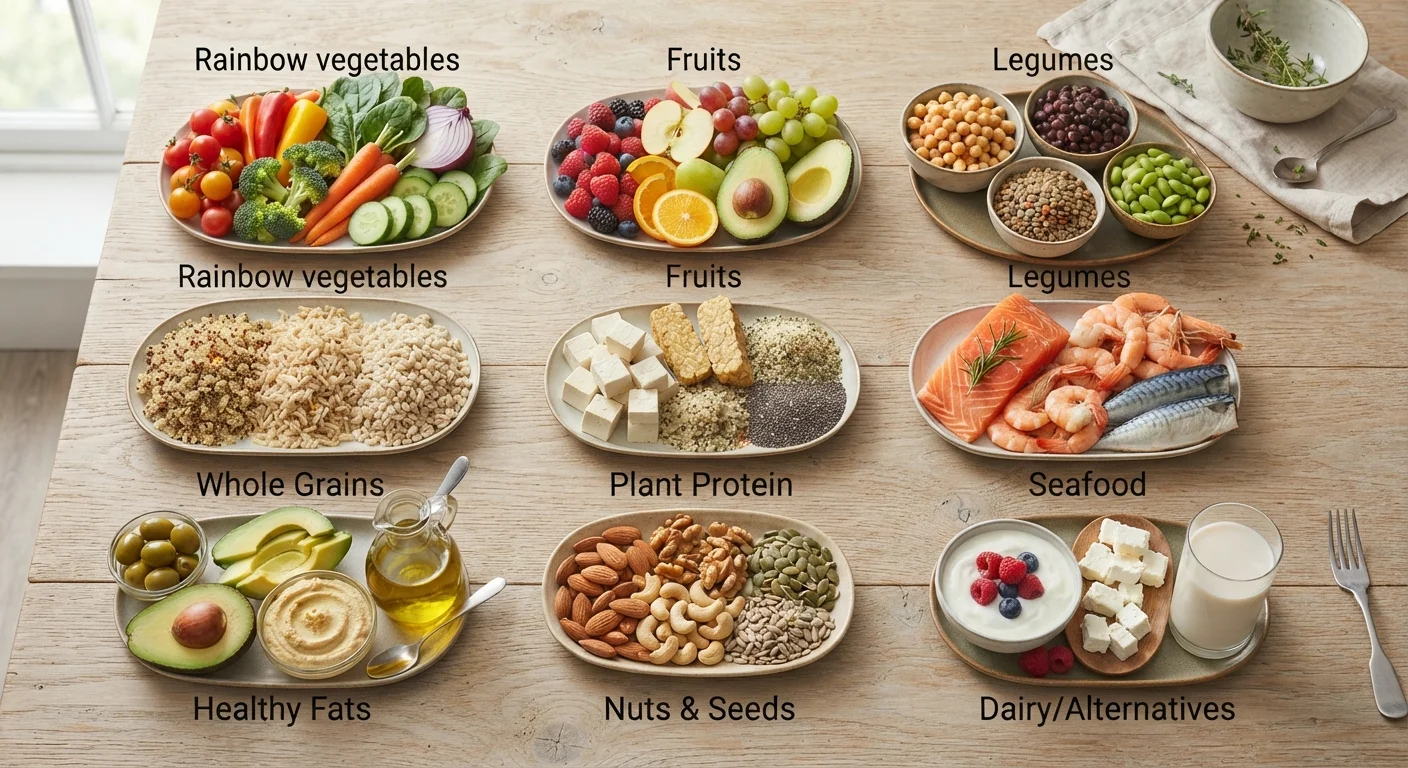
Despite headline clashes, nutrition researchers tend to converge on a consistent set of principles. Diets built around vegetables, legumes, whole grains, and lean or plant-based proteins consistently show benefits across large observational studies - regardless of whether they're labeled Mediterranean, plant-based, or flexitarian.
Ultra-processed foods - those engineered for palatability using additives, refined starches, and excess sodium - are associated with poorer health outcomes across multiple study designs. That finding holds whether the diet is low-carb or low-fat in orientation.
Sustainability matters more than perfection. A dietary pattern someone can maintain over years produces better outcomes than a technically superior one abandoned after two months. Persistent nutrition myths often survive precisely because they promise quick results rather than durable change.
Extreme Restriction Carries Real Risks
Highly restrictive diets - those eliminating entire food groups without clinical oversight - can lead to nutrient deficiencies, disordered eating patterns, and unsustainable cycles of restriction and rebound. Anyone considering a dramatic dietary change, particularly those with a history of eating disorders, diabetes, or kidney disease, should do so under the guidance of a registered dietitian or physician.
This article is for general informational and educational purposes only and is not a substitute for professional medical or dietary advice. Consult a qualified healthcare provider or registered dietitian before making significant changes to your diet, especially if you have a chronic condition, are pregnant, or are managing a specific health goal.