
Why Nutrition Myths Are So Persistent
Nutrition advice changes constantly - or so it seems. In reality, the core findings of nutrition science are fairly stable. What shifts are the headlines, the influencer takes, and the marketing claims layered on top of genuine research. The result is a landscape where myths travel faster than corrections.
This article examines some of the most widely repeated nutrition claims and measures them against what established research actually supports. For a broader look at how eating patterns compare, see evidence on popular dietary approaches. And if fitness claims give you the same headache, our fitness myth fact-check covers that ground too.
This content is general health information and education, not medical advice. Consult a qualified healthcare professional for guidance specific to your health situation.
Myth
Carbs make you fat, so cutting them out is the key to losing weight.
Fact
Weight change is driven by overall energy balance, not any single macronutrient. Carbohydrates themselves are not uniquely fattening.
The idea that carbohydrates are the primary cause of weight gain became popular with low-carb diet movements, but the science doesn't support carbs as uniquely fattening. Research published across multiple controlled trials shows that when calorie intake is matched, low-carb and low-fat diets produce similar long-term weight outcomes. What matters more is the quality and quantity of food consumed overall. Whole-food carbohydrate sources - legumes, whole grains, vegetables - carry fiber, vitamins, and minerals that support health. Cutting all carbs often means cutting these too.
Myth
Eating fat clogs your arteries and causes heart disease.
Fact
The relationship between dietary fat and cardiovascular risk depends heavily on the type of fat - not fat consumption in general.
Decades of research have refined the early blanket warnings about dietary fat. Current evidence, including large prospective studies, distinguishes clearly between fat types. Saturated and trans fats - found in processed foods and some animal products - are associated with elevated LDL cholesterol and cardiovascular risk. Unsaturated fats - found in olive oil, nuts, avocados, and fatty fish - are associated with improved cardiovascular markers. Replacing saturated fat with refined carbohydrates, which happened widely during the low-fat era, did not produce the expected health benefits. Fat type, not fat itself, is what matters.
Myth
You need to do a detox or cleanse to remove toxins from your body.
Fact
The liver, kidneys, and other organs continuously filter and eliminate waste. No commercial cleanse accelerates or improves this process.
The detox industry relies on a vague and scientifically unsupported premise: that toxins accumulate in the body and require special products to purge. In reality, the liver and kidneys are highly effective filtration systems operating continuously. When researchers and regulatory bodies have examined commercial detox products, the claimed mechanisms don't hold up, and the products themselves are generally unregulated. If you are concerned about exposure to a specific substance, that is a conversation for a healthcare provider - not a juice cleanse. Supporting your body's natural filtration means adequate hydration, not smoking, limiting alcohol, and eating a varied whole-food diet.
Myth
Eating many small meals throughout the day revs up your metabolism.
Fact
Meal frequency has minimal impact on metabolic rate. Total daily calorie and nutrient intake matters far more than how meals are distributed.
The idea that eating every two to three hours 'keeps the metabolic fire burning' is a persistent fitness and nutrition trope. Controlled studies examining meal frequency find that metabolic rate does not meaningfully differ between eating three meals versus six meals when total calorie intake is held constant. The thermic effect of food - the energy used to digest and process meals - is proportional to what you eat, not how often you eat it. Meal timing and frequency can matter for appetite regulation and energy levels in some individuals, but these are personal factors, not universal metabolic levers.
Myth
Organic food is significantly more nutritious than conventionally grown produce.
Fact
Current evidence does not consistently show meaningful nutritional differences between organic and conventionally grown foods.
Organic farming practices differ from conventional ones in terms of pesticide use and certain agricultural methods, but nutrient content is influenced by many factors - soil quality, variety, ripeness at harvest, and storage - that cut across both categories. Systematic reviews, including a widely cited Stanford analysis, found no strong evidence that organic foods deliver substantially higher nutrient levels. Consuming more fruits and vegetables, regardless of whether they are organic or conventional, is consistently associated with better health outcomes. If organic aligns with your environmental or personal values, that is a reasonable choice - but it should not be framed as a nutritional requirement.
What the Evidence Actually Supports
Understanding these corrections isn't just academic - it can free you from unnecessarily restrictive rules that make eating stressful without improving your health. The evidence consistently points toward dietary patterns rather than single foods or nutrients as the strongest predictor of long-term health outcomes.
~5%
Americans meeting daily fiber recommendations
According to data reviewed by the American Society for Nutrition, only a small fraction of US adults consume adequate dietary fiber daily.
$60B+
Annual US dietary supplement market size
The US supplement industry generates tens of billions annually, much of it driven by products with limited or no rigorous clinical evidence behind them.
3 of 4
Adults who cannot identify accurate nutrition facts
Research consistently shows that a majority of US consumers hold at least one significant nutrition misconception that influences their food choices.
Fiber is one example where the gap between what Americans eat and what research recommends is well documented. The role fiber plays in digestion and heart health is one area where the science is both clear and consistently underappreciated.
Similarly, understanding what carbohydrates, protein, and fat actually do in your body - rather than demonizing any one of them - is a more productive starting point. The macronutrients explained resource covers that foundation clearly.
No Single Food or Nutrient Determines Your Health
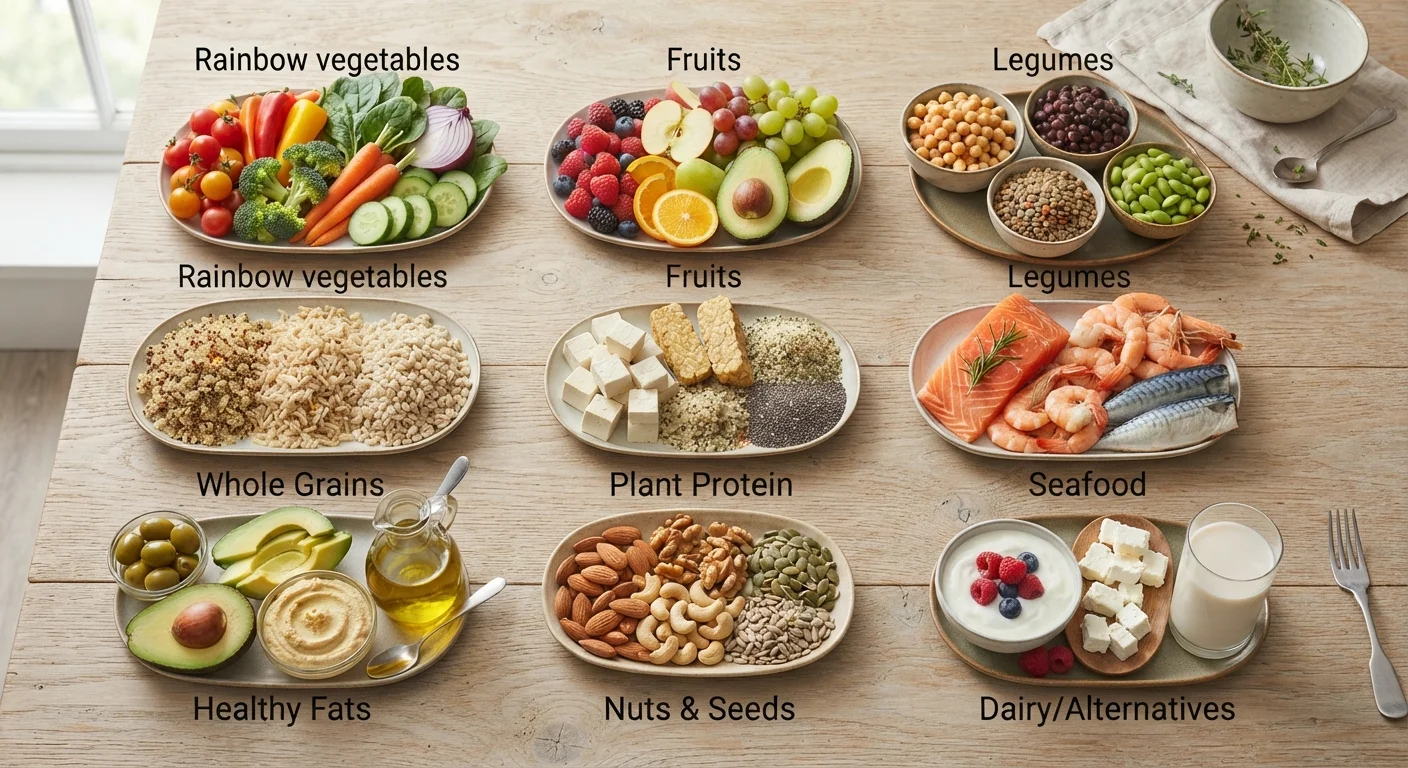
Nutrition research evaluates dietary patterns over time, not individual foods in isolation. Labeling any single food as universally 'good' or 'bad' oversimplifies how diet actually affects health. A varied, whole-food-centered eating pattern - not rigid elimination of any one nutrient - is what the broadest evidence consistently supports. Speak with a registered dietitian if you want personalized guidance.
For readers curious about eating windows and meal timing, what research shows about intermittent fasting offers a balanced, evidence-grounded overview. And if you've ever wondered why popular diets seem to contradict each other, why diet trends clash - and what they agree on is worth reading.