Why Soil pH Trumps Fertilizer
You can pour bags of premium fertilizer onto your garden beds and still watch plants struggle. The most common reason isn't poor fertilizer - it's a pH that has locked those nutrients out of reach. Soil pH acts like a gatekeeper: when it's off, nutrients bind to soil particles in forms plant roots simply cannot absorb, no matter how much you add.
Nitrogen, phosphorus, and potassium - the core nutrients in most fertilizers - are most available to plants in the 6.0 to 7.0 pH range. Dip below 5.5 and phosphorus becomes chemically bound. Rise above 7.5 and iron, manganese, and zinc become scarce. Fixing pH first makes every dollar spent on fertilizer work as intended.
6.0-7.0
Optimal pH range for most garden plants
Within this window, macronutrients and most micronutrients reach their peak availability in soil, according to university extension soil science resources.
10×
Difference per whole pH unit step
Each one-unit change on the pH scale represents a tenfold difference in hydrogen ion concentration, meaning small numeric shifts have large chemical effects.
~$15-$20
Typical cost of a cooperative extension soil test
Many state land-grant university extension services offer detailed soil pH and nutrient tests for a modest fee, providing actionable amendment guidance.
How to Test Your Soil pH
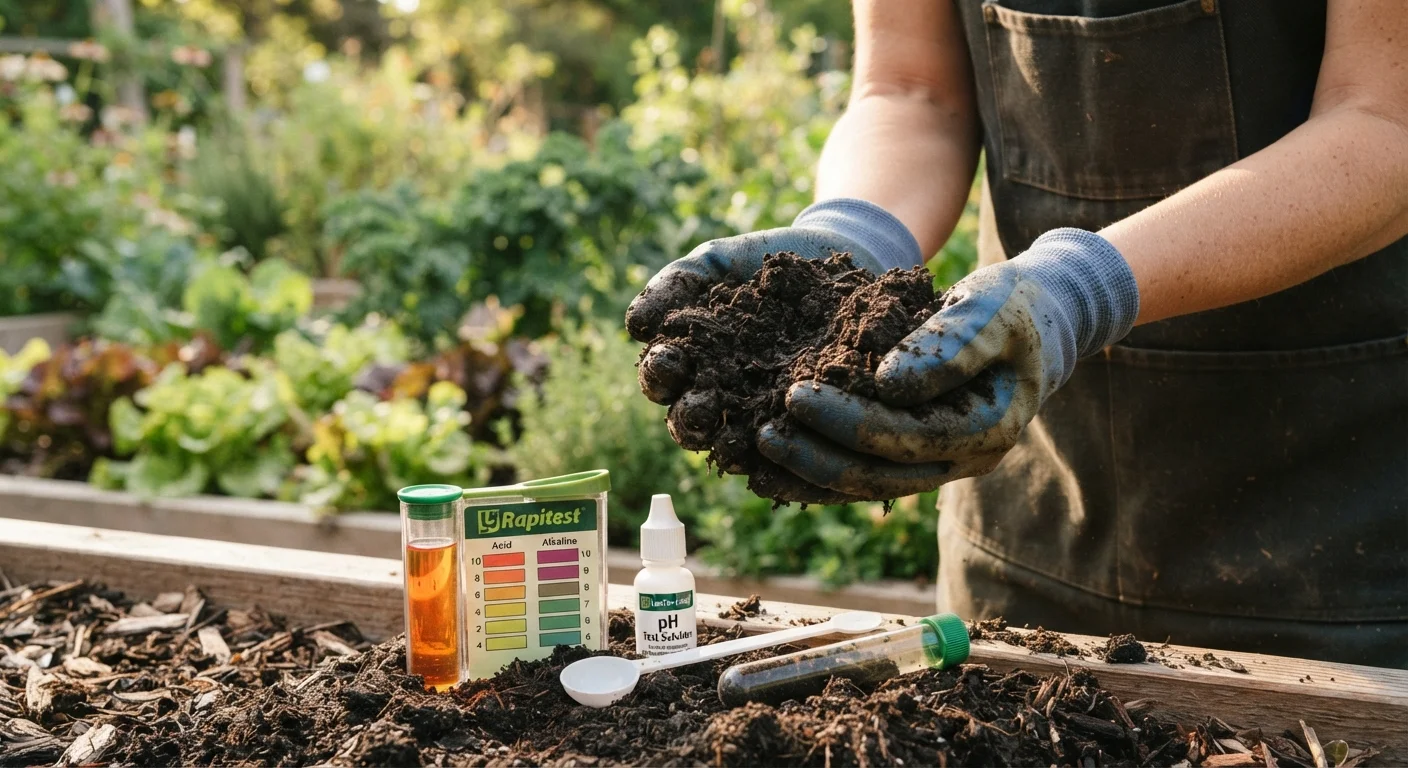
Testing soil pH is easier and cheaper than most gardeners expect. You have two main options:
- At-home test kits or digital meters: Available at garden centers, these give quick readings. Digital meters need periodic calibration to stay accurate.
- Cooperative extension lab test: Your state's land-grant university extension service accepts mail-in soil samples, typically for a modest fee. Results include pH plus a nutrient breakdown and amendment recommendations tailored to your region.
For the most useful results, collect small amounts of soil from several spots across your garden at a depth of about 4 to 6 inches, mix them together, and test that combined sample. One corner of a garden bed can read differently from another, so blending gives a representative picture.
Test Before You Amend
Never apply lime or sulfur based on guesswork - over-correcting pH can be as damaging as the original imbalance. A soil test takes the guesswork out and tells you exactly how much amendment your specific soil needs. Many cooperative extension offices offer testing, often with results returned within a few weeks.
Adjusting Soil pH: Raising and Lowering
Once you know your pH, adjustments are straightforward - though patience is required.
To raise pH (make soil less acidic)
Apply ground agricultural limestone (calcitic or dolomitic lime). Dolomitic lime also adds magnesium, which is beneficial in many Eastern US soils. Work it into the top 6 inches of soil in fall so it has time to act before spring planting. Follow the rate on your extension lab recommendation rather than guessing - over-liming can push pH too high.
To lower pH (make soil less alkaline)
Work in elemental sulfur, which soil bacteria convert to sulfuric acid over time. Acidifying fertilizers like ammonium sulfate also help with mild adjustments. Incorporating organic matter such as pine needle mulch or compost made from acidic plant material contributes modest long-term acidity.
pH Preferences by Plant Type
Matching plants to your existing pH - or amending a dedicated bed - saves work and delivers better results than fighting your soil everywhere.
| Plant Type | Preferred pH Range |
|---|---|
| Most vegetables | 6.0 - 7.0 |
| Lawn grasses | 6.0 - 7.0 |
| Roses & perennials | 6.0 - 6.5 |
| Blueberries | 4.5 - 5.5 |
| Azaleas & rhododendrons | 4.5 - 6.0 |
| Lavender | 6.5 - 7.5 |
If you grow acid-loving plants like blueberries, consider a dedicated raised bed with amended soil rather than trying to acidify your entire garden. This targeted approach is more practical and easier to maintain year over year.
“Soil health starts with chemistry. A gardener who understands pH has unlocked the most fundamental lever controlling plant nutrition - everything else builds on that foundation.”
— University Extension Soil Science Faculty, Land-grant university cooperative extension, soil science department