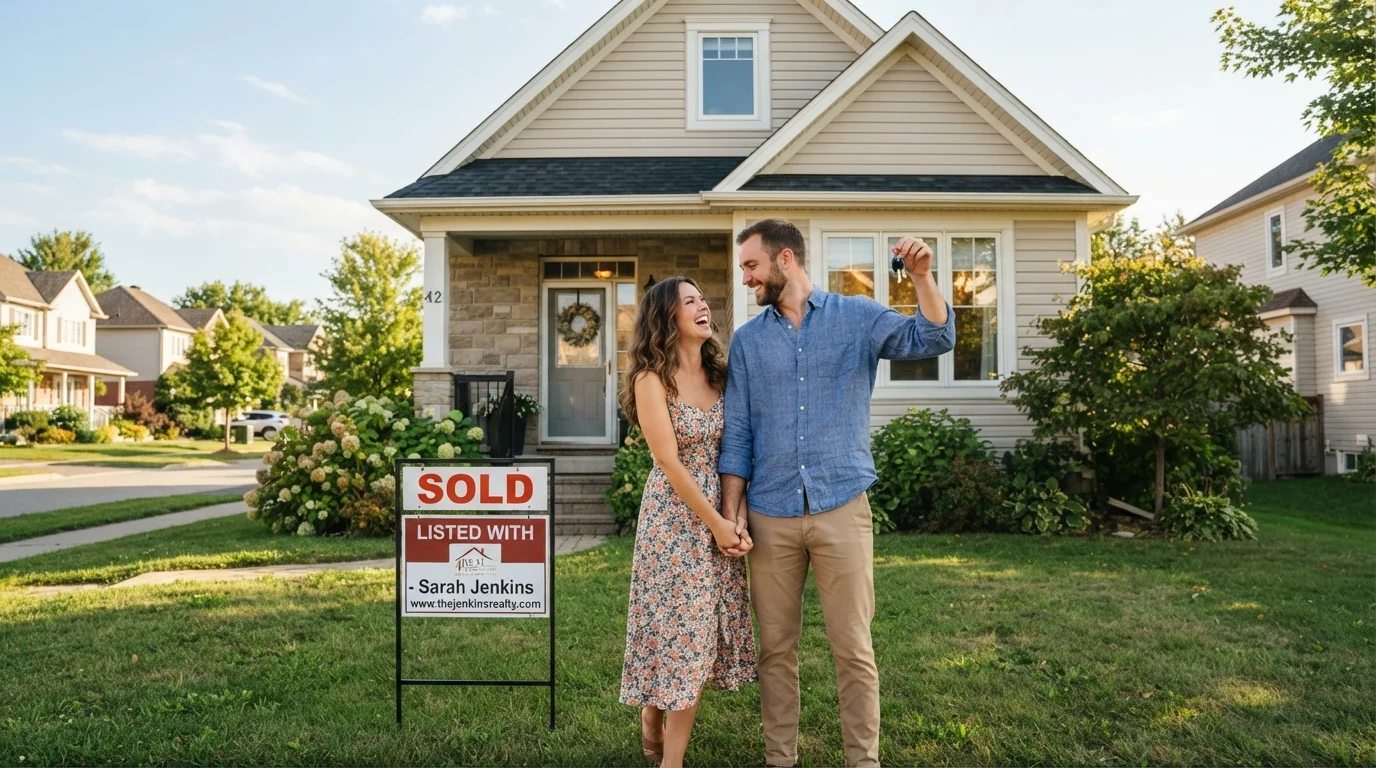

Why the 20% Myth Persists
Ask most people how much they need to buy a home and the answer comes back quickly: 20%. That figure has been passed down through family advice, personal finance folklore, and offhand comments from well-meaning friends. It is not baseless - a 20% down payment does eliminate the requirement for private mortgage insurance (PMI) and reduces long-term interest costs - but it represents one option among many, not an industry floor.
The persistence of this myth has real consequences. Research from the National Association of Realtors has consistently found that a significant share of non-owners believe they cannot afford to buy, and that a lack of savings for a down payment is a top barrier. If buyers are aiming at a target that is two or three times higher than they actually need, many will delay homeownership unnecessarily.
For a fuller foundation on the homebuying process, this plain-language primer on your first home purchase covers the key players, documents, and decisions involved from start to finish.
Myth
You must put down 20% to buy a home.
Fact
Many loan programs allow down payments of 3% to 3.5%, and some government-backed loans require nothing down.
The 20% threshold is a benchmark that eliminates the need for PMI on conventional loans, but it is not a legal or lender-universal requirement. FHA loans start at 3.5% down, conventional conforming loans can go as low as 3%, and VA and USDA loans offer zero-down options for eligible borrowers. The right down payment depends on your loan type, credit profile, and financial goals - not a single universal rule.
Myth
If you put less than 20% down, you'll never build equity.
Fact
Equity builds through both principal paydown and home price appreciation, regardless of your initial down payment size.
Every mortgage payment reduces your loan balance, which increases your equity stake over time. In addition, if the property appreciates in value, your equity grows even when your down payment was small. A buyer who puts 5% down and sees their home's value increase meaningfully can reach 20% equity faster than expected - at which point they can request PMI removal on a conventional loan.
Myth
Down payment assistance programs are only for very low-income buyers.
Fact
Many assistance programs serve moderate-income households, and income limits vary widely by program and location.
State housing finance agencies across the country administer programs with income limits that often extend into middle-income ranges, especially in high-cost areas. Some employer-sponsored programs, nonprofit initiatives, and local government grants further expand eligibility. A HUD-approved housing counselor can help identify programs for which a specific buyer qualifies - there is no universal cutoff that applies nationwide.
Myth
A bigger down payment always makes more financial sense.
Fact
A large down payment reduces your mortgage balance but ties up capital that could serve other financial needs.
Putting every available dollar into a down payment can leave buyers without an emergency fund, unable to cover closing costs, or short on reserves for early homeownership expenses like repairs and maintenance. Financial educators generally emphasize the importance of liquidity alongside homeownership. For some buyers, a moderate down payment paired with a healthy cash reserve may be a more resilient strategy than stretching to reach 20%.
Separately, the opportunity cost of a large lump-sum payment is worth considering as general background - though decisions about how to allocate savings involve individual tax, investment, and risk factors best discussed with a qualified financial adviser. See also: common myths about investing that hold people back.
Myth
Your down payment is the biggest upfront cost when buying a home.
Fact
Closing costs - typically 2% to 5% of the loan amount - add thousands of dollars to the upfront expense of buying a home.
Closing costs include lender fees, title insurance, appraisal fees, prepaid homeowners insurance, property tax escrow, and more. On a $300,000 home, closing costs could range from $6,000 to $15,000 on top of the down payment. Buyers who budget only for the down payment are often caught off guard at the closing table. Some sellers will agree to contribute to closing costs as part of negotiations, but this is not guaranteed and depends on market conditions.
What the Numbers Actually Look Like
The range of down payment requirements in today's market is wider than most first-time buyers realize. Conventional loans backed by Fannie Mae and Freddie Mac can go as low as 3% down for qualifying borrowers. FHA loans - insured by the Federal Housing Administration - require as little as 3.5% down for borrowers with a credit score of 580 or above. VA loans (for eligible veterans and active-duty service members) and USDA loans (for qualifying rural and suburban areas) can require zero down payment.
3%
Minimum down payment on some conventional loans
Fannie Mae and Freddie Mac both back conventional mortgage programs that allow as little as 3% down for qualifying first-time buyers.
3.5%
FHA loan minimum down payment
The FHA requires a minimum 3.5% down payment for borrowers with a credit score of 580 or higher, making it a common choice for first-time buyers.
0%
Down payment required for VA and USDA loans
Eligible veterans, active-duty service members, and buyers in qualifying rural areas may access zero-down mortgage programs through federal backing.
The trade-off for a smaller down payment is usually PMI on conventional loans, which typically costs between 0.5% and 1.5% of the loan amount annually until the homeowner reaches 20% equity. On an FHA loan, mortgage insurance premiums work differently and, depending on the loan term and down payment amount, may persist for the life of the loan. Understanding these costs upfront helps buyers make realistic comparisons - not just between down payment sizes, but between loan products.
It's also worth noting that down payment assistance programs - grants, forgivable loans, and deferred-payment loans offered by state housing finance agencies, nonprofits, and some local governments - can bridge the gap for eligible buyers. These programs vary significantly by location and income level, so consulting a HUD-approved housing counselor is a practical first step.
Don't Drain Your Savings for the Down Payment
Arriving at closing with a large down payment but little cash left over can create serious financial strain. Homeownership brings immediate costs - moving expenses, utility deposits, minor repairs, and unexpected maintenance - that can total several thousand dollars in the first months. Lenders may also require proof of reserves. Aim to keep an emergency fund intact even as you save for your down payment.
This article is for general informational purposes only and does not constitute financial, legal, or mortgage advice. Readers should consult a licensed mortgage professional or HUD-approved housing counselor for guidance specific to their financial situation.