How Each Structure Is Built
A fixed-rate mortgage sets your interest rate at closing and holds it constant for the entire loan term - typically 15 or 30 years. Every monthly payment covers the same blend of principal and interest, so your housing cost stays unchanged whether prevailing rates climb or fall. The predictability is the defining feature.
An adjustable-rate mortgage (ARM) operates differently. It starts with a fixed introductory period - often 5, 7, or 10 years - at a rate lower than what a comparable fixed loan would offer. After that window closes, the rate adjusts at regular intervals (commonly every six or twelve months) based on a published benchmark index, such as the Secured Overnight Financing Rate (SOFR), plus a fixed margin set by the lender. A loan marketed as a "7/1 ARM" is fixed for seven years, then adjusts once per year.
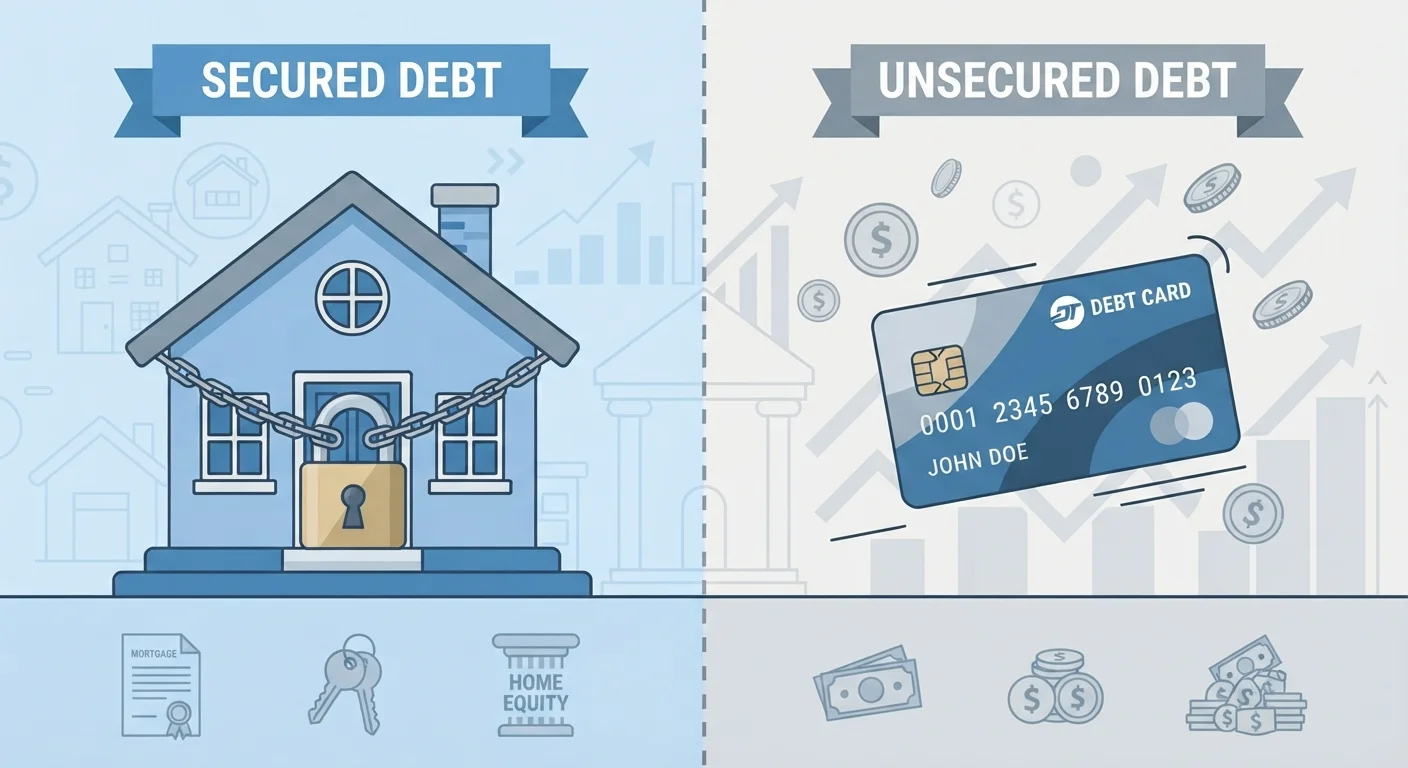
ARMs include built-in caps that limit how much the rate can move in any single adjustment and over the life of the loan. For example, a 2/2/5 cap structure means the rate cannot rise more than 2 percentage points at the first adjustment, 2 points at each subsequent adjustment, and 5 points total above the starting rate. These caps matter - but they do not eliminate the possibility of meaningfully higher payments. To understand how mortgage debt differs from other borrowing types, see how secured debt works.
| Criterion | Fixed-Rate Mortgage | Adjustable-Rate Mortgage (ARM) |
|---|---|---|
| Initial interest rate | Higher at origination | Lower during intro period |
| Rate stability | Constant for loan life | Adjusts after intro period |
| Payment predictability | Fully predictable | Variable after first reset |
| Rate change risk | None | Subject to index movements |
| Typical loan terms | 15 or 30 years | 5/1, 7/1, or 10/1 structures |
| Best ownership horizon | Long-term (10+ years) | Short-to-medium (under 7 years) |
| Budgeting simplicity | High | Moderate to low after reset |
Long-Term Cost Implications
Over the full life of a loan, a fixed-rate mortgage typically costs more in interest during the early years because its rate is set higher at origination to compensate the lender for taking on long-term interest rate risk. However, the total cost stays knowable from day one.
An ARM may deliver genuine savings if rates remain stable or fall during the adjustment period. But if prevailing rates rise sharply, the monthly payment on an ARM can increase by hundreds of dollars per month - a disruption that can strain household budgets. Borrowers who do not plan to exit the loan before adjustments begin carry real exposure to that volatility.
~90%
Share of mortgages that are fixed-rate
According to data from the Federal Reserve, fixed-rate mortgages have historically represented around 90% or more of new home loans in the United States during periods of rate uncertainty.
5 pts
Maximum lifetime ARM rate increase (typical cap)
Most ARM products include a lifetime cap - commonly 5 percentage points above the start rate - limiting total exposure over the loan's life, though individual products vary.
30 years
Most common fixed mortgage term in the US
The 30-year fixed-rate mortgage remains the dominant product in the US housing market, offering the lowest mandatory monthly payment for a given loan amount.
Your overall budget framework matters here too. Fixed monthly mortgage payments behave like fixed expenses, while an ARM introduces variability similar to a utility bill. Understanding how fixed and variable expenses interact can help you assess which structure fits your financial plan.
This article is for general informational purposes only and does not constitute financial, mortgage, or legal advice. Consult a licensed mortgage professional or financial adviser before making any borrowing decisions based on your individual circumstances.