What Kind of City Is Mexico City?
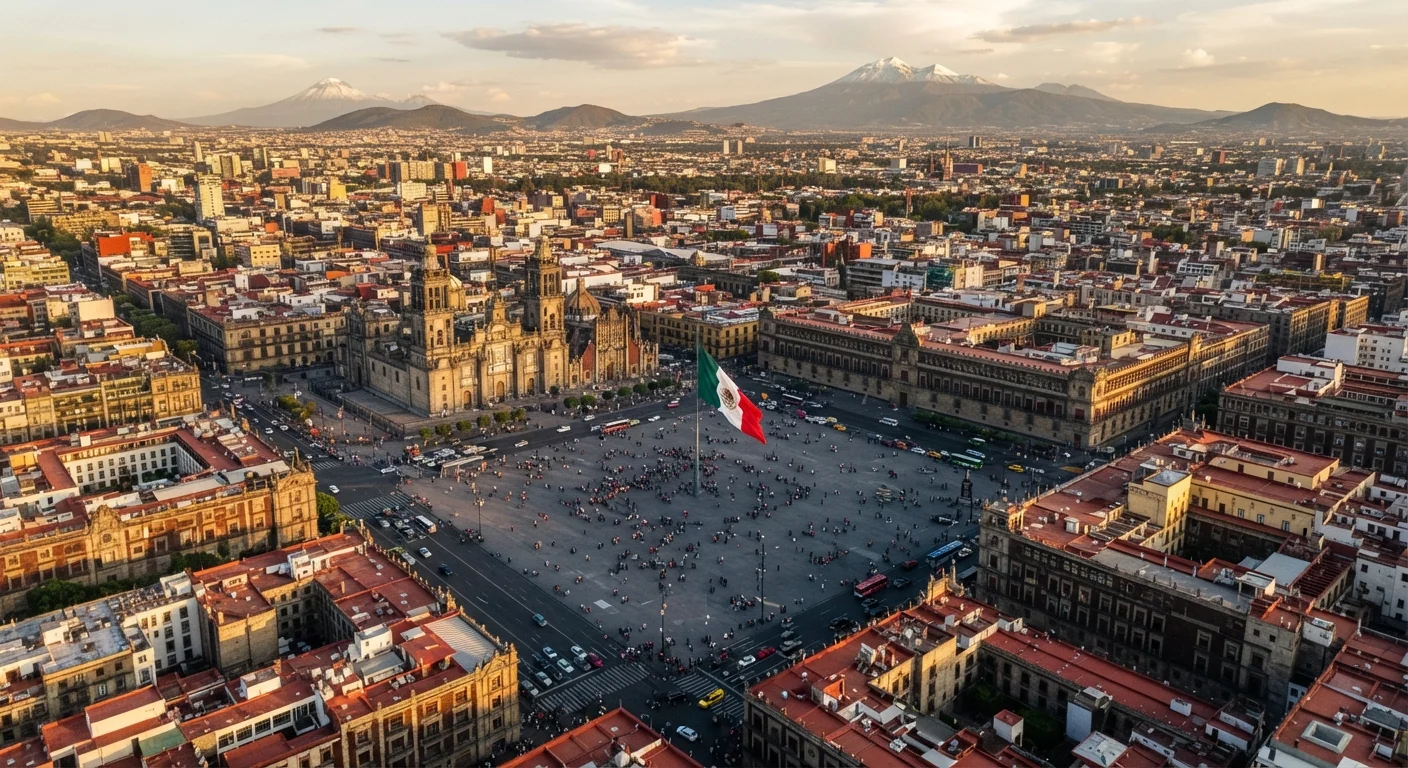
Mexico City-officially Ciudad de México, or CDMX-is not easily summarized. It is one of the most populous metropolitan areas in the world, home to roughly 22 million people across the greater urban zone, yet it has the layered texture of a collection of smaller cities stitched together. Pre-Columbian ruins sit beneath colonial plazas. Art Deco facades line streets that feed into glass-and-steel financial districts. Indigenous markets operate within walking distance of Michelin-recognized restaurants.
For travelers used to capitals that announce themselves through a single dominant identity, CDMX can be disorienting in the best sense. It rewards orientation before arrival. Readers thinking through how destination research fits into the broader trip-planning process may find useful framing in our guide to structuring a well-planned trip.
~22M
Greater Mexico City metropolitan population
Mexico City's metro area is consistently ranked among the five largest in the Western Hemisphere by population estimates.
7,350 ft
Elevation above sea level
This altitude is one of the most important practical factors for arriving travelers, affecting energy and comfort in the first days.
195+
Museums in the city
Mexico City is often cited as having one of the highest concentrations of museums of any city in the world.
The Neighborhoods That Define the Visit
Mexico City's colonias (neighborhoods) function almost as distinct villages. Understanding which areas suit your interests helps enormously.
Centro Histórico
The historic center is the city's oldest layer-built over the Aztec capital of Tenochtitlán. The Zócalo, one of the world's largest public plazas, anchors the area. The Metropolitan Cathedral, the Palacio Nacional (with Diego Rivera's murals), and the Templo Mayor archaeological site are all within walking distance. It is dense, loud, and endlessly fascinating.
Condesa and Roma
These neighboring colonias are popular with international visitors and residents alike. Tree-lined boulevards, Art Deco architecture, independent cafes, bookshops, and a walkable scale make them a comfortable base. Roma Norte in particular has seen significant growth in its restaurant and cultural scene over the past decade.
Polanco
Polanco is the city's upscale commercial and diplomatic district. It houses several major museums-including the Museo Soumaya-and a concentration of international cuisine. It feels more manicured than the bohemian Roma or the historic Centro.
Coyoacán
South of the center, Coyoacán retains a small-town feel that feels almost startling within a megacity. It is home to the Frida Kahlo Museum (the Casa Azul), a beloved weekend market, and cobblestone streets that invite slow exploration.
Xochimilco
Further south, Xochimilco offers a fundamentally different experience: a network of canals navigated by colorful flat-bottomed boats called trajineras. It is a UNESCO World Heritage site and one of the last remnants of the ancient lake system that once covered the Valley of Mexico.
Anchor your base in Roma Norte or Condesa for a first visit-both are walkable, well-served by transit, and close enough to each other that you can explore both on foot without committing to taxis.
First-time visitors often underestimate how taxing constant transit logistics are; a well-chosen base neighborhood reduces that friction considerably and leaves more energy for actual exploration.
Visit Xochimilco on a weekday rather than a weekend if possible-the canal experience is noticeably calmer and easier to absorb without the full weekend crowd.
Weekends at Xochimilco are a beloved local tradition and vibrant in their own right, but the noise and density can be overwhelming for visitors seeking a more reflective experience of the site's ecological and historical significance.
Cultural Depth: Museums, Markets, and Living Traditions
Mexico City's cultural infrastructure is extraordinary by any global standard. The Museo Nacional de Antropología in Chapultepec Park is consistently cited among the world's great museums, housing the most comprehensive collection of pre-Columbian artifacts in existence-including the famous Aztec Sun Stone. A serious visit requires at least half a day.
Beyond the landmark institutions, the city's cultural life plays out in markets, murals, and neighborhood cultural centers (casas de cultura) that host free events year-round. The muralist tradition of Rivera, Orozco, and Siqueiros is woven into the fabric of public buildings; visitors can see major works without paying admission.
Free Cultural Access Worth Noting
Many of Mexico City's most significant cultural institutions offer free admission on Sundays, including the Museo Nacional de Antropología and the Museo del Palacio de Bellas Artes. Lines can be longer on these days, but the access is meaningful for budget-conscious travelers. Confirm current policies directly with each institution before visiting, as schedules can vary.
For travelers who value cultural immersion over rapid sightseeing, CDMX offers the kind of depth that rewards slower engagement. Those weighing this type of extended cultural experience against other modes of travel may find useful perspective in our piece on long-term travel vs. living abroad.
Food and Drink: A City Shaped by Its Cuisine
Mexico City's food culture is one of its most defining characteristics. UNESCO designated Mexican cuisine as Intangible Cultural Heritage, and CDMX is its most concentrated expression. The range spans from tacos de canasta sold at bicycle stands before sunrise, to multi-course tasting menus drawing on indigenous ingredients and contemporary technique.
Key food experiences to seek out include: mercados (covered markets) like Mercado de la Merced or Mercado de San Juan, where vendors sell prepared food alongside produce and specialty ingredients; street tacos al pastor (pork on a vertical spit, served with pineapple and cilantro); tlayudas, memelas, and tamales sold from neighborhood breakfast stands; and the city's growing mezcal and craft beverage scene, rooted in Oaxacan traditions.
Street Food Safety: A Practical Guideline
High-turnover stalls with a steady local clientele are generally a reliable indicator of freshness and food safety. Look for busy stands where food is prepared in front of you and cooked to order. Avoid pre-cooked items that have been sitting at room temperature for extended periods. Most experienced travelers to CDMX eat street food regularly without issue when applying this basic judgment.
Practical Realities: Safety, Altitude, and Getting Around
Altitude: At approximately 7,350 feet (2,240 meters) above sea level, Mexico City sits significantly higher than most North American cities. Travelers arriving from sea level often experience mild symptoms-headache, fatigue, reduced appetite-in the first 24-48 hours. Staying hydrated, limiting alcohol initially, and avoiding strenuous activity on the first day are commonly cited strategies. Anyone with cardiac or respiratory conditions should consult a physician before travel.
Safety: Safety in CDMX varies considerably by neighborhood and time of day. Condesa, Roma, Polanco, Coyoacán, and the Centro Histórico (especially daytime) are generally well-traveled by tourists. Areas further from the tourist core warrant more caution. Petty theft-pickpocketing, bag snatching-is the most common issue facing visitors. The U.S. State Department maintains current travel advisories for Mexico; travelers should review official government guidance before departure, as conditions can change.
Verify Safety and Entry Information Officially
Safety conditions in Mexico City-and across Mexico-vary and can change. The U.S. State Department publishes current travel advisories by state; review these before your trip. Entry requirements, including any visa or health documentation needs, should also be verified through official government sources rather than travel blogs or third-party sites, as requirements can be updated without notice.
Getting Around: The Metro is affordable, extensive, and generally reliable during non-peak hours. Ride-share apps operate widely and offer a practical alternative, particularly at night or when carrying luggage. Walking is viable in compact colonias like Roma and Condesa. Driving independently in the city is not generally recommended for first-time visitors given traffic complexity and unfamiliar traffic enforcement norms.
How to Approach Planning Your Visit
A first visit to Mexico City benefits from a focused geographic strategy. Given the city's scale, trying to cover every neighborhood in a short trip leads to exhaustion rather than understanding. A productive approach: choose one or two colonias as a base, explore those on foot, and make deliberate day excursions to specific sites elsewhere.
Duration matters. Three days allows for the main cultural landmarks and a neighborhood orientation. Five to seven days allows for Coyoacán and Xochimilco, a day trip to Teotihuacán (the pre-Columbian pyramid complex roughly 30 miles northeast), and the kind of unscheduled wandering where cities reveal themselves. Travelers who enjoy this pace of discovery might also appreciate our look at US cities that reward slow, curious travel.
For practical tools, packing considerations, and logistics guidance applicable across trips, the Travel Tips hub offers relevant resources.
U.S. State Department Mexico Travel Advisory
The official source for current safety advisories, entry requirements, and consular information for US citizens traveling to Mexico. Check before booking and again before departure.
Museo Nacional de Antropología Official Site
The museum's official site provides current hours, admission pricing, and temporary exhibition information-essential for planning a visit to one of the world's foremost archaeological collections.
Mexico City Metro System Map
The official Metro network map is an essential navigation tool. With 12 lines and over 195 stations, understanding the system before arrival dramatically reduces transit friction for visitors.
This article is intended as general travel orientation. Safety conditions, entry requirements, and local circumstances can change; always verify current information with official government sources and your airline or accommodation provider before traveling.