Why These Cities Deserve More of Your Attention
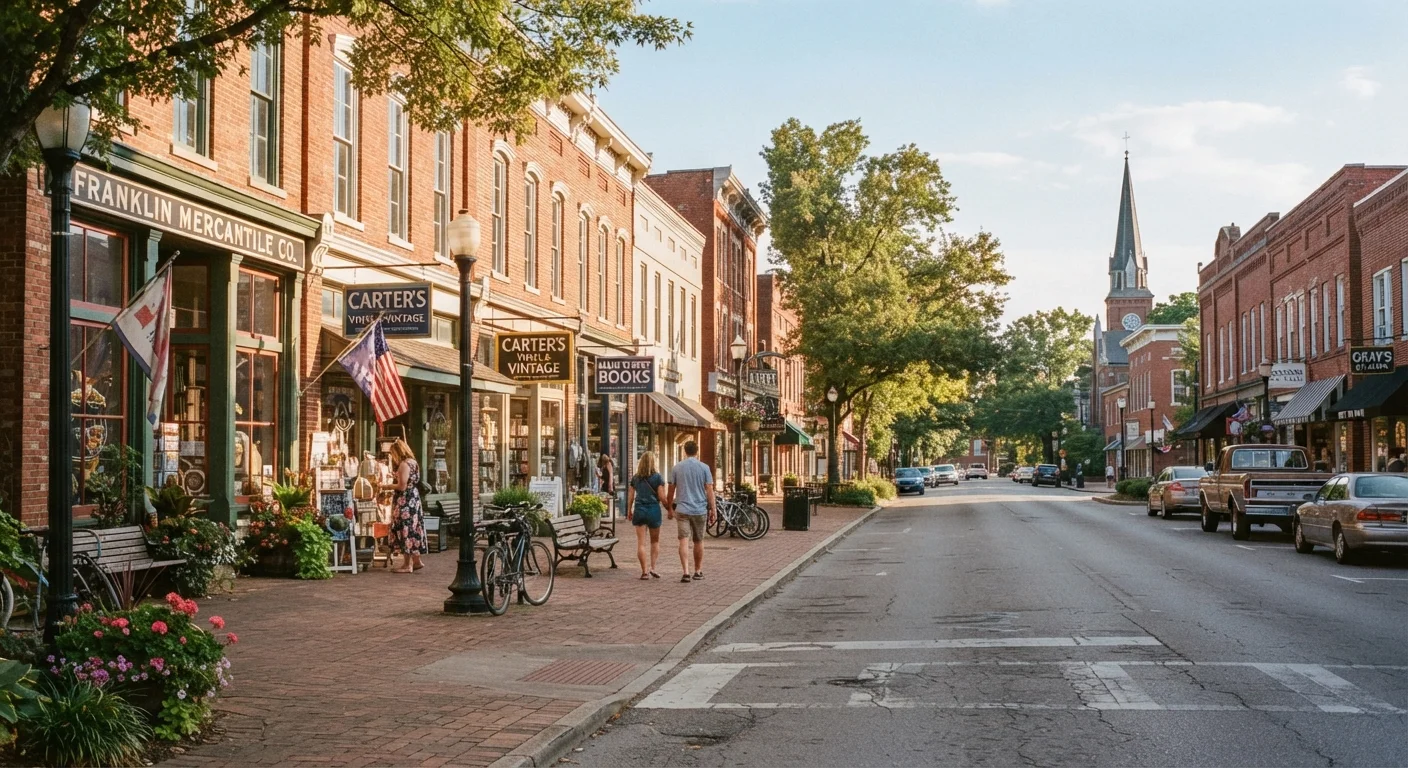
Most US travel conversations orbit a short list of cities-New York, San Francisco, Chicago, New Orleans, Miami. These places are genuinely worth visiting, but they also carry the weight of heavy tourism: higher prices, crowded sights, and experiences increasingly shaped around visitors rather than residents. The cities on this list sit outside that circuit. They're not undiscovered-locals know them well-but they haven't been packaged and polished to the point where the real place disappears behind the tourist infrastructure.
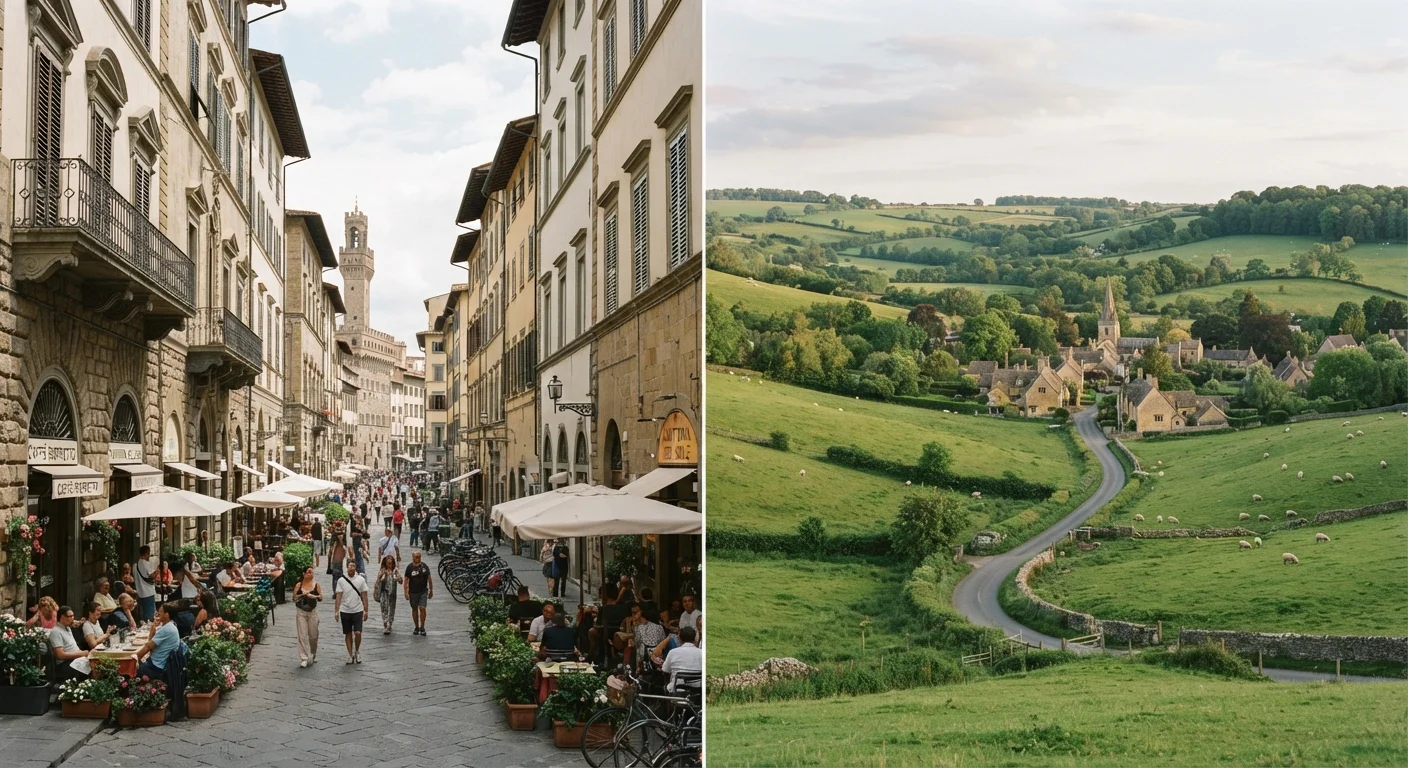
Slow travel is the frame that makes these cities work best. Rather than moving fast to maximize coverage, slow travel means staying longer, walking more, eating where locals eat, and allowing enough time for a city's character to become legible. If you've thought about whether an urban or more relaxed pace suits your travel style, our look at city breaks versus countryside retreats explores those trade-offs in detail. The cities below reward exactly this kind of patient, curious attention.
How to Travel More Slowly in Any City
Limit yourself to two or three neighborhoods per visit rather than racing through a checklist. Arrive without a rigid schedule for at least one morning, and prioritize local markets, bookshops, or public spaces over headline attractions. The goal is enough time to notice what makes a place different, not just document that you were there.
Five US Cities That Reward Lingering
Savannah, Georgia
Savannah is one of the most architecturally intact cities in the American South, yet it rarely dominates travel conversations the way Charleston or New Orleans do. Its grid of 22 oak-shaded squares-each a small park anchored by a monument or fountain-was laid out in 1733 and functions today as an unusually walkable public realm. You can spend a full afternoon drifting between them without a plan.
The historic district holds Federal and Regency townhouses alongside art galleries and independent restaurants serving coastal Georgia cuisine: shrimp, grits, and boiled peanuts done with genuine regional pride. The Savannah College of Art and Design (SCAD) has also infused the city with a creative energy that shows in its galleries, pop-up exhibitions, and a surprisingly strong coffee culture. Slow travelers will find that Savannah rewards observation-the ironwork, the moss, the way light moves through the canopy-more than any checklist of attractions.
Savannah's 22 public squares form one of America's most walkable and historically intact urban grids.
Tucson, Arizona
Tucson sits in the Sonoran Desert at roughly 2,400 feet elevation, surrounded by five distinct mountain ranges-a geography that shapes everything from its light to its food culture. While Phoenix draws more visitors, Tucson has a quieter depth: a university town with a genuine arts scene, a UNESCO Creative City of Gastronomy designation, and a Mexican-American culinary tradition rooted in centuries of borderland exchange.
Sonoran-style cuisine here is distinct from Tex-Mex or Cal-Mex: flour tortillas made by hand, mesquite-grilled meats, and dishes that reflect Indigenous Tohono O'odham ingredients and techniques. The Barrio Viejo neighborhood preserves some of the city's oldest adobe architecture, and the Saguaro National Park-split into two units that flank the city-is accessible for day hiking without long drives. For travelers who want landscape, history, and food culture in a single place, Tucson delivers with little competition for attention.
Tucson holds a UNESCO gastronomy designation, rooted in a centuries-old borderland food tradition unlike anywhere else in the US.
Providence, Rhode Island
Providence is New England's second-largest city, but it operates at a human scale that Boston rarely achieves. The College Hill neighborhood climbs above the Providence River with a dense concentration of 18th- and 19th-century wooden architecture-among the best-preserved in the Northeast. The Rhode Island School of Design (RISD) Museum punches well above its size, with a permanent collection spanning Egyptian antiquities to contemporary textile art.
The food scene is disproportionately strong for a city of around 190,000 people. Federal Hill, the city's Italian-American neighborhood, has sustained a restaurant culture for generations that feels lived-in rather than curated for visitors. The WaterFire public art installation-bronze braziers set ablaze on the river-runs on selected evenings from spring through fall and draws locals as much as tourists. Providence is a city where slowing down long enough to walk the streets reveals architectural and cultural layers that even many New Englanders haven't fully explored.
Providence's College Hill contains one of the most intact concentrations of 18th-century wooden architecture in the entire Northeast.
Chattanooga, Tennessee
Chattanooga spent decades defined by its industrial decline and river geography. The city's investment in its riverfront and downtown core since the 1990s has produced one of the more genuinely pleasant mid-size American cities to walk around-without the self-consciousness that sometimes accompanies urban revitalization. The Tennessee Aquarium on the riverfront is one of the largest freshwater aquariums in the country and is legitimately excellent.
The city's outdoor access is extraordinary for its size. Lookout Mountain, visible from downtown, holds Civil War battlefield sites, a short hiking trail to a 1,000-foot gorge, and panoramic views across multiple states. The North Shore neighborhood across the Walnut Street Bridge-a 19th-century pedestrian span-has independent bookshops, cafes, and a Saturday farmers market that reflects the city's character more honestly than its tourist brochures do. For travelers who want a city that works as a base for both urban exploration and day hikes, Chattanooga is an underappreciated option.
Chattanooga pairs a walkable revitalized riverfront with direct access to Civil War history and exceptional Tennessee landscape.
Albuquerque, New Mexico
Albuquerque is frequently bypassed for Santa Fe, which is smaller, more polished, and more expensive. But Albuquerque has its own distinct character-a larger, grittier city where Indigenous, Hispanic, and Anglo histories layer visibly in its neighborhoods, food, and architecture. The Old Town district preserves a Spanish Colonial plaza from 1706 and operates as a genuine civic space rather than a theme park.
New Mexico cuisine is its own regional tradition, distinct from any other American food culture: red and green chile (not chili) appear at breakfast, lunch, and dinner, and the debate over which is better is taken seriously. The Indian Pueblo Cultural Center, operated by the 19 Pueblos of New Mexico, provides essential context for understanding the region's Indigenous history before visiting any of the surrounding communities. The Sandia Mountains rise to nearly 11,000 feet on the city's eastern edge, accessible by aerial tram, making Albuquerque one of the few American cities where you can move from high desert terrain to subalpine forest in under 30 minutes.
Albuquerque's Sandia Mountains let you move from high desert to subalpine forest in under 30 minutes-an experience few US cities can match.
On Entry, Safety, and Current Conditions
Neighborhood character, venue hours, and local conditions change over time. Before visiting any destination, verify current safety advisories, accessibility information, and operating hours through official city tourism offices or government sources. This article reflects general editorial research and is not a guarantee of conditions at the time of travel.
Each of these cities has something the usual lists miss: a food tradition rooted in genuine regional history, a walkable core that reveals itself on foot, or a cultural institution that merits more than a quick stop. For travelers weighing whether a destination justifies the time investment, it's worth reading our piece on what travelers miss when comparing destinations on cost alone-the case for these cities isn't built on price, but on depth. And if you're thinking about how to make the most of travel once you've chosen a destination, the trip planning hub has practical guidance for organizing any kind of domestic trip.