
Getting Your Documents in Order
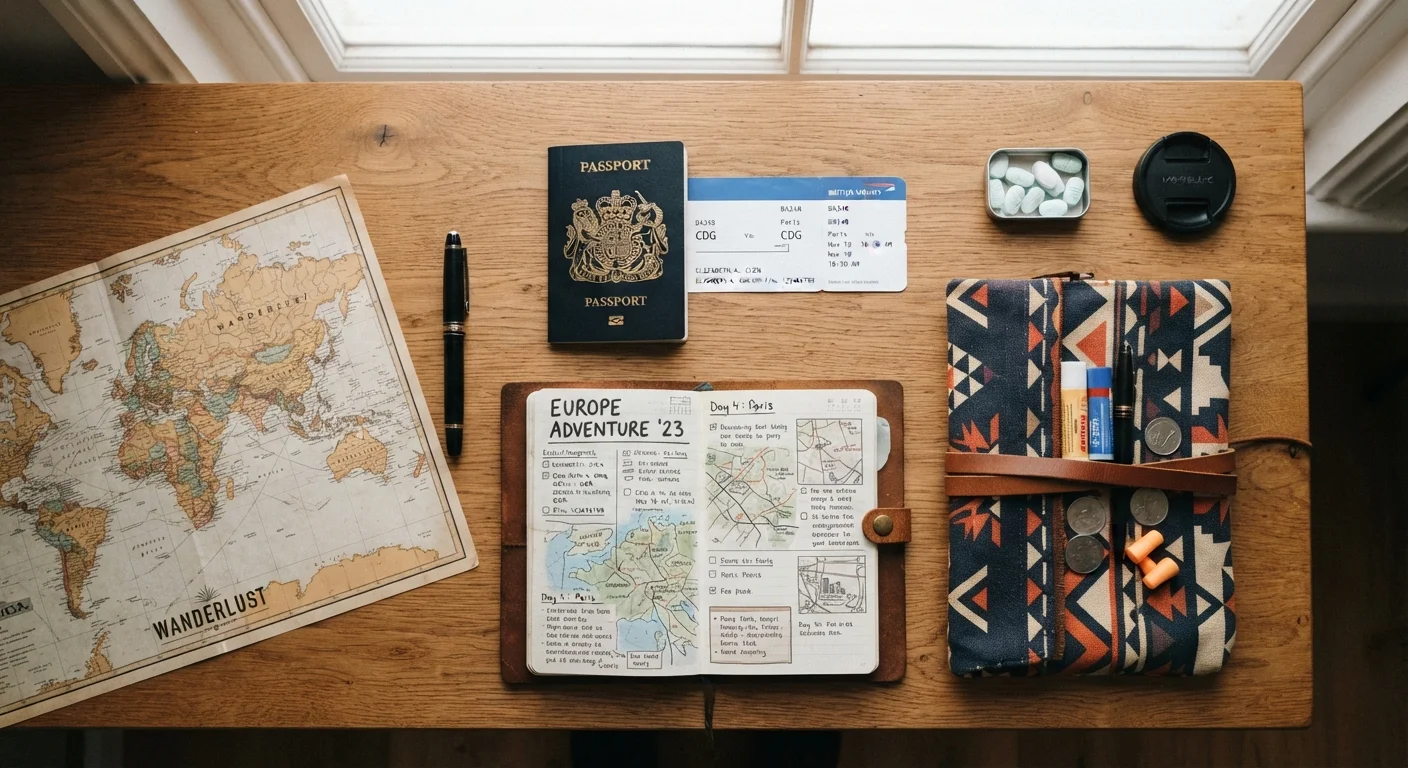
Before you research flights or pack a bag, your documents need to be airtight. A valid U.S. passport is the foundation of any international trip. Check the expiration date carefully-many countries require at least six months of validity beyond your planned return date, meaning a passport that technically hasn't expired may still get you turned away at the border.
If you don't have a passport, apply as early as possible. The U.S. State Department's current processing times fluctuate and can stretch beyond several weeks for routine applications. Expedited service is available for an additional fee, and in genuine emergencies, in-person appointments at a passport agency may be possible.
Alongside your passport, gather these essentials well before your trip:
- Copies of your itinerary - hotel confirmations, flight details, and any tour bookings
- Travel insurance documentation - proof of coverage with emergency contact numbers
- Emergency contacts - written down, not just stored in your phone
- Medication documentation - a letter from your doctor if you carry prescription drugs
Store digital backups of every document in secure cloud storage or a protected email folder. See our pre-trip planning checklist for a thorough document review before departure.
Passport validity
The period during which your passport is legally usable for international travel. Many countries require six months of validity beyond your planned return date, not just the date of entry.
Visa
An official endorsement from a foreign government granting permission to enter their country, either stamped in your passport or issued electronically. Requirements depend on your citizenship and the destination.
Customs declaration
A formal statement made to customs officials listing goods, food, currency, or restricted items you are bringing into a country. Inaccurate or omitted declarations can result in fines.
Foreign transaction fee
A charge added by your bank or credit card issuer when you make a purchase in a foreign currency or through a foreign bank, typically a small percentage of each transaction.
Dynamic currency conversion
An option offered at some foreign ATMs and merchants to charge you in U.S. dollars rather than local currency. The exchange rate applied is typically less favorable than your bank's standard rate.
STEP (Smart Traveler Enrollment Program)
A free U.S. State Department service that registers your international trip with the nearest embassy or consulate, enabling contact during emergencies or local crises.
Understanding Visas and Entry Requirements
A visa is official permission from a foreign government allowing you to enter their country. Some countries grant U.S. citizens a visa-free entry or a visa on arrival for short tourism stays; others require you to apply weeks or months in advance. There is no universal rule-each destination sets its own terms.
Start by checking two sources: the U.S. State Department's country information pages and the official embassy or consulate website of your destination country. Never rely solely on travel blogs or booking platforms for visa information, as these may be outdated.
Visa-Free Doesn't Mean No Rules
Even when a country allows U.S. citizens to enter without a pre-arranged visa, there are still conditions to meet-typical limits on length of stay, proof of onward travel, sufficient funds, or a valid return ticket. Some destinations have also introduced electronic travel authorization systems (similar to ESTA for the U.S.) that require a brief online application before arrival. Read the fine print for every destination.
Entry requirements can change without much notice-political shifts, public health events, or bilateral agreements all affect the rules. Verify requirements as close to your departure date as is practical, not only when you first book. The Trip Planning hub provides additional guidance on researching destinations responsibly.
If your trip requires a visa, start the application process early. Many require supporting documents such as bank statements, hotel confirmations, or a return flight ticket. Some embassies conduct interviews. Processing times can vary from days to months depending on the country and visa type.
Managing Money Abroad
Currency confusion is one of the most common sources of stress for first-time international travelers. Understanding a few fundamentals makes a significant difference.
Notify your bank before you leave. Banks flag unusual foreign transactions as potential fraud and can freeze your card mid-trip. A quick call or online notification prevents this. Ask specifically whether your debit and credit cards carry foreign transaction fees-these small percentages add up across a week of spending.
Use local ATMs strategically. Withdrawing local currency from a bank-affiliated ATM at your destination usually gives you a rate close to the interbank exchange rate-better than airport currency exchange kiosks, which typically offer less favorable rates. When an ATM or merchant asks if you want to pay in U.S. dollars rather than local currency, decline. This is called dynamic currency conversion, and the rate it applies is almost always less favorable than your bank's standard conversion.
Carry some local cash for arrival. Your first hours in a country-taxis, buses, small food vendors-often run on cash. Exchange a modest amount before departure, enough for your first day, so you're not scrambling at the airport.
Withdraw Cash Wisely at Your Destination
Use ATMs connected to major bank networks rather than standalone kiosks in tourist areas, which often charge higher fees. Withdraw enough for a few days at a time to limit transaction fees, but avoid carrying more cash than you're comfortable with. A money belt or hidden pouch is a practical precaution in crowded areas.
For more on staying connected without unexpected costs-which pairs directly with managing your money situation-see our guide on using your phone abroad.
Navigating Customs and Immigration
Arriving in a foreign country means passing through two distinct checkpoints: immigration (also called passport control) and customs. Knowing what to expect at each removes a major source of anxiety.
Immigration is where officials verify your identity, check your passport and any required visa, and determine whether you're permitted to enter. Answer questions calmly and honestly-how long you're staying, where you'll be accommodated, the purpose of your visit. Have your accommodation address written down if you don't have it memorized.
Customs is where you declare goods you're bringing into the country. Most travelers flying internationally fill out a customs declaration form on the plane or at a kiosk before reaching the officer. Declare all items you're required to-purchased goods above the duty-free threshold, food, large sums of cash. Different countries restrict different items; some prohibit certain foods, plant materials, or medications that are freely available in the U.S. Check restrictions through the destination country's customs authority website before you pack.
On your return to the U.S., you'll pass through U.S. Customs and Border Protection. Every traveler must declare items acquired abroad. The duty-free exemption for returning U.S. residents is generally $800, though this figure can change-verify current limits with CBP before you travel.
Handling the Unexpected
Even a well-planned trip encounters disruptions. Flights get delayed, luggage gets misdirected, people get sick, and plans change. Resilience on an international trip comes from preparation, not just adaptability in the moment.
Travel insurance is worth understanding before every international trip. Policies vary widely, but coverage categories typically include trip cancellation, emergency medical care, medical evacuation, and lost or delayed baggage. Your existing health insurance may cover very little or nothing abroad-check explicitly before deciding whether to buy a separate policy. This is general information; assess your own coverage needs carefully.
Register your trip with the U.S. State Department's Smart Traveler Enrollment Program (STEP). It's free, takes minutes, and allows the nearest embassy or consulate to contact you in an emergency or during a local crisis.
Know your embassy's location. Save the address and emergency phone number of the U.S. embassy or consulate in every city you visit. If your passport is lost or stolen, this is your first call.
Building flexibility into your itinerary helps enormously. See how to build a realistic travel itinerary with the kind of buffer time seasoned travelers swear by. For the habits that consistently make international travel smoother, explore what experienced travelers always do before a big trip.
Never Assume Entry Requirements Haven't Changed
Visa policies, health documentation requirements, and entry restrictions can change with little warning. Checking requirements months before your trip is a starting point-verify again closer to your departure date through official sources. Arriving without the correct documentation can result in being denied boarding or turned back at the border.
This article provides general travel information for educational purposes. Entry requirements, visa rules, customs thresholds, and travel advisories change frequently. Always verify requirements through official government sources-including the U.S. State Department and the destination country's official authorities-before you travel.