Why the DIY vs. Pro Question Actually Matters
Changing your own wiper blades feels empowering. Attempting a brake job without the right equipment can put lives at risk. The gap between those two scenarios is exactly why it's worth thinking carefully before deciding what to tackle yourself.
DIY car maintenance has real advantages: it can reduce costs, build mechanical familiarity, and help you catch problems early. But those benefits only hold when the task is genuinely within reach. Mishandling safety-critical repairs - or using the wrong parts - can turn a money-saving project into an expensive or dangerous outcome.
The framework here isn't about skill-shaming. It's about matching the task to your actual setup: tools on hand, workspace available, and how much margin for error exists if something goes wrong. For a broader look at how neglecting upkeep compounds over time, see what happens when routine maintenance gets skipped.
DIY Tasks Most Drivers Can Learn
These jobs share a common profile: they require modest tools, the consequences of an imperfect job are minor, and clear instructions are widely available.
- Wiper blade replacement: Most blades attach with a simple clip mechanism. No tools needed, takes under 10 minutes, and the wrong choice is immediately obvious.
- Cabin air filter replacement: Typically located behind the glove box or under the dashboard. A new filter usually slides in without tools. Consult your owner's manual for location.
- Engine air filter replacement: Usually held by a few clips or screws inside the airbox. Straightforward to inspect and swap on most vehicles.
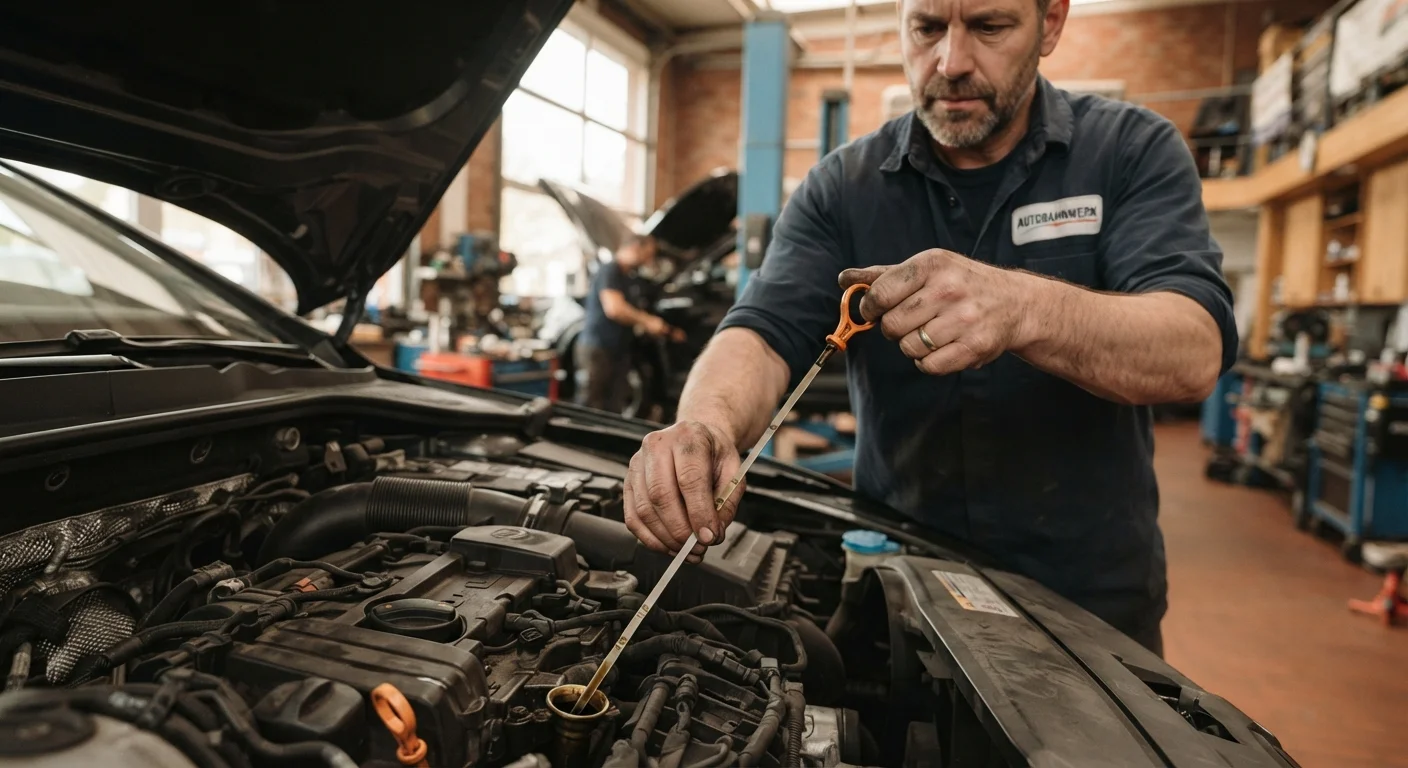
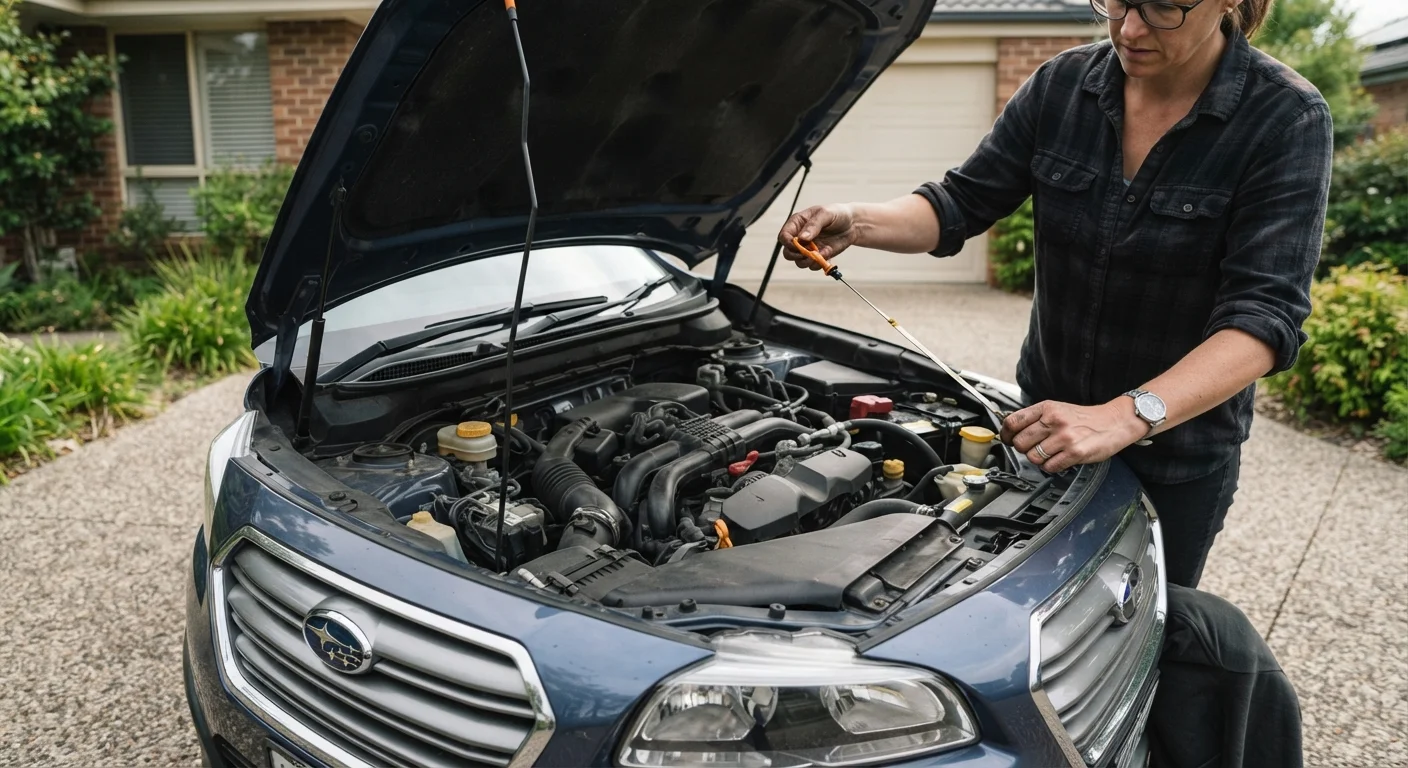
- Checking and topping off fluids: Engine oil, coolant reservoir, washer fluid, and brake fluid reservoir levels are all visible under the hood. Top-offs are simple; just use the fluid type specified in your owner's manual.
- Battery terminal cleaning: Corrosion on terminals can cause starting problems. Disconnecting, cleaning with a baking soda solution, and reconnecting is manageable - but follow the correct disconnect order (negative first) and consult your manual if your vehicle has memory-sensitive electronics.
- Changing a flat tire: If you know how to use a jack and lug wrench, swapping in your spare is a skill worth practicing before you need it roadside.
Start With Your Owner's Manual
Before attempting any maintenance task, consult your vehicle's owner's manual. It specifies fluid types, filter part numbers, torque values, and service intervals for your exact make and model. Generic advice online may not apply to your vehicle's specific requirements.
For context on how these small tasks fit into a full maintenance picture, the comprehensive car maintenance guide covers fluids, tires, brakes, and more in plain language.
Jobs That Belong With a Qualified Mechanic
These tasks involve systems where errors directly affect safety, require specialized tools most drivers don't own, or where improper work can cause cascading failures.
Never Work Under an Unsupported Vehicle
A floor jack alone is not a safe support for a vehicle you're working under. Always use rated jack stands positioned at manufacturer-specified lift points before getting beneath a raised vehicle. This applies even for tasks that seem quick. Each year, people are seriously injured by vehicles that slip off inadequate support.
- Brake pad and rotor replacement: Brake work is not especially complex, but it is safety-critical. Incorrectly seated calipers, uneven rotor surfaces, or air introduced into hydraulic lines can lead to brake failure. Unless you have confirmed experience, appropriate jack stands, and torque specs from a service manual, this is a mechanic job.
- Timing belt or timing chain service: This is one of the more consequential jobs on an engine. Getting the timing wrong by even a few degrees can cause engine damage. The job requires specific tools and exact procedure adherence.
- Suspension and steering components: Ball joints, tie rods, and control arm bushings affect how your vehicle handles and stops. These require alignment after replacement and proper torque specs - errors here affect steering response at highway speeds.
- Fuel system work: Anything involving fuel injectors, the fuel pump, or fuel lines introduces fire and vapor hazards. These repairs belong with professionals who have the right environment and equipment.
- Transmission service beyond fluid changes: Basic fluid and filter changes are manageable on some vehicles, but internal transmission work is highly specialized.
- Airbag or supplemental restraint system (SRS) components: Accidental airbag deployment can cause serious injury. Never attempt work near airbag components without professional training.
If you're ever uncertain whether a job falls into the DIY category, the practical test is this: could a mistake on this task cause an accident or injure someone? If yes, call a mechanic.
How to Decide: A Practical Framework
Before starting any maintenance task, honestly answer four questions:
- Do you have the right tools? A socket set and screwdrivers cover basic tasks. Brake jobs require a caliper piston tool and torque wrench; suspension work needs a spring compressor. Don't improvise with safety-critical hardware.
- Do you have a safe workspace? Working under a vehicle supported only by a floor jack - without jack stands - is genuinely dangerous. A level, stable surface and proper stands are non-negotiable for anything requiring you to get under the car.
- Can you verify the procedure for your specific vehicle? A repair that's straightforward on one model can be awkward or different on another. Your owner's manual and vehicle-specific service information are your primary references.
- What happens if it goes wrong? A misaligned wiper blade streaks your windshield. A misaligned brake caliper can cause a crash. Weight the consequence, not just the difficulty.
It's also worth noting that some tasks - like tire rotation - sit in a middle ground. The physical swap is manageable for many drivers, but getting rotation patterns right and torquing lug nuts correctly matters more than it seems. See what separates rotation, alignment, and balancing for more detail. And for planning ahead by season, a seasonal maintenance calendar is a useful reference.
| DIY-Friendly Tasks | Leave to a Mechanic | |
|---|---|---|
| Skill level required | Beginner to intermediate | Intermediate to advanced |
| Specialized tools needed | Minimal (screwdrivers, basic sockets) | Often required (torque wrench, spring compressor, scan tool) |
| Safety risk if done incorrectly | Low - cosmetic or minor functional impact | High - can affect braking, steering, or cause injury |
| Examples | Wiper blades, air filters, fluid top-offs | Brakes, timing belt, fuel system, SRS components |
| Cost savings potential | Moderate - mainly labor savings on simple tasks | Lower - risk of error can offset any savings |
| Follow-up alignment or calibration needed | Rarely | Often (suspension, brakes, some sensors) |