What Tire Pressure Actually Controls
Most drivers think of tire pressure as a fuel economy issue - and it does affect efficiency. But pressure governs something more fundamental: how much of the tire's tread actually touches the road at any given moment.
That contact patch - roughly the size of a hand for a standard passenger tire - is the only point of connection between your vehicle and the pavement. Steering inputs, braking force, and traction all pass through it. When pressure is off, the shape of that patch changes, and so does every safety system that depends on it.
An underinflated tire bulges outward at the shoulders, concentrating stress on the sidewalls and the outer tread edges. An overinflated tire rides on its center rib, reducing grip and making the vehicle feel skittish over bumps. Both conditions undermine performance in ways that no other maintenance item can compensate for.
Door Jamb vs. Tire Sidewall
The number printed on the tire sidewall is the maximum pressure the tire can structurally hold - not your vehicle's target PSI. Always use the placard on the driver's door jamb or the owner's manual for the correct pressure. The two numbers are often significantly different, and using the wrong one can degrade both safety and tire life.
The Real Consequences of Getting It Wrong
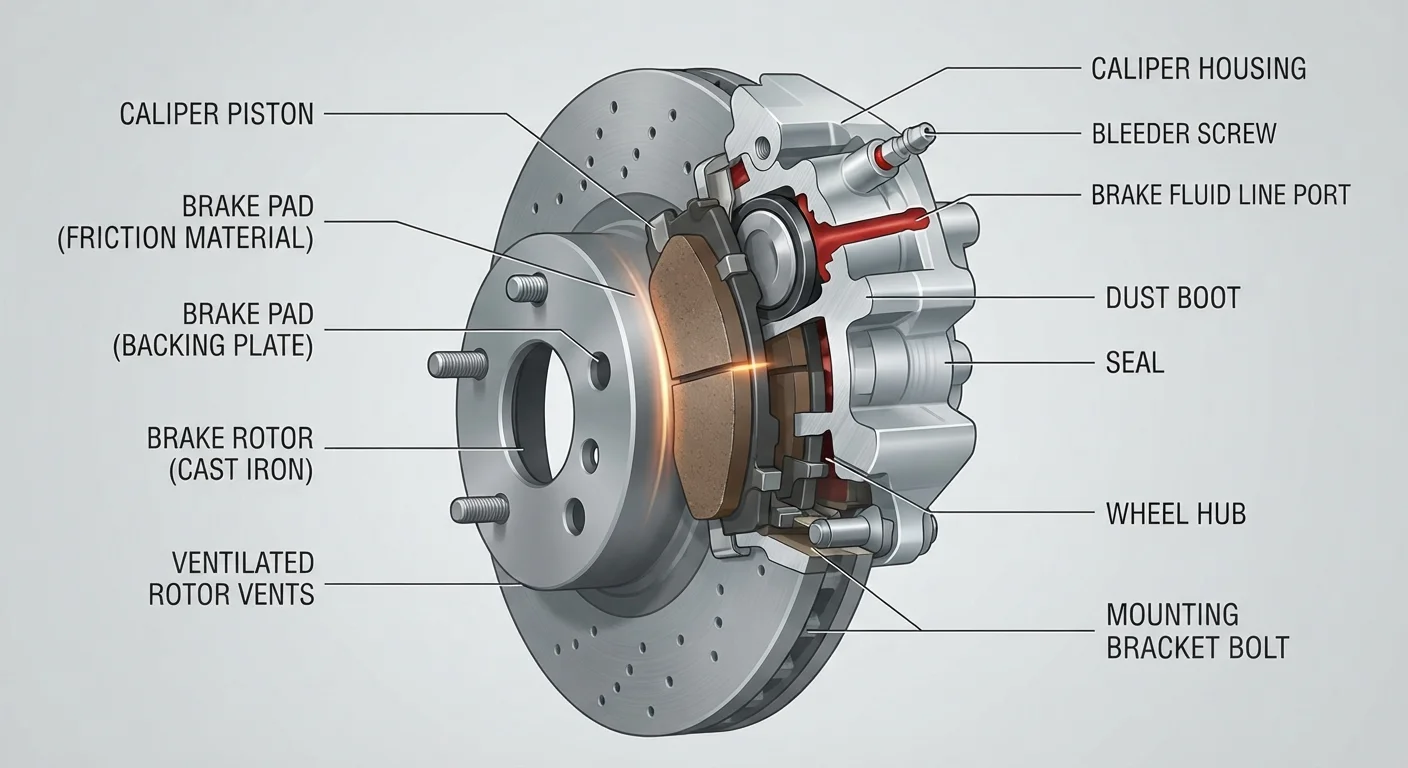
Braking distance: Underinflated tires generate excess heat and deform under braking load, which can lengthen stopping distances - a critical factor in emergency situations. This interacts directly with your brake hardware; if you're curious how those systems work together, see how brake pads, rotors, and calipers function.
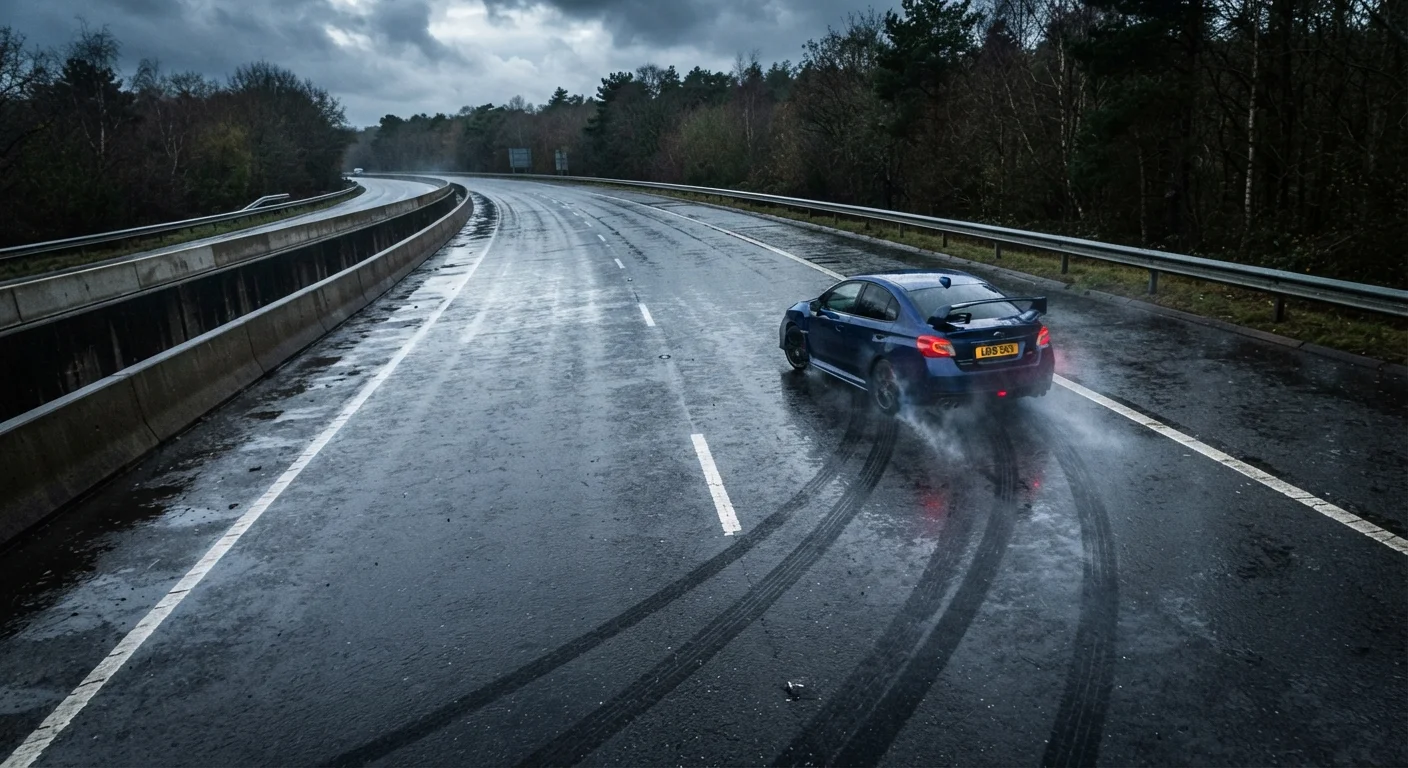
Handling and stability: Incorrect pressure makes a vehicle feel vague or unpredictable in corners. Modern stability control systems can partially compensate, but they operate within limits - and those limits shrink when the tires aren't properly inflated.
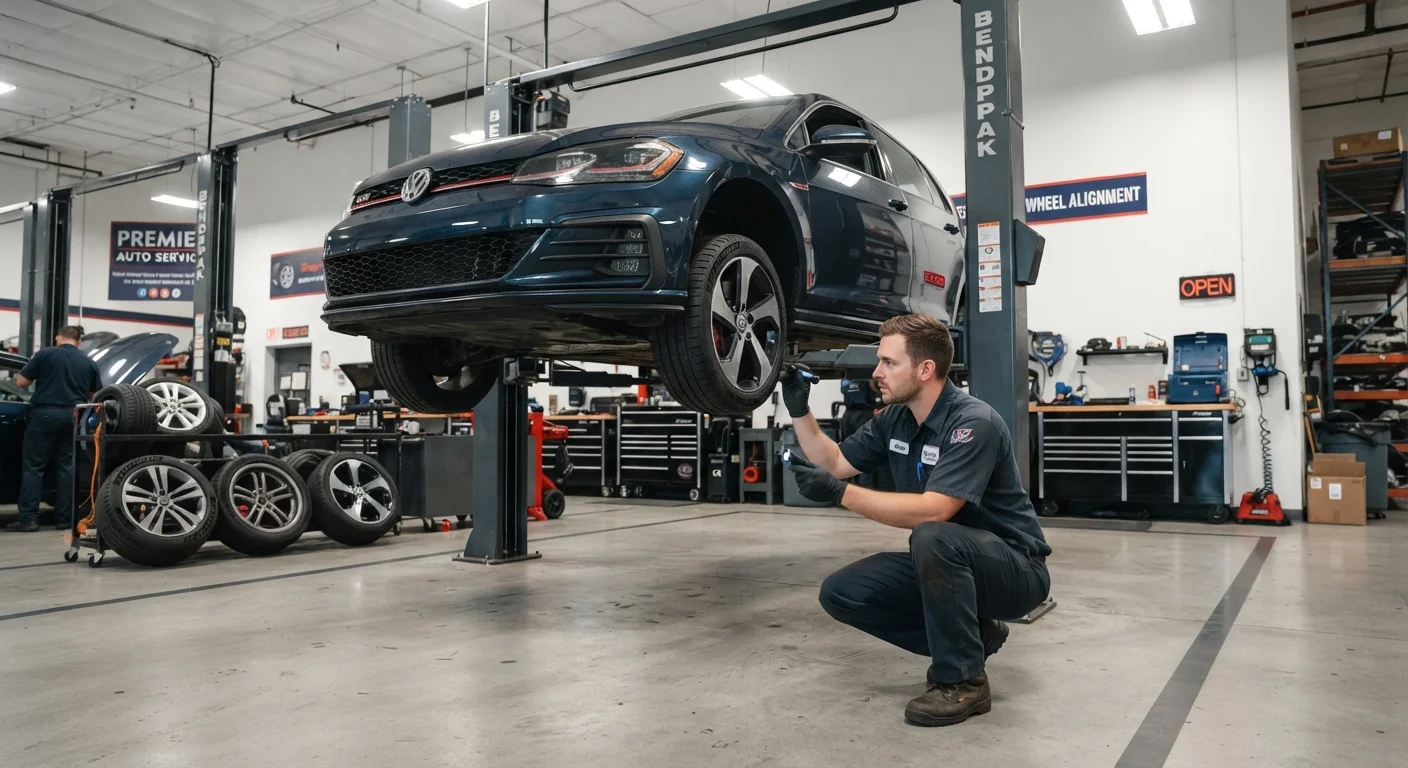
Tread wear: Pressure imbalances cause uneven wear patterns that shorten tire life. Underinflated tires wear the shoulders; overinflated tires wear the center. Either pattern can mean replacing tires thousands of miles earlier than expected. For additional context on wear and related services, see tire rotation, alignment, and balancing.
Blowout risk: Sustained underinflation generates heat that weakens the tire's internal structure. High-speed blowouts from heat-fatigued tires are among the more dangerous failure modes on the highway.
~1 PSI
Pressure drop per 10°F temperature decrease
A widely cited rule of thumb from tire industry guidance, relevant for seasonal pressure management.
25%
Below recommended PSI before TPMS typically alerts
Most factory TPMS systems are calibrated to warn at approximately 25% below the placard pressure, meaning problems can exist before any dashboard warning appears.
~0.2%
Fuel economy loss per 1 PSI drop across all tires
Estimate from the U.S. Department of Energy's general guidance on tire inflation and vehicle efficiency.
How Temperature Throws Off Your PSI
Tire pressure isn't static - it responds to ambient temperature. As a general rule, pressure drops by approximately 1 PSI for every 10°F decrease in outside temperature. That means a tire inflated correctly during a warm September afternoon could be 4-5 PSI low by mid-January without losing a single molecule of air.
This is why seasonal pressure checks matter, particularly in regions with cold winters. Drivers who rely solely on the Tire Pressure Monitoring System (TPMS) warning light should know that most TPMS systems don't alert until a tire is roughly 25% below the recommended pressure - by which point the tire has already been operating in a degraded condition.
Build a Monthly Check Into Your Routine
Pair your monthly tire pressure check with something you already do regularly - such as the first of the month or a recurring errand. Keep a gauge in the glove compartment so it's always available. Checking all four tires and the spare takes under five minutes and is one of the highest-return maintenance habits a driver can develop.
Checking Pressure Correctly
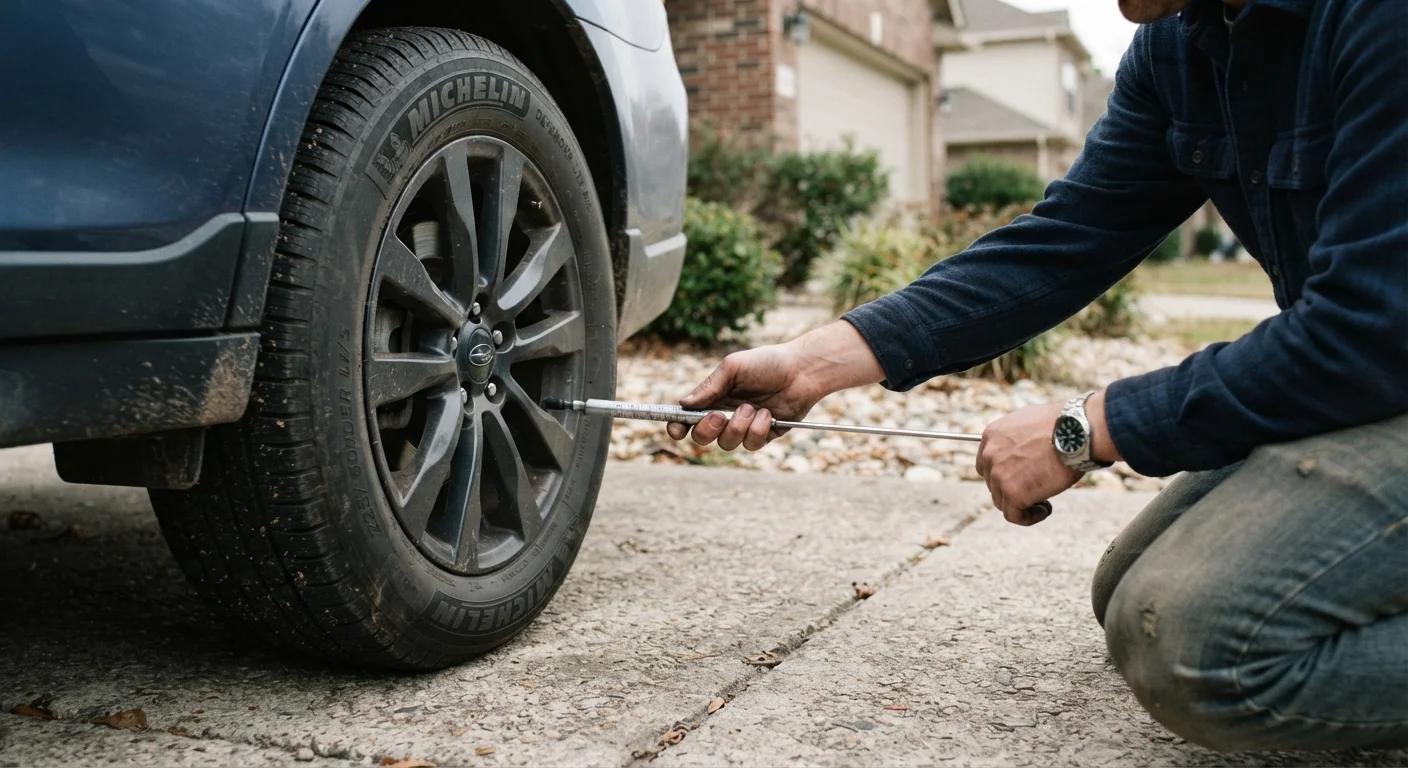
Use a quality dial or digital gauge - the pencil-style gauges are inexpensive but less reliable. Check pressure when the tires are cold: either first thing in the morning or after the car has sat for at least three hours. Driving heats the air inside the tire, inflating readings artificially.
Match the reading to the PSI listed on your driver's door jamb sticker. If a tire is low, add air in small increments and recheck. If it's consistently losing pressure, have it inspected for a slow leak or valve stem issue - don't just keep topping it off.
For a broader look at how tire pressure fits into routine vehicle upkeep, our complete car maintenance guide covers the full picture from fluids to filters.