Two Forces Working Against You
Every time you need to stop quickly, two separate clocks are running simultaneously. The first starts the moment your eyes register a hazard. The second starts only after your foot actually engages the brake pedal. Understanding the difference between these two phases - reaction distance and braking distance - is the foundation of safer driving.
Reaction distance is the ground your vehicle covers while your brain processes the threat and your foot moves to the brake. The average driver takes about 1.5 seconds to react. At 60 mph, that's roughly 132 feet of travel before any deceleration begins. Distraction, fatigue, or impairment can push that figure significantly higher.
Braking distance is what happens after you hit the pedal. This is where physics takes over: the kinetic energy stored in a moving vehicle must be absorbed by the brakes and transferred to the road surface as heat and friction. The faster you're going, the more energy there is to dissipate - and it doesn't scale linearly.
132 ft
Reaction distance at 60 mph
Based on an average human reaction time of 1.5 seconds, before braking even begins.
4x
Stopping distance increase when speed doubles
Due to the kinetic energy equation, braking distance grows with the square of speed, not linearly.
2-4x
Stopping distance increase on ice vs. dry pavement
Ice dramatically reduces tire-road friction, extending safe stopping distances well beyond dry-road estimates.
Why Speed Is the Biggest Variable
Many drivers instinctively think that going twice as fast means they need twice the stopping distance. The reality is far more sobering. Because kinetic energy is proportional to the square of velocity, doubling your speed roughly quadruples the braking distance required.
Consider this: a car traveling at 30 mph might require around 75 feet of total stopping distance under good conditions. At 60 mph, that figure jumps to over 300 feet. At 70 mph, it can exceed 400 feet. These aren't worst-case scenarios - they're typical values for a well-maintained vehicle on dry pavement with an alert driver.
This exponential relationship is why speed limits near schools, intersections, and pedestrian zones are set as they are. A few extra miles per hour isn't a minor difference - it can be the margin between a near-miss and a collision. For drivers looking to understand the broader habits that account for this reality, defensive driving techniques offer a practical framework.
Use the 3-Second Rule as a Baseline
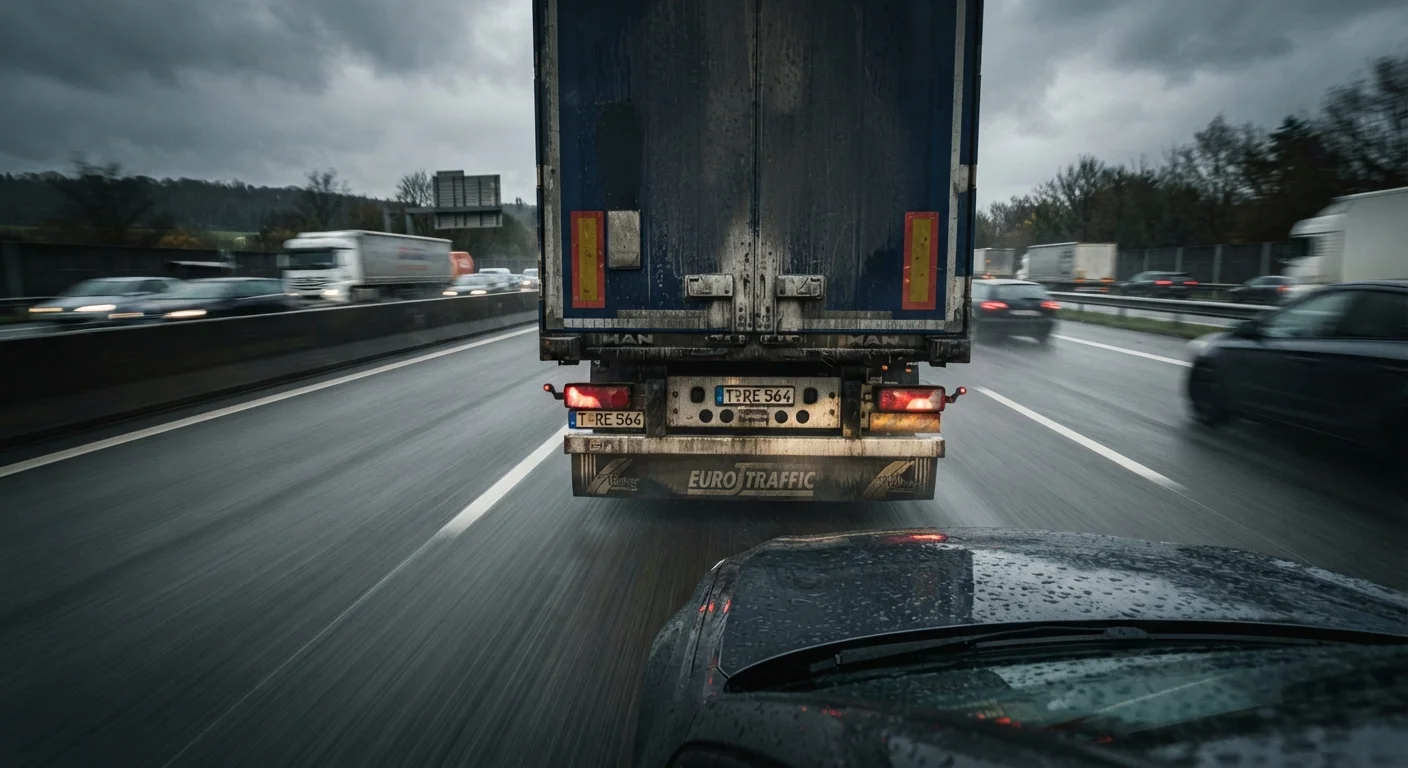
Pick a fixed object on the road ahead and count the seconds between when the vehicle in front passes it and when you do. Three seconds is a minimum buffer under dry, normal conditions. In rain, at night, or at highway speeds, extend it to four or five seconds. This gives your actual stopping distance a fighting chance to work.
How Road Conditions Multiply the Risk
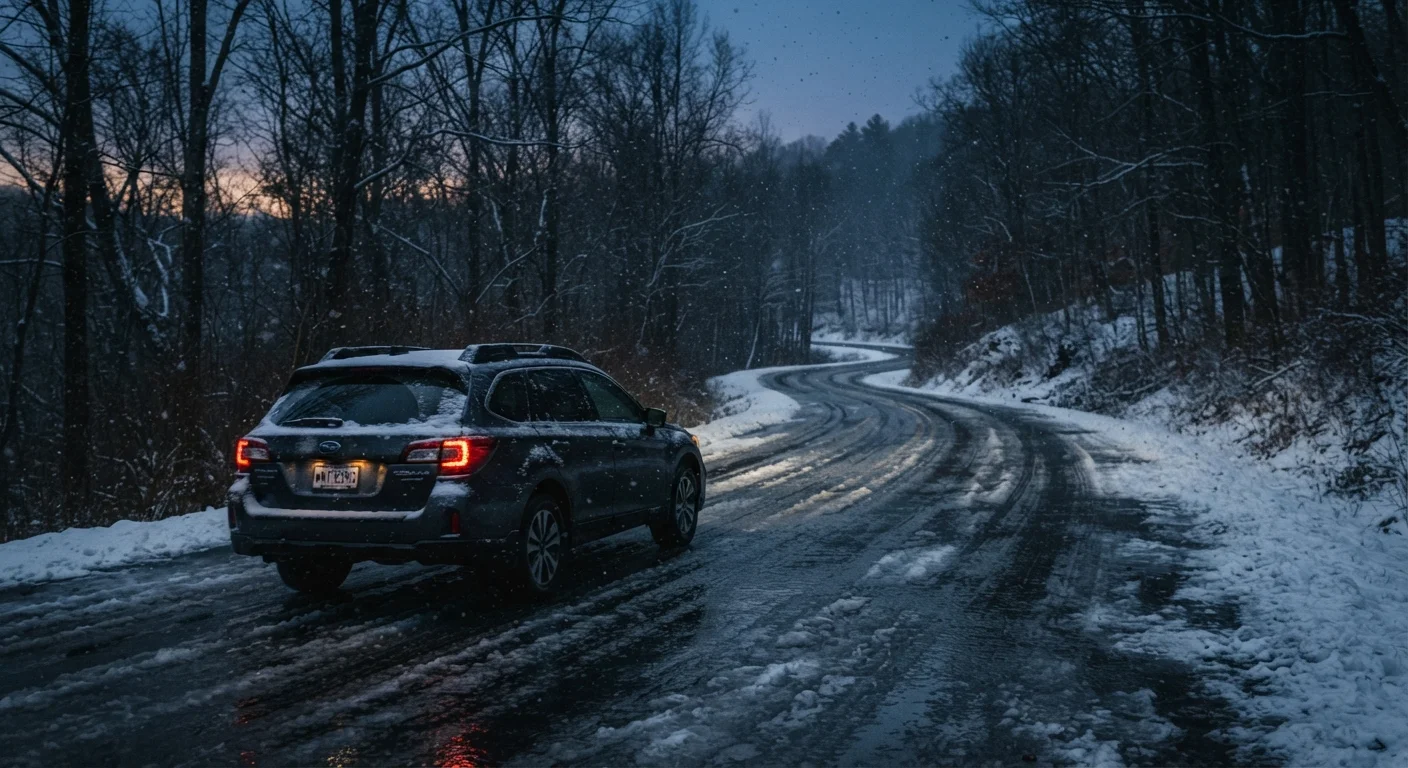
Dry asphalt is the best-case scenario. Everything else - rain, standing water, ice, snow, gravel, even road paint - reduces the friction available between your tires and the road. That reduced friction means your brakes have less to work with, and stopping distance extends accordingly.
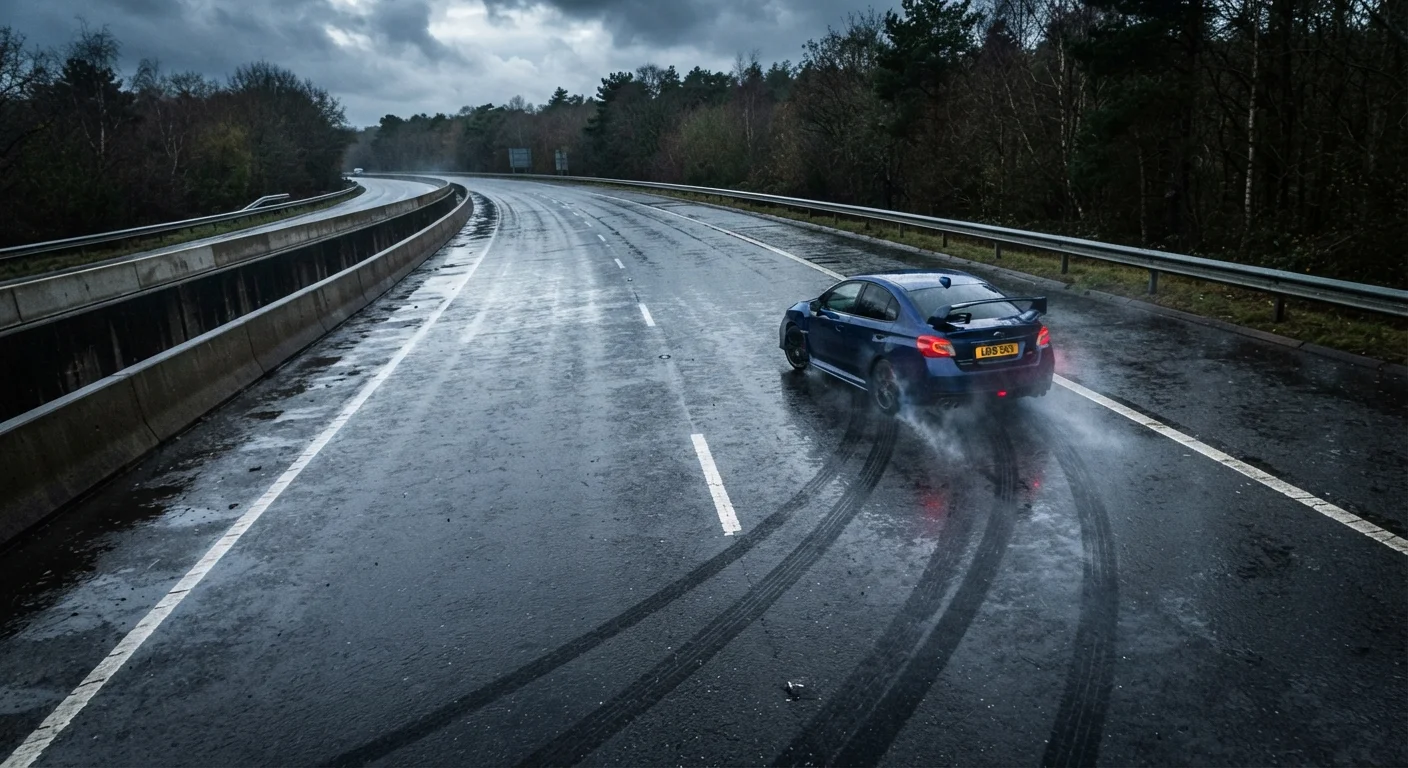
Wet roads can increase stopping distance by 50-100% compared to dry conditions. Ice can make stopping distances four times longer or more. This isn't just a matter of driving more carefully - it requires fundamentally adjusting your speed and following distance before you encounter a problem, not after.
How road conditions change your driving goes deeper into specific techniques for wet and frozen surfaces, but the core principle here is simple: if traction is reduced, your buffer must increase.
ABS Doesn't Always Shorten Stopping Distance
Anti-lock braking systems (ABS) prevent wheel lockup and help drivers maintain steering control during hard braking - which is critically important for avoiding obstacles. However, on loose surfaces like gravel or deep snow, ABS may slightly increase stopping distance compared to controlled wheel lockup. ABS is a safety system, not a speed-reduction guarantee.
Vehicle Condition Isn't Optional
Even with perfect reaction time and ideal road conditions, a poorly maintained vehicle can undermine everything. Two systems matter most: tires and brakes.
Tires with worn tread can't channel water effectively or grip the road adequately. At highway speeds on a wet road, worn tires can hydroplane - meaning the tire rides on a thin layer of water rather than contacting the pavement at all, making braking nearly impossible. Checking tread depth regularly and replacing tires at or below 2/32 inch is a straightforward but critical maintenance habit.
Brake condition matters just as much. Worn brake pads, warped rotors, or low brake fluid all reduce the system's ability to convert kinetic energy into heat efficiently. A brake system that feels adequate during gentle, everyday stops may be significantly compromised when you need full emergency braking force.
Tailgating eliminates the buffer that your stopping distance requires. Following too closely removes your reaction window entirely - and no amount of braking capability compensates for zero margin of safety.