
The Five Core Sections of a Credit Report
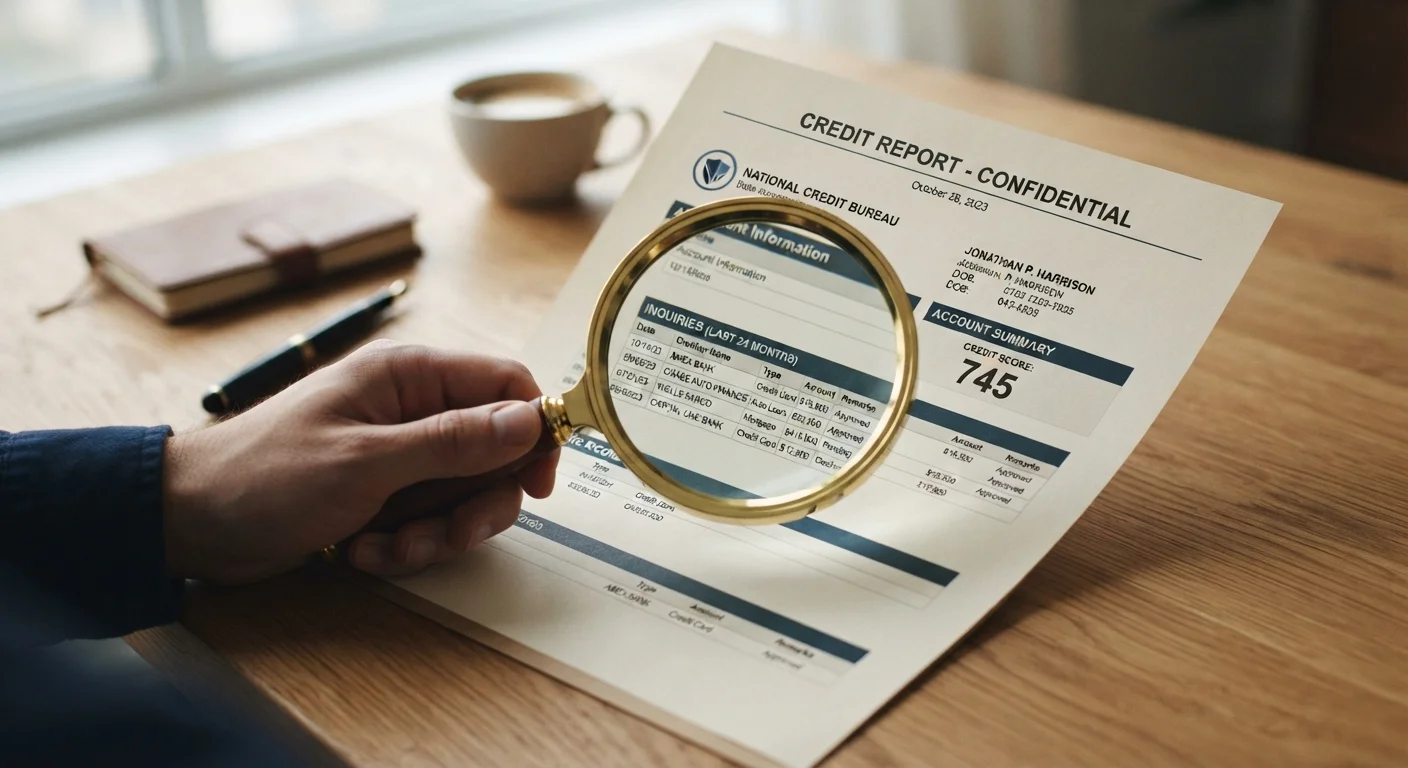
A standard credit report - issued by any of the three major U.S. bureaus (Equifax, Experian, and TransUnion) - is divided into five main sections. If you're new to borrowing concepts, see our introductory guide to credit and debt before diving in.
| Number of Major Credit Bureaus | 3 (Equifax, Experian, TransUnion) (Consumer Financial Protection Bureau (CFPB)) |
| Free Annual Report Access | AnnualCreditReport.com (Mandated by FCRA) |
| Chapter 7 Bankruptcy Duration | 10 years on credit report (Fair Credit Reporting Act) |
| Most Negative Items Duration | 7 years from original delinquency (Fair Credit Reporting Act) |
| Payment History Weight in FICO Score | ~35% (myFICO.com, general published guidance) |
| Dispute Rights | Consumers may dispute errors with each bureau directly (FCRA, Section 611) |
1. Personal Information
This section identifies you: full name, current and previous addresses, date of birth, Social Security number (partially masked), and employer information. It does not affect your credit score - its purpose is identity verification. Always review it for errors, which could indicate a reporting mistake or identity fraud.
2. Account History (Trade Lines)
This is the largest and most score-influential section. Each account - credit cards, auto loans, mortgages, student loans - appears as a separate trade line showing: the lender name, account type, date opened, credit limit or loan amount, current balance, monthly payment, and payment history going back up to seven years. Late payments are coded by severity: 30, 60, 90, or 120+ days past due.
3. Public Records
This section once included judgments and tax liens, but most have been removed from consumer reports following 2017-2018 industry changes. Today, bankruptcies remain the primary public record you'll see. A Chapter 7 bankruptcy stays on your report for 10 years; a Chapter 13 stays for 7 years.
4. Collections
When a creditor sells or transfers an unpaid debt to a collections agency, a separate collections entry appears. This is distinct from the original account and can significantly lower your scores. Collections generally remain for 7 years from the original delinquency date.
5. Inquiries
Every time a lender or other authorized party checks your credit, an inquiry is recorded. Understanding which type you're looking at is important - see our dedicated explainer on hard vs. soft credit pulls for full detail.
How to Interpret What You Find
Trade Line
An individual credit account entry on your credit report. Each loan or credit card you hold appears as a separate trade line with its own history, balance, and status.
Hard Inquiry
A credit check triggered when you apply for new credit, such as a loan or credit card. Hard inquiries are visible to lenders and can modestly lower your credit score for a period of time.
Credit Utilization Ratio
The percentage of your available revolving credit that you are currently using. It is calculated by dividing your total balances by your total credit limits across revolving accounts.
Derogatory Mark
Any negative item on a credit report - such as a late payment, collection, charge-off, or bankruptcy - that indicates a failure to repay debt as agreed.
Charge-Off
When a creditor declares a debt unlikely to be collected and writes it off as a loss, typically after 180 days of non-payment. The debt may still be owed and can be sold to a collections agency.
Fair Credit Reporting Act (FCRA)
A U.S. federal law that regulates how consumer credit information is collected, shared, and used, and that grants consumers rights to access and dispute their credit reports.
Once you know where each piece of information lives, the next step is understanding what it means for your financial health.
Payment History: The Biggest Factor
Payment history accounts for approximately 35% of a FICO score. A single 30-day late payment can remain visible for seven years, though its impact diminishes over time - especially as you build a consistent on-time record afterward.
Credit Utilization: Watch the Ratio
Your revolving utilization ratio - the percentage of available revolving credit you're using - is calculated from trade line data. Staying well below your credit limit is generally considered favorable, though the precise threshold that optimizes scoring varies by individual profile. This is general information, not a guarantee of any specific score change.
Account Age and Mix
The report shows the open date for each account. Scoring models consider both the age of your oldest account and the average age across all accounts. A healthy mix of revolving credit (credit cards) and installment loans (auto, mortgage) is also factored in, though payment history and utilization carry more weight.
Errors and Disputes
The Consumer Financial Protection Bureau (CFPB) reports that errors on credit reports are not uncommon. Under the Fair Credit Reporting Act (FCRA), consumers have the right to dispute inaccurate information directly with the bureaus. You can access your reports from all three bureaus for free at AnnualCreditReport.com. If you find a discrepancy, file a dispute in writing with supporting documentation.
Your Right to Free Credit Reports
Under federal law, you are entitled to a free credit report from each of the three major bureaus every 12 months via AnnualCreditReport.com. Reviewing all three is advisable because not all creditors report to every bureau. Spotting differences between reports can help you catch errors early.
This article is for general educational purposes only and is not personalized financial or legal advice. Consult a qualified financial professional regarding decisions specific to your situation.