Why Risk and Return Are Always Connected
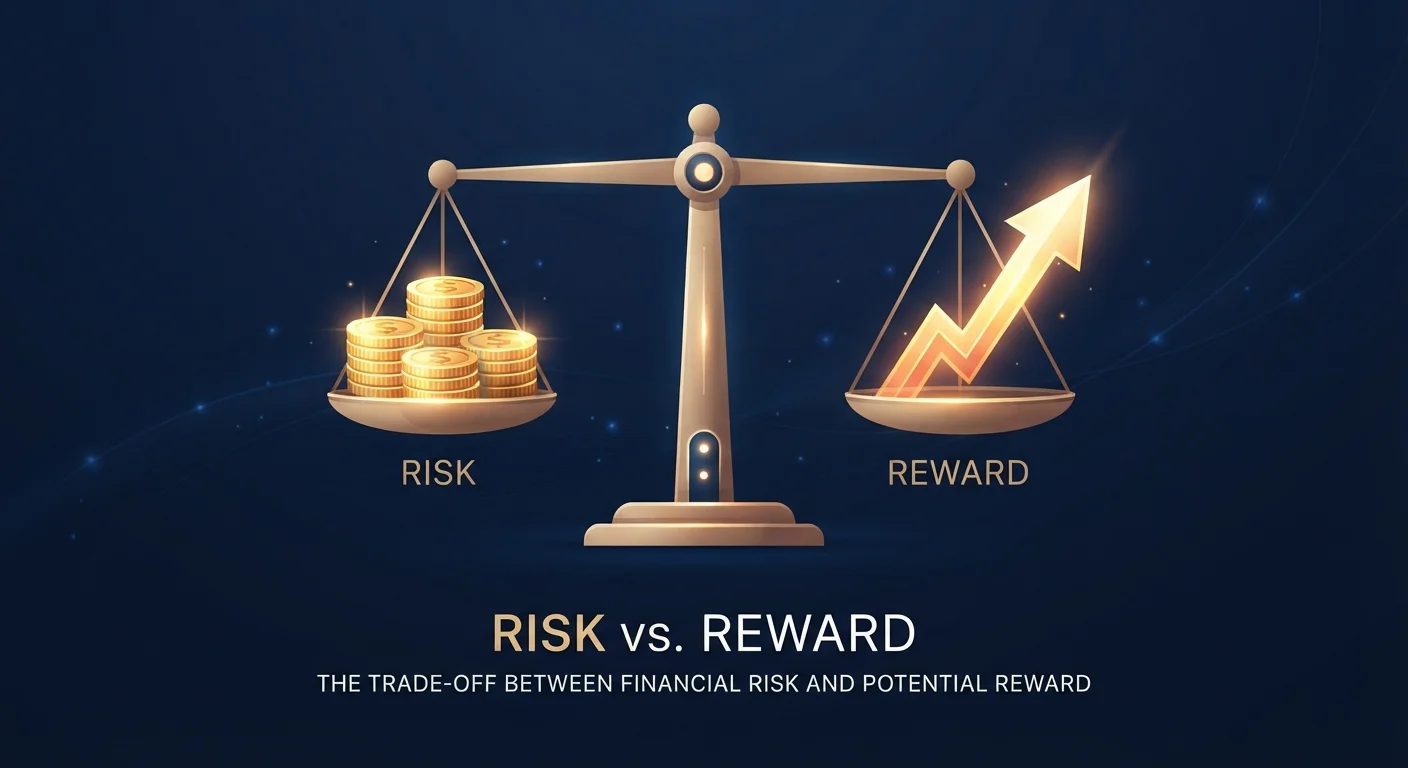
At the core of every investment decision is a simple, unavoidable relationship: the more return you want, the more risk you typically have to accept. This isn't a flaw in the system - it's the mechanism that makes investment markets function.
Think of it this way: if a high-return investment carried zero risk, everyone would pile into it, driving up its price until the returns normalized. Markets naturally price assets so that higher expected gains compensate investors for taking on greater uncertainty. This is why U.S. Treasury bonds - backed by the federal government - pay relatively modest interest rates, while stocks in individual companies can rise dramatically but can also collapse.
Understanding this trade-off matters before putting a single dollar into any account, fund, or asset. It shapes everything from how you build a portfolio to how you react when markets move. For a solid foundation in the vocabulary that comes up throughout this conversation, see our guide to key investing terms.
“Risk comes from not knowing what you're doing. The investor of today does not profit from yesterday's growth.”
— Warren Buffett, Chairman and CEO, Berkshire Hathaway; widely cited investor
Types of Risk Every Investor Faces
Risk isn't one-dimensional. Several distinct types of risk affect investments, and recognizing them helps you make more informed choices:
- Market risk: The possibility that the entire market declines, reducing the value of most assets simultaneously. This affected virtually all investors during the 2008 financial crisis and the early months of the COVID-19 pandemic.
- Inflation risk: The danger that investment returns don't keep pace with inflation, eroding your purchasing power over time. Even a savings account earning 2% interest loses real value when inflation runs at 4%.
- Concentration risk: The hazard of holding too much of your money in a single asset, sector, or company. If that investment performs poorly, your portfolio takes an outsized hit.
- Liquidity risk: The risk that you can't quickly convert an investment to cash without significant loss - common with real estate or certain alternative assets.
- Credit risk: Relevant mainly for bonds - the chance that the issuer defaults and cannot repay its debt obligations.
No investment is free from all of these. Even FDIC-insured bank deposits, safe from loss of principal up to the insured limit, still carry inflation risk.
~10%
Average annual return of US stocks (historical)
According to data compiled by NYU Stern School of Business, the S&P 500 has averaged roughly 10% annually over long periods - but with significant year-to-year volatility.
~50%
Peak-to-trough decline in S&P 500, 2007-2009
The S&P 500 fell approximately 50% during the 2007-2009 financial crisis, illustrating the substantial downside risk that accompanies equity investments.
3-5%
Typical range for 10-year US Treasury yields
U.S. Treasury securities are widely considered among the lowest-risk investments available, with yields that historically reflect that reduced risk relative to equities.
Matching Risk to Your Personal Situation
The right level of risk isn't universal - it's personal. Two people could look at the same investment and reach opposite conclusions about whether it fits their needs, because their situations differ fundamentally.
Key factors that shape your appropriate risk level include:
- Time horizon: If you won't need the money for 25 years, short-term volatility matters far less than if you're five years from retirement. Longer timelines create room to recover from market downturns.
- Financial cushion: An investor with substantial emergency savings and stable income can afford to absorb losses more readily than someone with thin reserves.
- Emotional tolerance: Some people can watch a portfolio drop 30% without flinching; others lose sleep. Honest self-assessment here prevents panic-driven decisions that lock in losses.
- Financial goals: Saving for a down payment in three years demands a very different approach than building retirement wealth over decades.
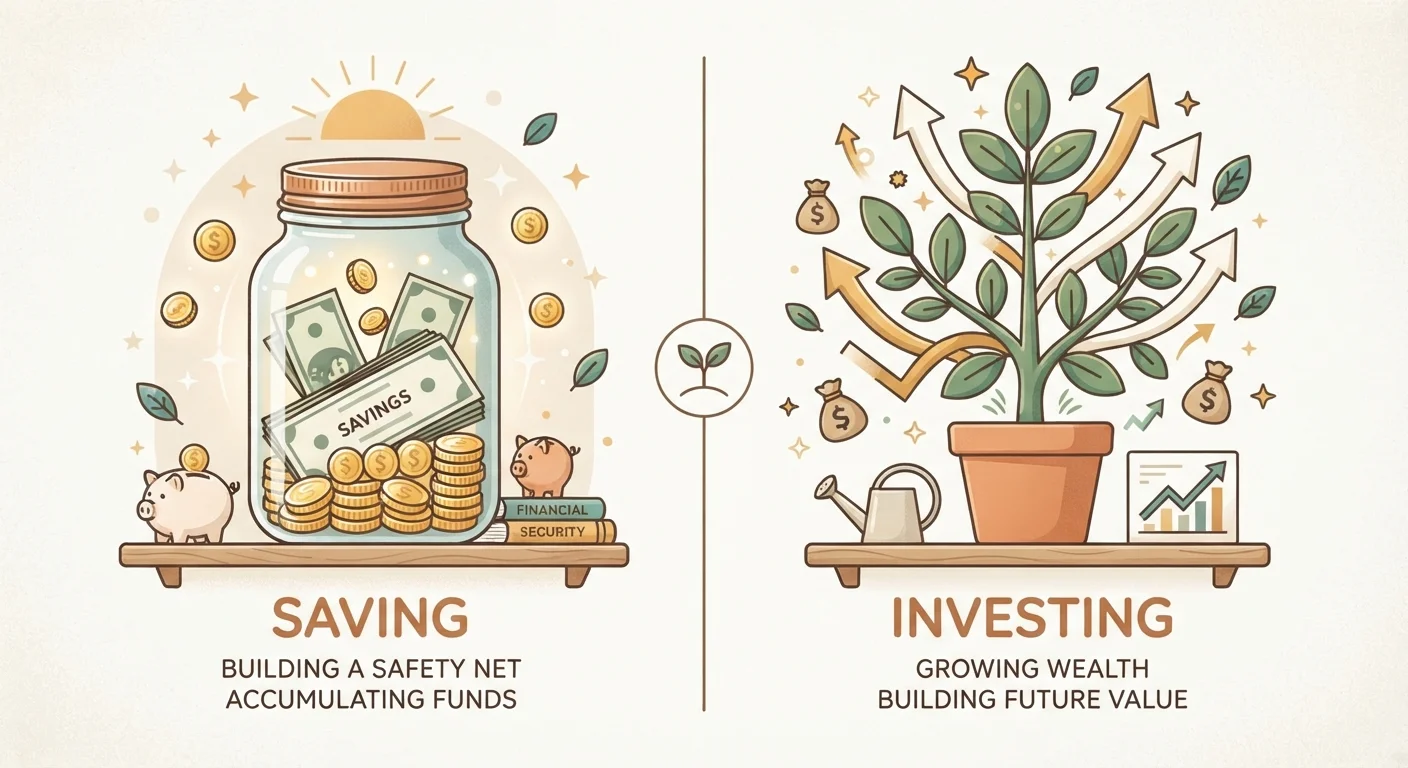
It's also worth distinguishing investing from saving altogether. If you're still building foundational financial stability, understanding how saving and investing differ is a useful starting point before taking on investment risk.
A Simple Starting Question
Before any investment, ask yourself: 'Could I afford - financially and emotionally - to lose a significant portion of this money in the short term?' If the honest answer is no, that investment may carry more risk than your current situation can support. Starting with this question helps align choices with reality, not just optimism.
Managing Risk Without Abandoning Growth
Accepting risk doesn't mean accepting unnecessary risk. Several widely used strategies help investors manage the downside without completely sacrificing potential returns.
Diversification is the most fundamental tool. By spreading investments across different asset classes - stocks, bonds, real estate, cash equivalents - and within them across sectors and geographies, you reduce the damage any single underperformer can do to your overall portfolio. Losses in one area may be offset by gains in another.
Asset allocation - the proportion of your portfolio in each asset class - is the primary driver of both risk and return over time. A portfolio weighted heavily toward stocks historically offers higher long-run growth but with more volatility. A bond-heavy portfolio tends to be steadier but grows more slowly.
Rebalancing periodically - realigning your portfolio back to its target allocation after market movements shift the mix - keeps your risk exposure in line with your intentions.
None of these strategies guarantee gains or prevent losses. Past performance of any asset class does not guarantee future results. A licensed financial adviser can help you build a strategy suited to your specific goals and circumstances - this article is general educational information, not personalized investment advice.
This article is for informational and educational purposes only and does not constitute personalized financial or investment advice. Consult a qualified, licensed financial professional before making decisions about your own investments.