What Sets Saving Apart from Investing
Saving and investing are often used interchangeably in everyday conversation, but they describe fundamentally different financial actions. Understanding the distinction helps you put the right dollars in the right place at the right time.
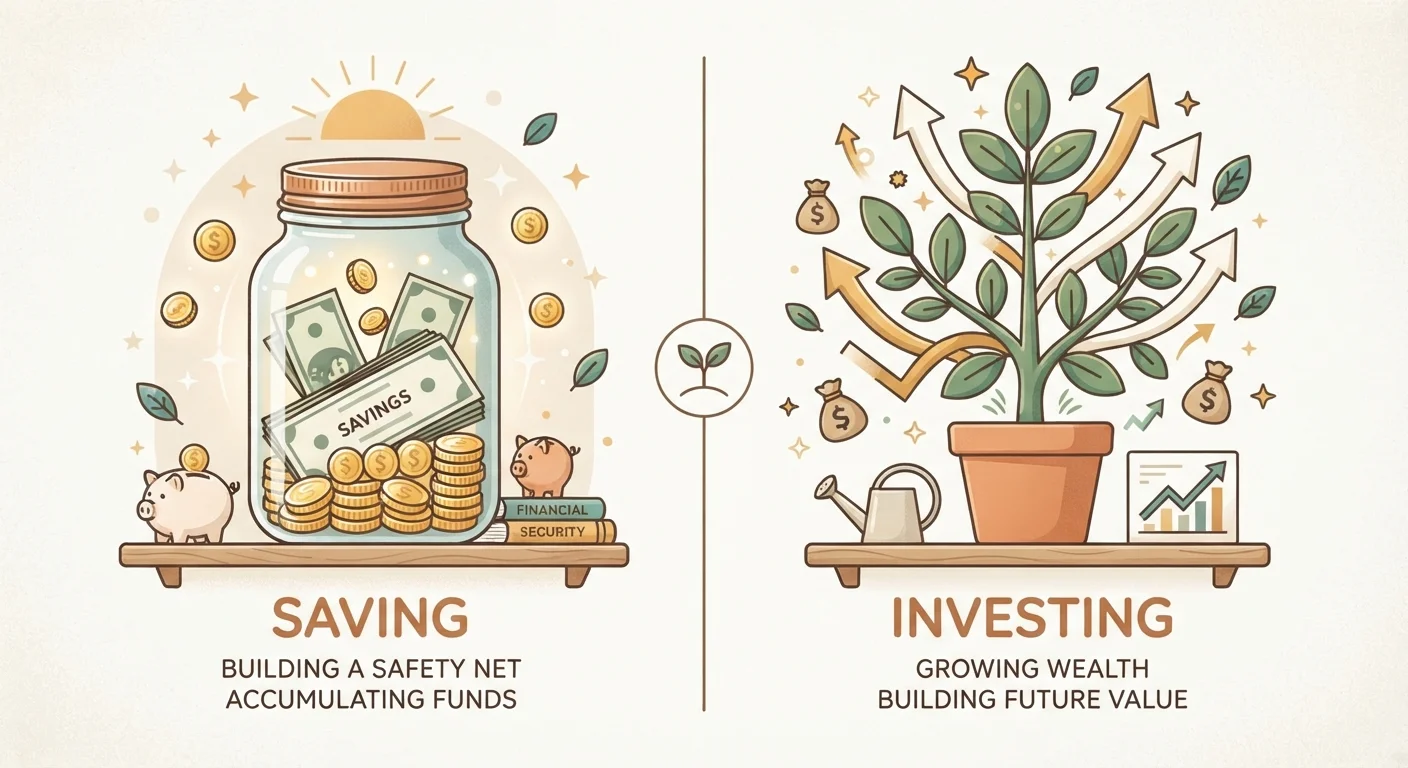
Saving means holding money somewhere safe and accessible - most commonly a bank savings account, a money market account, or a certificate of deposit (CD). The primary goals are preservation of principal and liquidity: your money should be there when you need it, and it shouldn't lose its face value. The trade-off is modest growth. Even high-yield savings accounts rarely outpace inflation consistently over the long run.
Investing means allocating money to assets - such as stocks, bonds, mutual funds, or real estate - with the expectation that the value will grow over time. Returns are not guaranteed. Investments can and do lose value, sometimes significantly. But over long time horizons, investing has historically offered returns that outpace inflation by a meaningful margin, making it the primary engine for building wealth. See our guide to basic asset classes for a deeper look at how different investment types behave.
Terminology Can Be Misleading
Common terms like "retirement savings" or "savings plan" often refer to investment accounts - not traditional bank savings. A 401(k) or IRA holds investments, not just cash deposits. Understanding this distinction prevents confusion when reading financial documents or planning conversations. For a full glossary of terms, see our financial terms reference for new investors.
When Each Approach Makes Sense
Choosing between saving and investing isn't an either-or decision - it's a sequencing and allocation question based on your financial goals and timeline.
Saving is the right tool when:
- You need the money within one to three years (a vacation, a down payment, a car purchase).
- You don't yet have an emergency fund covering three to six months of essential expenses.
- You cannot afford to risk losing any of the principal.
Investing is the right tool when:
- Your goal is five or more years away - retirement, a child's college fund, long-term wealth building.
- You have a stable income and a funded emergency cushion.
- You understand and can tolerate some degree of market fluctuation.
For most people, both operate in parallel. You maintain liquid savings for short-term needs and protection, while directing longer-term dollars into investment accounts. Our article on emergency funds versus investment accounts walks through how to think about the order of operations when spare cash is limited.
~4.5%
Peak high-yield savings rate (2023-2024 cycle)
Following Federal Reserve rate increases, some FDIC-insured savings accounts offered rates around this level - still below many historical stock market averages over long periods.
~10%
Average annual S&P 500 return (historical, pre-inflation)
The S&P 500 index has historically averaged roughly 10% annually before inflation over long periods, though past performance does not guarantee future results.
56%
Americans who own stocks in some form
According to Gallup polling, slightly more than half of U.S. adults reported owning stocks - directly or through funds and retirement accounts - as of recent surveys.
The Role of Risk - and Why It Matters
Risk is the central reason saving and investing produce different outcomes. Savings accounts are insured by the FDIC up to $250,000 per depositor per institution, which means your principal is protected from bank failure. You know exactly what you'll have tomorrow. That certainty comes at a cost: limited growth potential.
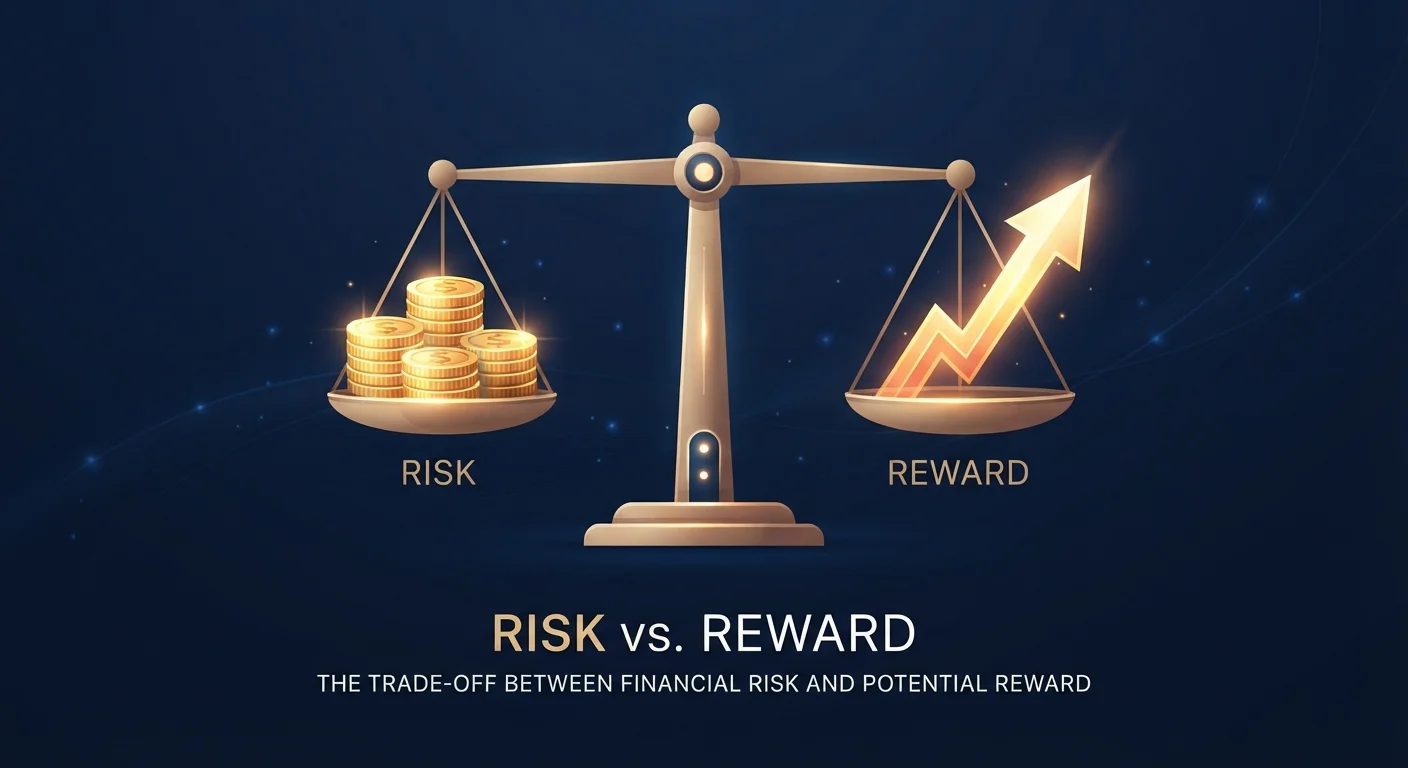
Investments carry market risk - the possibility that the value of your holdings will decline. Stocks can fall sharply during economic downturns. Even diversified portfolios experience volatility. This risk is real, and anyone considering investing should understand it clearly. That said, risk and potential return are linked: historically, accepting more short-term volatility has been associated with higher long-term returns. For a thorough explanation of this dynamic, see our piece on risk and return.
One underappreciated risk of not investing is inflation erosion. When the purchasing power of your money declines faster than your savings account earns interest, you're effectively losing ground even as your balance grows. Over decades, this gap can be substantial - which is one reason financial professionals generally recommend investing for long-term goals rather than keeping everything in cash.
Start With Your Emergency Fund
If you're unsure where to begin, prioritize building a liquid emergency fund before directing money toward investments. Having three to six months of essential expenses in an accessible savings account means you're less likely to need to sell investments at an inopportune time. Once that foundation is in place, even modest investment contributions can begin building long-term momentum. Our guide to getting started with investing covers how to begin even when funds are limited.
This article is for general informational purposes only and does not constitute personalized financial advice. Consult a qualified financial professional before making decisions about your own saving and investing strategy.