What the Nutrition Facts Panel Actually Is
The Nutrition Facts panel is a standardized information box that federal law requires on most packaged foods sold in the United States. Regulated by the Food and Drug Administration (FDA), the format was most recently updated in 2020 to reflect current dietary science and make key figures - like added sugars and vitamin D - more prominent.
Its purpose is straightforward: to give consumers consistent, comparable data across products. Whether you're looking at a box of crackers or a can of beans, the layout is the same, which makes comparison possible once you know how to read it. If you're new to thinking about food composition, our introductory nutrition guide covers the broader context.
Serving size
The standardized amount of food the label's numbers are based on, set by the FDA using consumption data. It is not a recommendation for how much to eat.
% Daily Value (% DV)
A percentage showing how much of a nutrient one serving contributes toward a 2,000-calorie reference diet. Used for quick comparisons between products.
Added sugars
Sugars and syrups added to food during processing or preparation, listed separately from naturally occurring sugars like those in fruit or milk.
Saturated fat
A type of fat found mainly in animal products and some tropical oils. Current dietary guidance recommends limiting it as a share of total fat intake.
Dietary fiber
The indigestible portion of plant foods that supports digestive health and contributes to feelings of fullness after eating.
Sodium
A mineral used in food processing and preservation. Most Americans consume more than current health guidance recommends.
Serving Size: The Number That Changes Everything
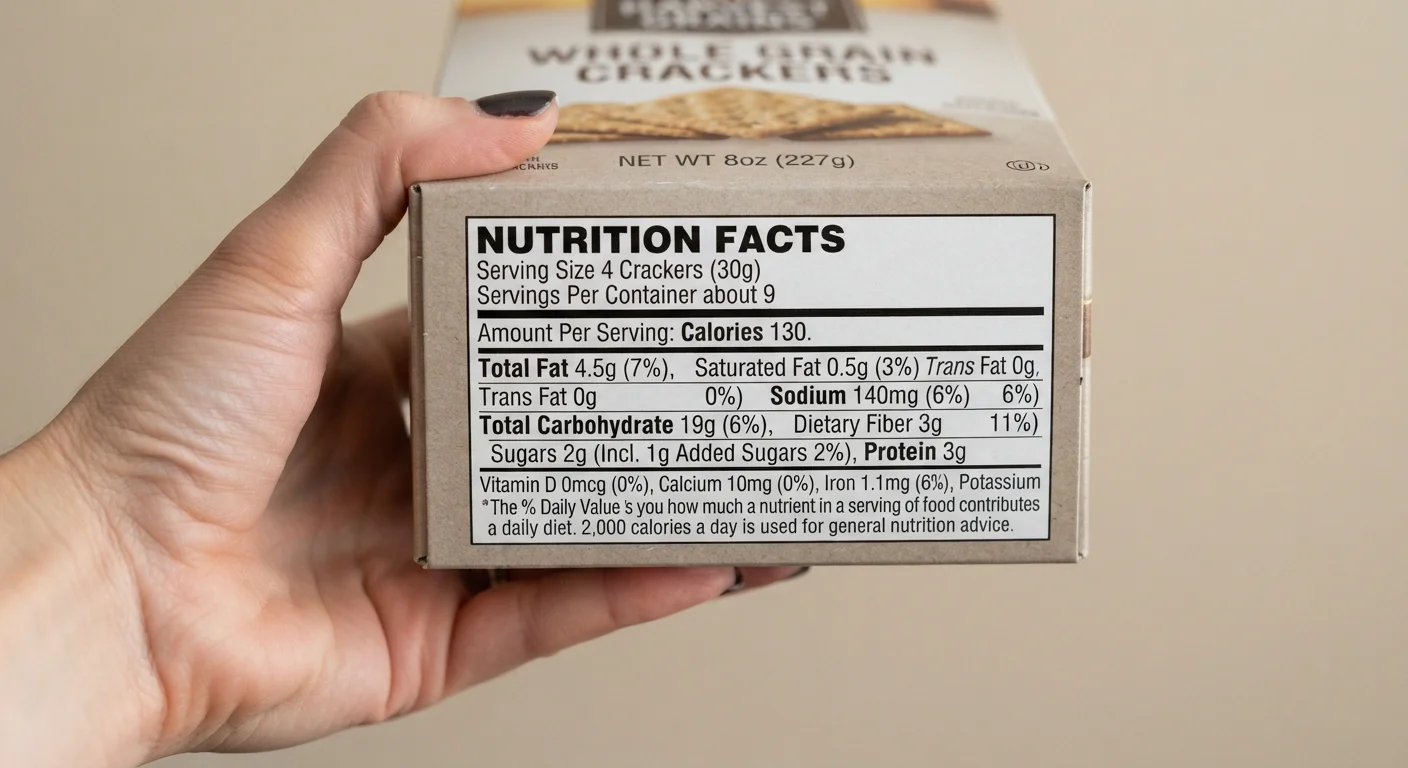
The serving size appears at the very top of the panel, and it's the single most important figure on the label. Every other number - calories, fat, sodium, vitamins - is calculated based on that one serving amount, not the full package.
This trips up many readers. A bag of chips listed at 150 calories per serving may contain three servings, meaning the whole bag is 450 calories. The serving size reflects what the FDA considers a typical amount consumed at one sitting, based on consumption surveys - not a recommendation for how much to eat.
Check Serving Size Before Anything Else
Before reading any other number on the panel, look at the serving size and ask how it compares to what you'd actually eat. If a realistic portion is two servings, mentally double every figure on the label. This single habit prevents the most common misreading of nutrition information.
Since 2020, packages containing between one and two servings must display a dual-column label showing both per-serving and per-package values side by side. This change was specifically designed to reduce the confusion that arises when people consume a container they reasonably assume is one serving.
Daily Values: A Relative Guide, Not a Personal Prescription
To the right of most nutrient figures, you'll see a percentage labeled % DV - percent Daily Value. This tells you how much of a nutrient one serving contributes toward a standard 2,000-calorie daily diet. The 2,000-calorie baseline is a regulatory reference point, not a target for any specific person.
A useful rule of thumb from the FDA: 5% DV or less is generally low for a nutrient; 20% DV or more is generally high. Use this to quickly gauge whether a food is a significant source of something - or contains an outsized amount of something you might want to limit.
Your actual daily needs depend on your age, sex, body size, activity level, and health status. A registered dietitian is the appropriate resource for personalized guidance. For now, think of % DV as a comparison tool, not a personal quota.
The Nutrients Worth Paying Attention To
Not every line on the label demands equal scrutiny. Here's where most readers benefit from focusing their attention:
- Added sugars: Listed separately from total sugars since 2020. Major health bodies, including the American Heart Association, recommend limiting added sugar intake. A high % DV here on a food that isn't a dessert is a signal worth noting.
- Sodium: Many processed and packaged foods are significant sodium sources. The Dietary Guidelines for Americans recommend most adults stay under 2,300 mg per day - checking sodium % DV across the foods in a meal adds up quickly.
- Saturated fat: Current dietary guidance suggests limiting saturated fat. It's listed separately from total fat on the panel.
- Dietary fiber: Most Americans fall short of recommended fiber intake. Foods with a higher % DV for fiber generally support digestive health and satiety.
- Protein: Unlike other nutrients, protein does not have a % DV listed (the calculation is complex and context-dependent). The gram amount is still useful to note, particularly for those monitoring intake.
To understand what these macronutrients actually do in your body, see our explainer on what macronutrients actually do.
Labels Alone Don't Define a Healthy Diet
Fixating on individual nutrients - hunting for zero-fat or zero-sugar labels - can obscure the bigger picture. Dietary patterns over time matter more than any single food's numbers. Use the label as one input among many, not as a pass/fail judgment on a food.
What the Label Doesn't Tell You
Nutrition labels are genuinely useful, but they have real limits. They don't tell you about ingredient quality, degree of processing, or how a food fits into an overall eating pattern. A product can have a tidy-looking label and still be heavily processed. Conversely, a whole food like an avocado or an egg has no label at all.
The ingredient list - a separate section below the Nutrition Facts panel - adds important context that numbers alone can't provide. Our guide on reading ingredient lists walks through what to look for there. And if you want to apply what you've learned without obsessing over every number, building a balanced plate without calorie counting offers a practical next step.
This article is for general informational and educational purposes only and does not constitute medical or dietary advice. Consult a qualified healthcare professional or registered dietitian for guidance tailored to your individual health needs.