
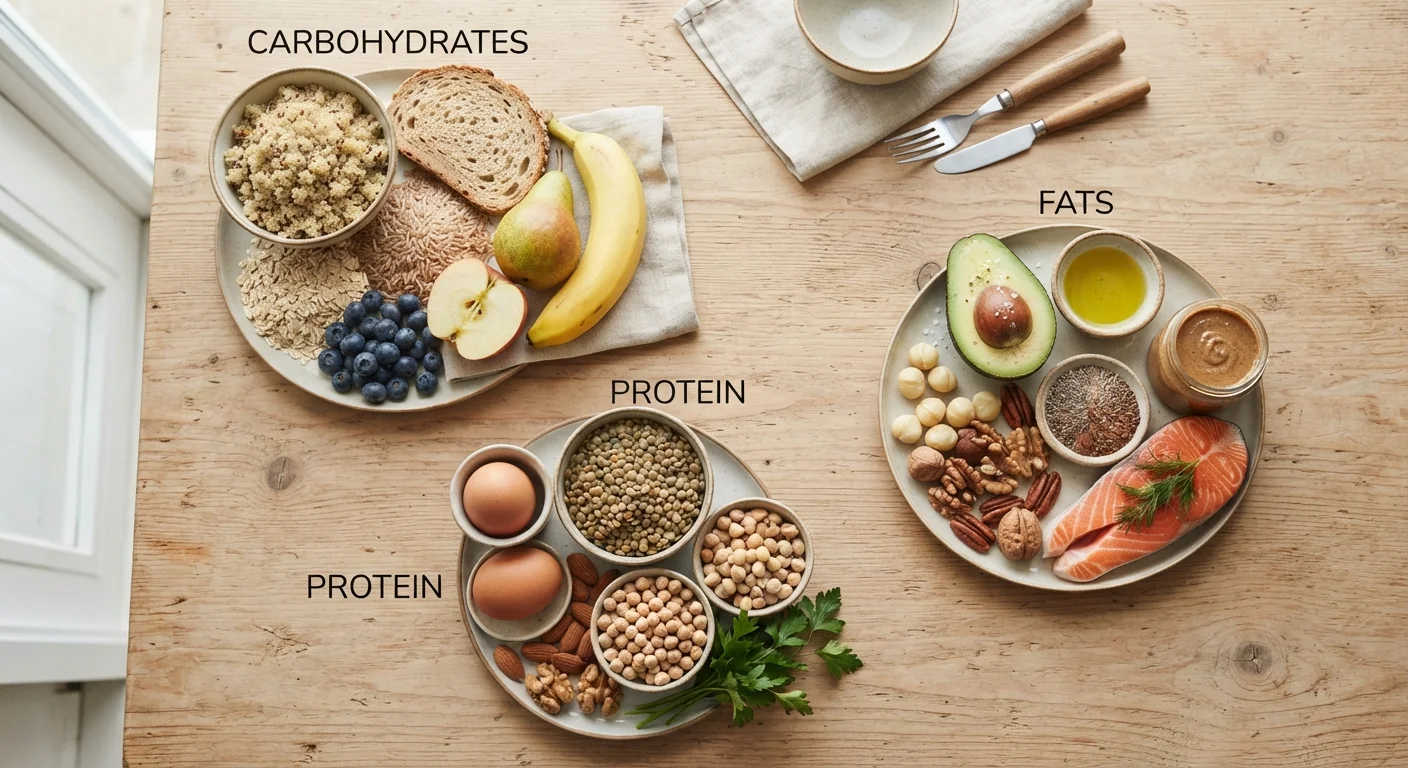
Carbohydrates: Your Body's First Choice for Fuel
Carbohydrates are broken down into glucose - a simple sugar your cells use as their primary energy source. Your brain alone runs almost exclusively on glucose, which is why low-carb diets can sometimes cause mental fogginess, especially early on.
Not all carbohydrates behave the same way. Complex carbohydrates - found in whole grains, legumes, vegetables, and fruits - are digested more slowly, delivering steadier energy and contributing dietary fiber that supports gut health. Simple carbohydrates, like those in refined grains and added sugars, digest quickly and can cause sharper spikes and dips in blood sugar.
Fiber, technically a carbohydrate, deserves a special mention. It isn't absorbed as a calorie source, but it plays a vital role in digestive health, cholesterol management, and keeping you feeling satisfied after meals.
Choose Carbs by Quality, Not Just Quantity
When evaluating carbohydrate-containing foods, look at fiber content and how processed the food is. Whole grains, legumes, and fruit offer fiber and micronutrients alongside their carbohydrates. Heavily refined options provide calories with less nutritional value alongside them.
Protein: The Body's Builder and Repairman
Protein is made up of smaller units called amino acids. Your body uses these amino acids to build and repair nearly every tissue - muscle, skin, hair, cartilage - and to produce enzymes, hormones, and antibodies that regulate bodily processes.
Of the 20 amino acids your body uses, nine are considered essential, meaning your body can't make them on its own and must get them from food. Animal proteins - meat, fish, eggs, dairy - contain all nine essential amino acids in adequate amounts, earning them the label "complete proteins." Most plant proteins are "incomplete" on their own, though pairing foods (like rice and beans) across the day covers all nine.
Protein also has a higher thermic effect than carbs or fat - your body burns more calories digesting it - and it tends to be the most satiating macronutrient per calorie, which is part of why higher-protein meals often feel more filling.
~17%
Body weight that is protein in an average adult
According to general physiology references, protein accounts for roughly 15-20% of total body weight, underscoring how structurally central it is.
9 kcal/g
Energy density of dietary fat
Fat yields more than twice the calories per gram compared to carbohydrates or protein, making portion awareness especially relevant for high-fat foods.
45-65%
Recommended share of calories from carbohydrates
The Dietary Guidelines for Americans suggest carbohydrates make up roughly 45-65% of total daily calorie intake for most adults.
Fat: More Vital Than Its Reputation Suggests
Dietary fat has spent decades unfairly cast as the villain of nutrition. In reality, fat is essential for survival. It insulates your organs, forms the outer layer of every cell in your body, and is required for your brain - which is roughly 60% fat by dry weight - to function properly.
Fat is also the vehicle your body uses to absorb vitamins A, D, E, and K, all of which are fat-soluble. Without adequate dietary fat, these nutrients pass through largely unused. To learn more about how vitamins and minerals work, see our guide to vitamins vs. minerals.
Fat types matter considerably. Unsaturated fats - found in olive oil, avocados, nuts, and fatty fish - are associated with cardiovascular and anti-inflammatory benefits. Saturated fats, common in red meat and full-fat dairy, are generally fine in moderation. Trans fats, largely eliminated from the US food supply through regulatory action, are the type most consistently linked to health problems.
Trans Fats and the US Food Supply
The FDA took regulatory action to eliminate partially hydrogenated oils - the primary source of artificial trans fats - from the US food supply. Small amounts of naturally occurring trans fats are still present in some animal products, but at much lower levels than artificial sources. Checking ingredient lists for 'partially hydrogenated oil' remains a useful habit.
Why Balance Across All Three Actually Matters
Popular diets often spotlight one macronutrient while demonizing another, but your body is designed to use all three in concert. Carbs fuel your immediate energy needs. Protein handles growth and repair. Fat keeps your hormones, brain, and cell membranes functioning. Cutting any one of them entirely - rather than simply adjusting quality or quantity - creates gaps your body will struggle to compensate for.
Understanding macronutrients is a useful foundation, but it's only one layer of the picture. Micronutrients - vitamins and minerals - work alongside them in ways that matter just as much. You can explore commonly under-consumed nutrients in the US diet to see where gaps often appear.
Reading nutrition labels is another practical skill that connects directly to macronutrients. Our plain-language guide to nutrition facts panels explains what those numbers actually tell you.
“There are no magic foods and no evil foods. What matters most is the overall pattern of eating - the whole diet - rather than any single nutrient or food in isolation.”
— Walter Willett, Professor of Epidemiology and Nutrition, Harvard T.H. Chan School of Public Health
This article is for general informational purposes only and does not constitute medical or dietary advice. Consult a registered dietitian or qualified healthcare professional for guidance tailored to your individual health needs.