Why the Nutrition Facts Panel Exists
The Nutrition Facts label is a federally mandated panel required on most packaged foods sold in the United States, governed by the FDA. Its purpose is straightforward: give consumers standardized, comparable information so they can make informed choices. The current label format was updated in 2016 and phased in fully by 2020, with changes that include a bolder calorie display, a separate line for added sugars, and updated serving sizes that more closely reflect how people actually eat.
If you're newer to thinking about food composition, Understanding Nutrition for the First Time offers a solid foundation before diving into label reading. And if you want to put what you learn here into everyday practice, Building a Balanced Plate Without Counting Every Calorie shows how to apply it without obsessing over numbers.
Labels Inform, Not Prescribe
Nutrition Facts panels are tools for general awareness, not personal medical guidance. Individual nutritional needs vary widely based on age, activity level, health conditions, and other factors. For personalized dietary guidance, consult a registered dietitian or your healthcare provider.
What You'll Need Before You Start
What you will need
A packaged food item
Provides the Nutrition Facts panel you'll be reading through each step.
Pen and notepad (or notes app)
Useful for jotting down serving sizes and nutrient totals when comparing two products.
How to Read the Label, Section by Section
Work through the Nutrition Facts panel from top to bottom - the layout is intentional. Each section builds on the one above it, and skipping steps (especially serving size) leads to misreading every number that follows.
Start with Serving Size and Servings Per Container
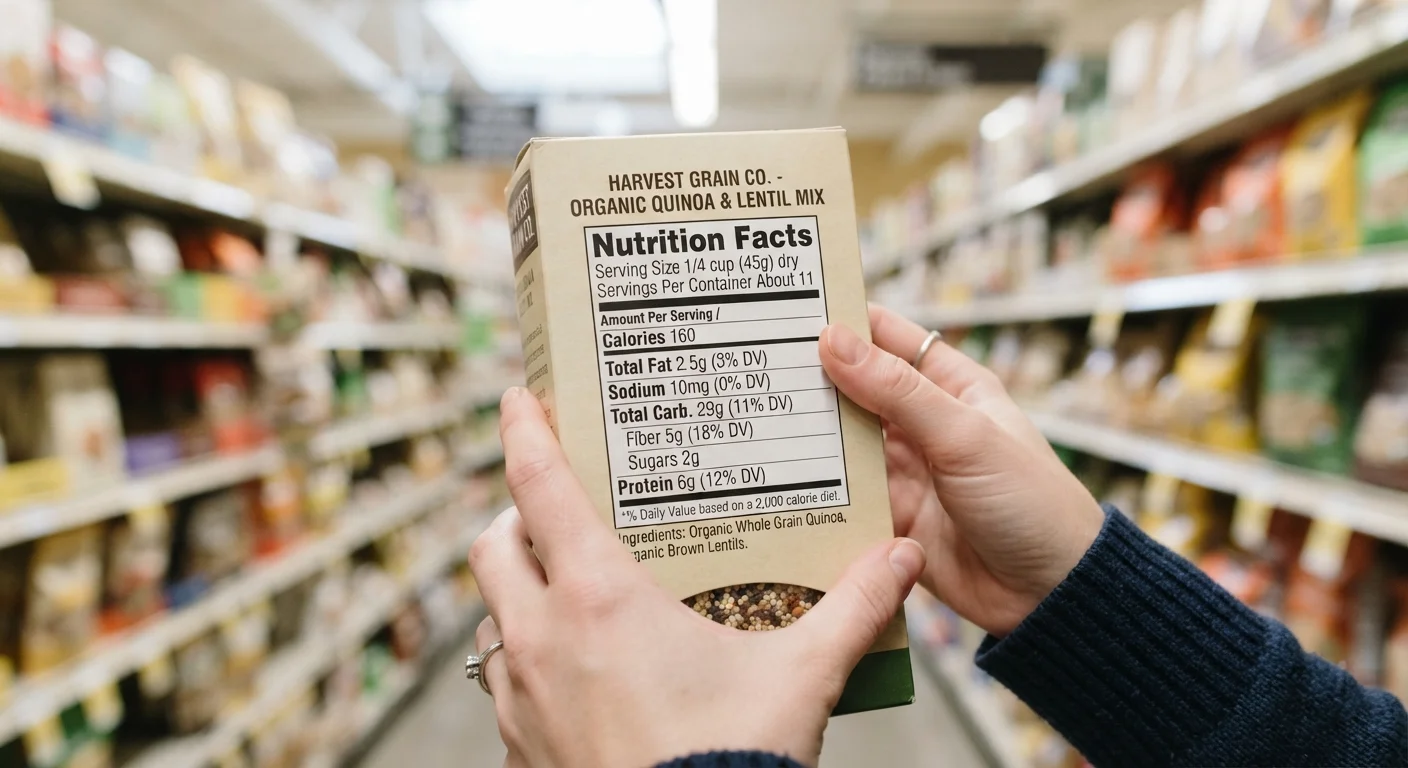
The very first block on any Nutrition Facts panel tells you what counts as one serving and how many servings are in the package. Every single number below it - calories, fat, sodium, everything - applies to that one serving, not the whole container.
If a bag of chips lists a serving as 1 oz (about 28 g) and contains 3 servings, eating the whole bag means tripling every number you see. This is the single most important step because skipping it makes every other figure meaningless.
Read the Calorie Count in Context
Calories measure the energy one serving provides. The number is displayed prominently in a larger font on updated labels. It's useful context, but calories alone don't tell you whether a food is nutritious - a handful of nuts and a handful of candy may have similar calorie counts but very different nutritional profiles.
Think of calories as one data point among many, not the defining judgment of a food's quality.
Identify Nutrients to Limit
The next section lists nutrients most Americans consume in excess: saturated fat, trans fat, sodium, and added sugars. Dietary guidelines from major health authorities generally recommend keeping these lower in your overall diet.
- Saturated fat is found in animal products and some tropical oils; it's distinct from unsaturated fats.
- Trans fat should ideally be as close to zero as possible - even small amounts add up.
- Sodium is measured in milligrams (mg); the %DV here is especially useful for comparison shopping.
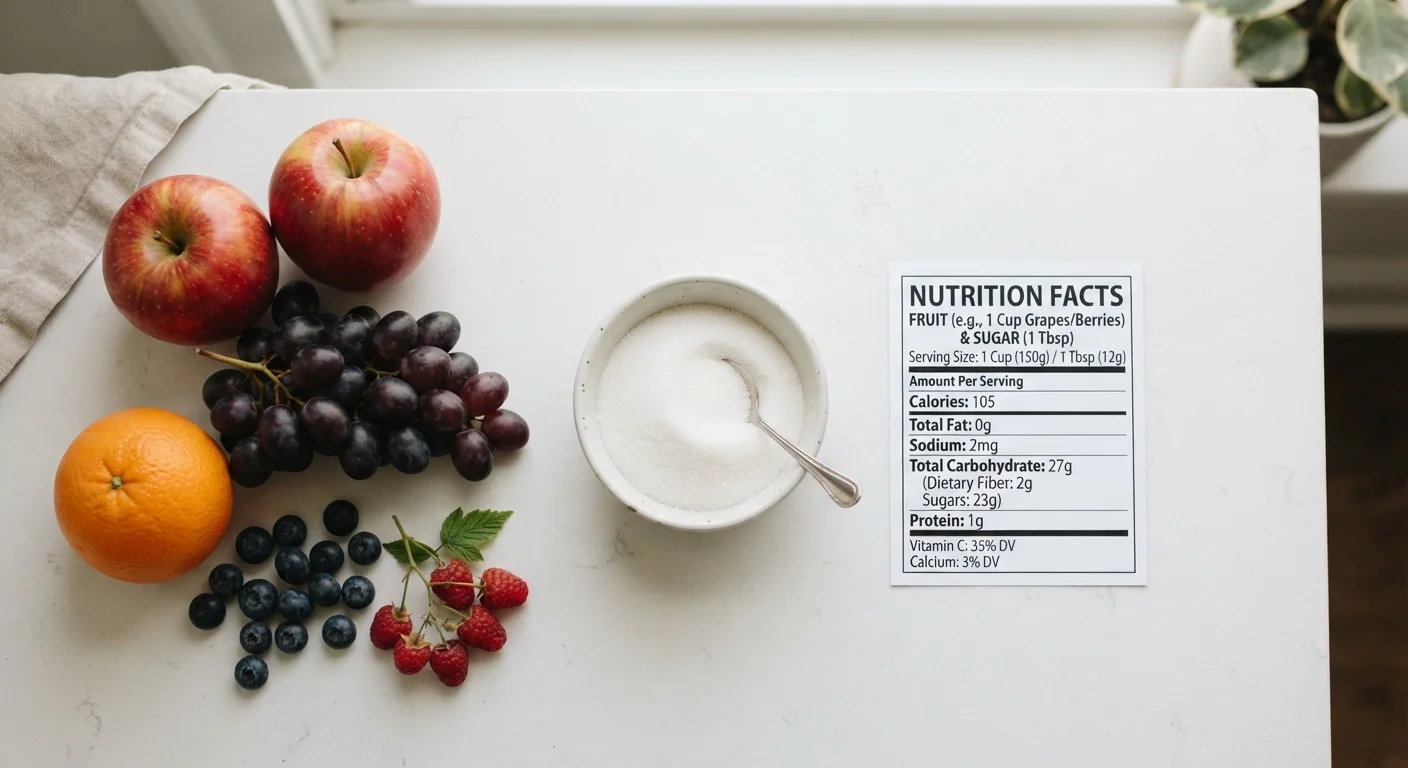
- Added sugars are sugars introduced during processing or preparation - distinct from naturally occurring sugars in fruit or dairy. For more on why that distinction matters, see Added Sugar vs. Natural Sugar.
Look for Nutrients to Prioritize
Below the nutrients-to-limit section, you'll find nutrients many Americans fall short on: dietary fiber, vitamin D, calcium, iron, and potassium. Higher %DV values for these are generally a positive sign.
Fiber supports digestive health and helps you feel full. The four vitamins and minerals listed are highlighted because deficiencies in them are common in the US population. For a deeper look at what these nutrients do, the Vitamins and Minerals reference guide is a useful companion.
Understand Percent Daily Value (%DV)
The % Daily Value column is calculated based on a 2,000-calorie-per-day reference diet - a general benchmark used by the FDA, not a prescription for any individual. It tells you what share of a full day's worth of a nutrient one serving provides.
This makes %DV most useful for comparison: scanning two cereals side by side or checking whether a soup is high in sodium before you buy. It's less useful as a precise personal tracker unless your needs happen to match the reference values closely.
[tip_callout]Cross-Reference the Ingredient List
The Nutrition Facts panel and the ingredient list are separate but complementary. Ingredients are listed in descending order by weight - what appears first makes up the largest proportion of the product. A food with "whole wheat flour" as the first ingredient is very different from one where it appears fifth, after several sweeteners.
For a full guide to reading ingredient lists with confidence, see Reading Ingredient Lists. Together, both panels give you a far more complete picture than either one alone.
Don't Stop at the Front of the Package
Front-of-package claims like "low fat," "natural," or "multigrain" are marketing language with limited regulatory definition. Always flip to the Nutrition Facts panel and ingredient list for the actual nutritional story. A product can carry a health-sounding claim and still be high in added sugars or sodium.
Once you're comfortable reading labels on their own, it's also worth understanding their limits. restaurant portions rarely match nutrition labels - a useful reminder that label literacy is one tool, not the whole picture.
This article is for general informational and educational purposes only. It is not a substitute for personalized dietary or medical advice. Consult a qualified healthcare professional or registered dietitian for guidance specific to your health needs.