Why Multi-Climate Trips Demand a Different Approach
A beach week in Southeast Asia followed by a few days in a cool highland town, then a city stop in a temperate climate-these itineraries are increasingly common, and they expose the fatal flaw in casual packing: volume-based thinking. Most travelers try to solve climate variation by adding more items. The result is a bag that doesn't fit overhead.
The carry-on constraint actually helps here. When space is fixed and finite, you're forced into a more disciplined framework: what combination of items covers the most conditions? That shift-from volume to versatility-is the foundational mindset for any multi-climate carry-on trip.
Before you even think about what to pack, understand your bag's constraints. Size limits differ between US domestic carriers and international airlines, and budget carriers in Europe or Asia often enforce stricter rules. See our guide to carry-on size rules and what they actually mean to avoid surprises at the gate.
Check Every Flight Leg Separately
On multi-leg international itineraries, carry-on rules are set by each operating carrier-not just the one you booked with. A US carrier may allow a 22-inch bag while a connecting regional carrier enforces a smaller limit. Check each carrier's current policy and measure your bag before you travel.
The Layering System: One Framework, Many Climates
Layering isn't just for hikers-it's the most space-efficient approach to multi-climate dressing. Think in three layers:
- Base layer: Lightweight, moisture-wicking shirts and underwear in neutral tones. Merino wool is a strong choice-it resists odor, regulates temperature, and can be worn multiple days between washes.
- Mid layer: One versatile piece-a zip-up fleece, a lightweight down jacket that compresses, or a structured cardigan-that handles cool evenings, air-conditioned transit, and highland temperatures.
- Outer layer: A packable, water-resistant shell or rain jacket that doubles as wind protection. This single item earns its weight across climates.
For bottoms, two pairs of versatile pants (one lightweight travel trouser, one dark jean or chino) plus one pair of shorts covers most scenarios. Shoes take up the most real estate: wear your bulkiest pair on travel days, pack one compact flat or sandal.
Build your packing list around a three-layer clothing system instead of packing by outfit.
Outfit-based packing leads to redundancy-multiple items that serve the same function for specific occasions. A layering system means every piece serves multiple roles and combinations, dramatically reducing total item count.
Choose a two- or three-color neutral palette and ensure every top pairs with every bottom.
Uncoordinated colors reduce the number of wearable combinations per item, meaning you effectively need more clothes. A cohesive palette multiplies outfit options without adding volume.
Plan your liquid toiletries first and work within the 3-1-1 limit before deciding on clothing.
Liquids have a hard regulatory constraint that clothing does not. Failing to plan toiletries early leads to last-minute decisions that result in checked bags or confiscated items at security.
Wear your heaviest, bulkiest items on travel days rather than packing them.
Shoes and heavy outerwear take disproportionate bag space. Wearing them during transit costs nothing in terms of comfort and can free several liters of critical bag volume.
Leave a deliberate 20% buffer in your bag at the start of the trip.
A bag packed to capacity creates problems on return-no room for purchased items, and no flexibility if you need to shift things around at security or to access gear mid-trip.
Fabric and Color Choices That Do the Heavy Lifting
Fabric selection isn't aesthetic-it's functional. Clothes that dry overnight mean you can re-wear items without running out of clean options. Clothes that resist wrinkles mean you don't waste space packing around wrinkle-prone items.
~40%
Packed items never worn on average trips
Travel industry surveys and frequent-traveler accounts consistently suggest roughly 30-40% of packed clothing goes unused on typical international trips.
3.4 oz
TSA liquid container limit per item
The TSA's 3-1-1 rule limits individual liquid containers to 3.4 fluid ounces (100ml), all fitting in one quart-sized clear bag per traveler.
Stick to a tight color palette of two or three complementary neutrals (navy, grey, olive, black, stone). Every top should pair with every bottom. This isn't a style limitation-it's a multiplication strategy. Five tops and three bottoms in a cohesive palette give you 15 outfit combinations. Five tops in five unrelated colors give you far fewer usable pairings.
Avoid: denim (heavy, slow to dry), cotton (holds moisture, slow to dry), and bulky knits (compress poorly). Prefer: merino wool, nylon-spandex blends, and technical fabrics marketed as quick-dry or travel-ready.
Toiletries, Liquids, and the Rules That Catch People Off Guard
Liquids are where well-intentioned carry-on plans collapse. The TSA's 3-1-1 rule-liquids in containers of 3.4 oz (100ml) or less, in one quart-sized clear bag-applies to US departures, but many international airports enforce similar rules. Plan your toiletries before you plan your clothes.
International Liquid Rules Vary
While the TSA's 3-1-1 rule governs US departures, other countries apply similar but not identical rules. Some international airports enforce 100ml limits more strictly, and connecting through certain hubs may subject you to additional screening. Always check the security rules for each country you're departing from, not just your origin airport.
Solid alternatives (shampoo bars, solid conditioner, solid sunscreen, toothpaste tablets) eliminate liquid volume entirely and are increasingly available. They're not for everyone, but they free up your quart bag for essentials that truly must be liquid.
Buy what you can at your destination. Sunscreen, shampoo, and basic toiletries are available in most cities worldwide. Packing a full bottle of shampoo for a two-week trip is a volume mistake-pack for the first few days, then resupply locally.
For a complete pre-departure checklist that covers documents, health prep, and logistics alongside packing, see our pre-trip planning checklist for domestic and international travel.
Packing Technique: Organization That Saves Space
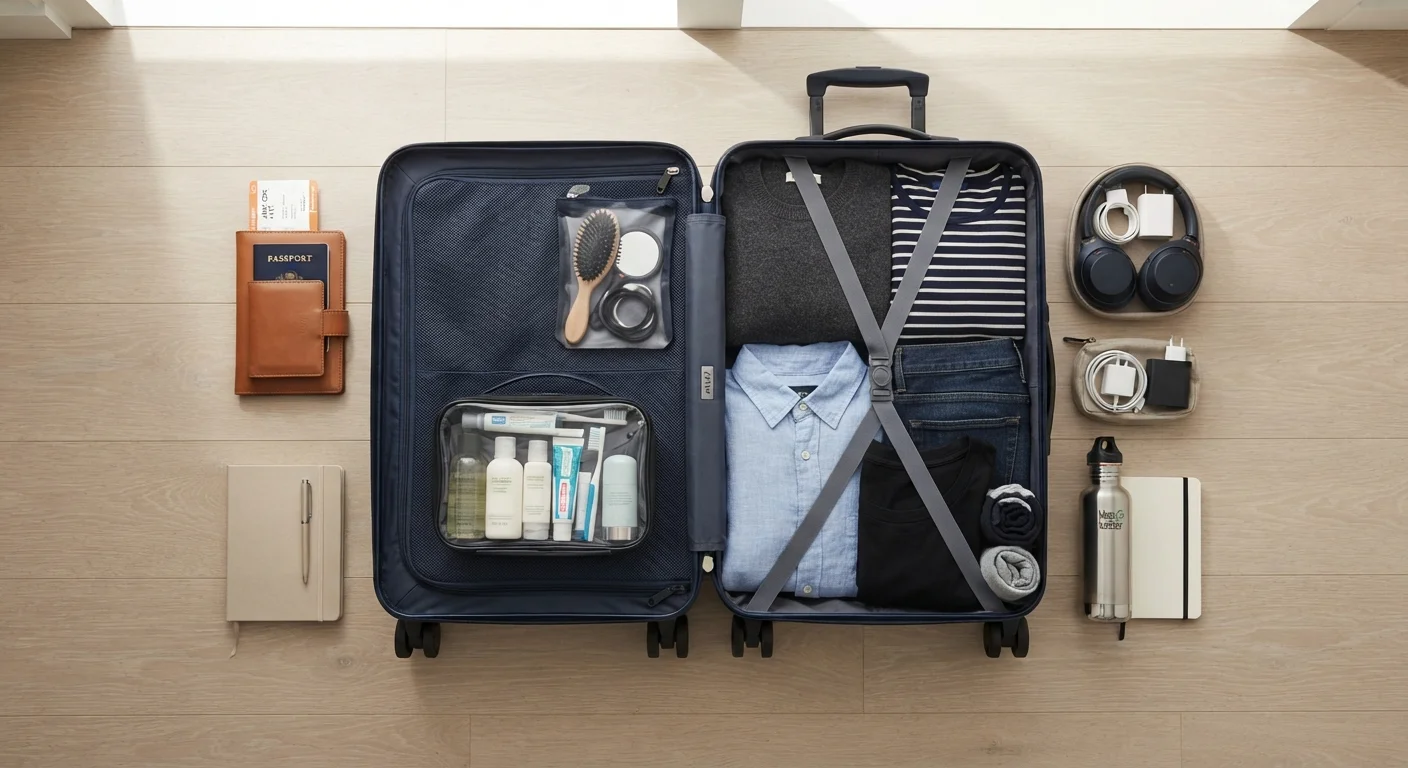
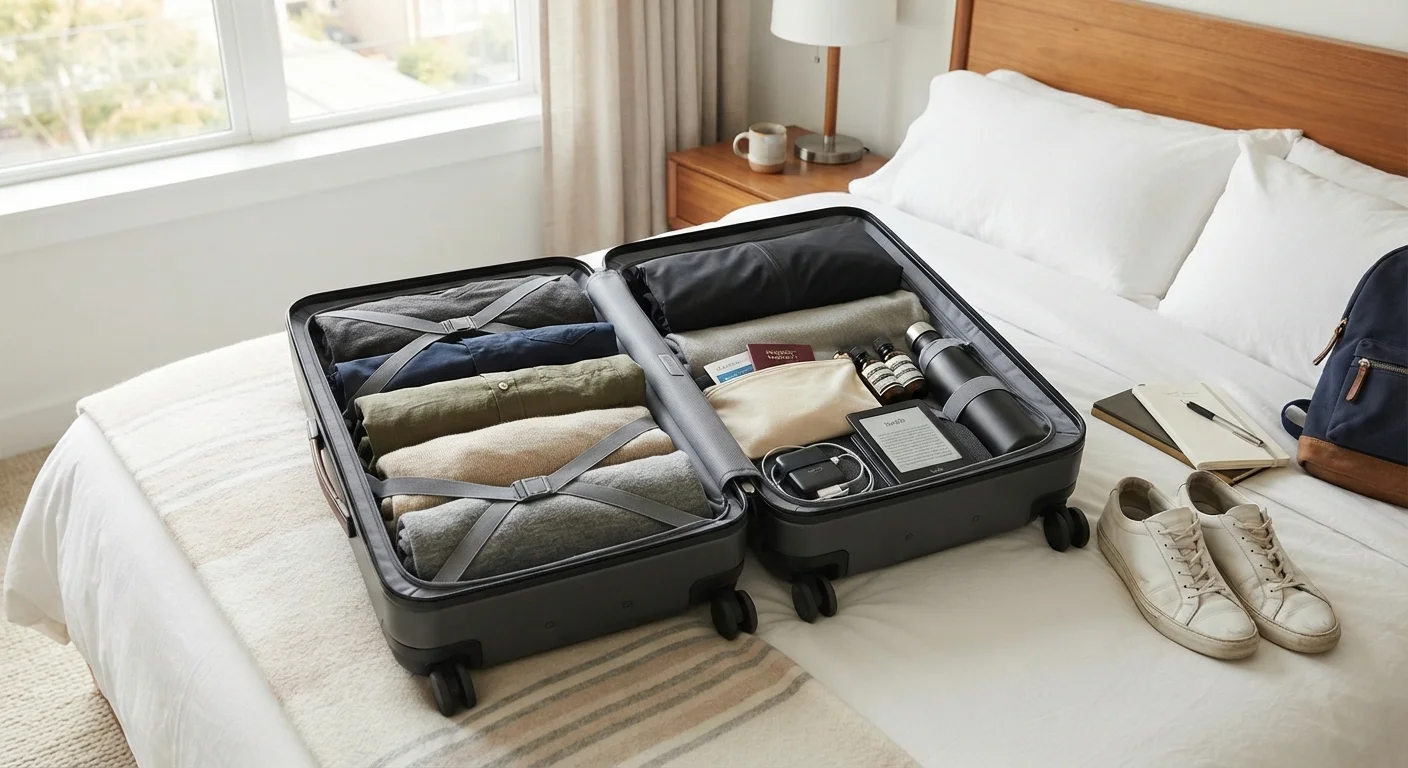
How you pack matters almost as much as what you pack. Rolling clothes rather than folding them compresses fabric more efficiently and makes items easier to identify. Packing cubes-lightweight fabric organizers-let you separate clothing by category or climate zone, so you're not unpacking your entire bag to find a warm layer.
Place heaviest items (shoes, electronics) closest to the bag's wheels or frame. Shoes go in separate bags or shower caps to protect clothes. Fill every dead space: socks inside shoes, chargers inside hats.
Leave a deliberate buffer of roughly 20% bag capacity. You'll acquire things-a gift, a locally purchased layer-and you'll want flexibility for the return journey. A bag packed to absolute capacity on departure usually means a stress-filled repack or overweight fees on the way home.
If you're planning an extended trip or blending long-term stays with moving between destinations, the dynamics of what you pack shift considerably. Our piece on living abroad versus long-term travel explores how slower travel changes your relationship with luggage and place.
Packing information reflects general guidelines. Airline policies, security rules, and local regulations change; always verify current requirements with your carrier and the relevant government travel authority before your trip.