Why Long-Haul Flights Take a Physical Toll
A flight across the Pacific or Atlantic isn't just time-consuming-it stresses the body in ways that catch many travelers off guard. Cabin air typically maintains humidity levels between 10% and 20%, far drier than most indoor environments. Cabin pressure is equivalent to sitting at roughly 6,000-8,000 feet of altitude, which subtly affects oxygen absorption and can cause mild fatigue. Add in cramped seating, disrupted sleep cycles, and limited movement, and it's easy to understand why many passengers arrive feeling depleted.
The good news: frequent flyers have refined strategies for managing these conditions without special equipment or expensive upgrades. Most of it comes down to consistency-doing the right things repeatedly over the course of a flight rather than hoping for one big fix. If you're building a broader travel wellness plan, the Pre-Trip Planning Checklist covers health prep steps to take before you even reach the airport.
Hydrate proactively, not reactively
Thirst is a lagging indicator of dehydration-by the time you feel it at altitude, you're already behind. Frequent flyers typically aim to drink water consistently throughout the flight, roughly every hour, regardless of thirst. Many bring an empty reusable bottle through security and fill it at the gate.
Alcohol and caffeinated beverages act as diuretics and compound dehydration, so experienced travelers treat them as occasional treats rather than defaults. Electrolyte packets mixed into water can also help the body retain fluids more effectively during very long hauls.
Drink water on a schedule, not when you feel thirsty-thirst lags behind actual dehydration at altitude.
Move deliberately throughout the flight
Sitting still for ten or more hours slows circulation and can cause swelling in the feet and legs. Frequent flyers counter this with a mix of aisle walks every 60-90 minutes and seated exercises-ankle rolls, calf raises, and knee lifts-done without leaving their seat.
Compression socks are a widely used tool among road warriors; they apply graduated pressure that supports blood flow in the lower legs during prolonged sitting. People with specific circulatory concerns should speak with a doctor about whether compression garments are appropriate for them before travel.
Aisle walks every 60-90 minutes and simple seated leg exercises counter the circulatory slowdown of long flights.
Sleep strategically, not just whenever you can
Grabbing sleep indiscriminately can worsen jet lag if it misaligns with your destination's time zone. Experienced travelers decide before boarding whether they want to sleep early, late, or skip sleep entirely on a flight-guided by when local nighttime begins at their destination.
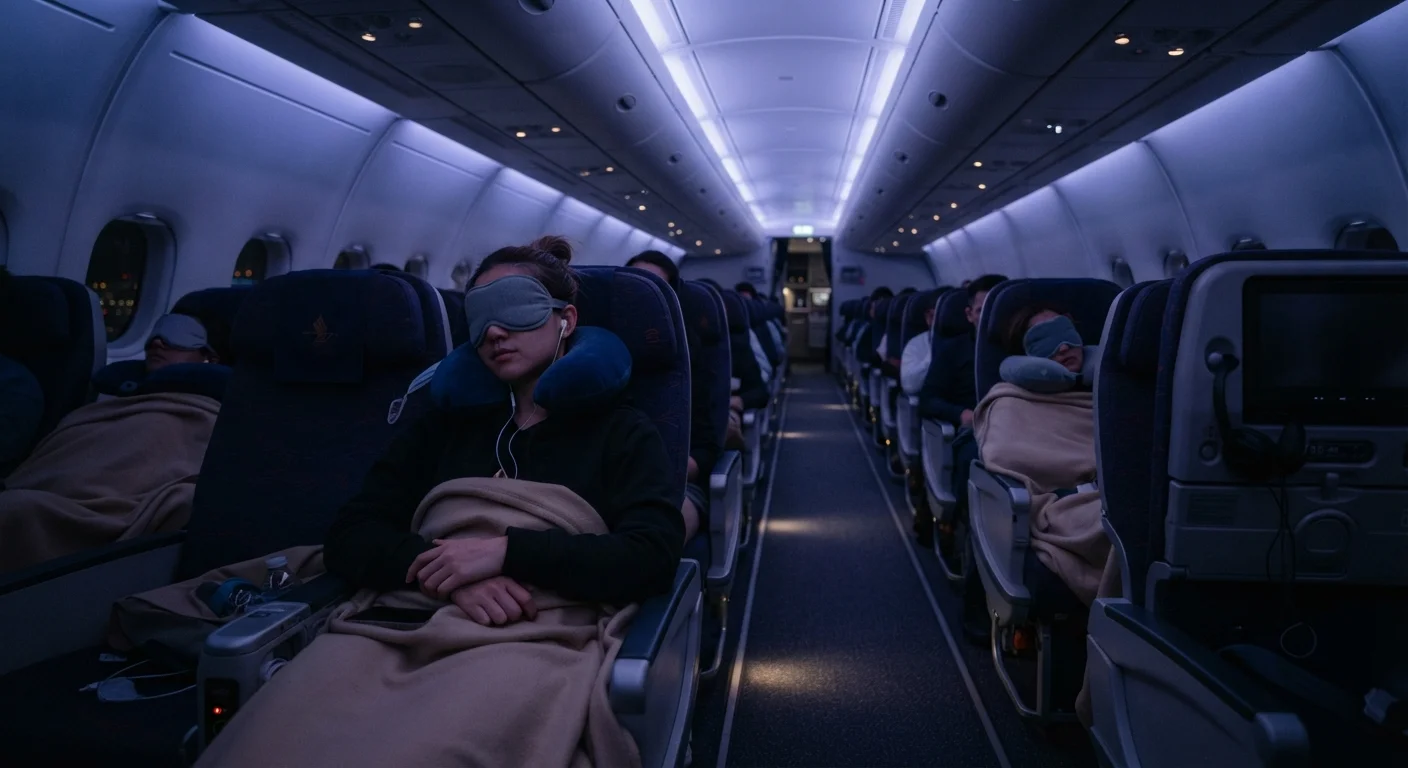
A quality neck pillow, eye mask, and earplugs or noise-canceling headphones form the core of most frequent flyers' sleep kits. Keeping the seat reclined only moderately and avoiding heavy meals close to planned sleep windows also helps the body shift into rest mode more naturally. For more on managing the transition across time zones, see the science of crossing time zones.
Decide your sleep window before boarding, based on your destination's time zone-not just whenever fatigue hits.
Practice cabin hygiene without obsessing over it
Tray tables, seat-back pockets, and armrests are among the higher-touch surfaces on a plane. A simple practice of wiping down your immediate seating area with an antibacterial wipe at the start of the flight takes under two minutes and meaningfully reduces surface contact with germs.
Hand hygiene matters more than surface-wiping, however. Washing hands thoroughly before eating and after using the lavatory is the single highest-leverage hygiene habit on any flight. Hand sanitizer kept accessible in a seat pocket makes this easy between lavatory trips.
Washing hands before meals is the highest-leverage hygiene habit on any flight-more impactful than surface wipes alone.
Eat lightly and mindfully in the air
Heavy, salty, and gas-producing foods are harder to manage at altitude, where reduced cabin pressure can cause intestinal gas to expand. Frequent flyers often eat a substantial meal before boarding and treat in-flight meals as light fuel rather than full dining experiences.
Skipping a meal entirely on an overnight flight is common practice when sleep is the priority. For general guidance on eating patterns that support energy and wellbeing during travel, the Nutrition & Diet hub offers practical context worth reviewing before a long trip.
Treat in-flight meals as light fuel rather than full dining-heavy meals amplify discomfort at altitude.
Manage your environment actively
The overhead air vent is a tool, not a nuisance. Directing airflow away from your face keeps ambient air circulating around you without directing potentially germ-laden cabin air directly at your nose and mouth. Many frequent flyers keep it open rather than closed for this reason.
Layering clothing or carrying a light travel wrap solves the problem of fluctuating cabin temperature without depending on the airline's blanket supply. Eye drops suitable for dry eyes and a small lip balm address the dryness caused by low cabin humidity, keeping discomfort from compounding over a 12-hour flight.
Redirect the overhead vent away from your face rather than closing it-it keeps air circulating without directing it at you.
Building These Habits Into Every Long Flight
None of these strategies require a business-class seat or an elaborate routine. The frequent flyers who arrive in the best shape tend to be methodical rather than reactive-they plan their hydration, movement, and sleep around the flight schedule before boarding, not after takeoff. For a deeper look at the science behind one of the most disruptive effects of long-haul travel, see our article on how circadian rhythms respond to time-zone crossings.
Pack a Simple In-Flight Wellness Kit
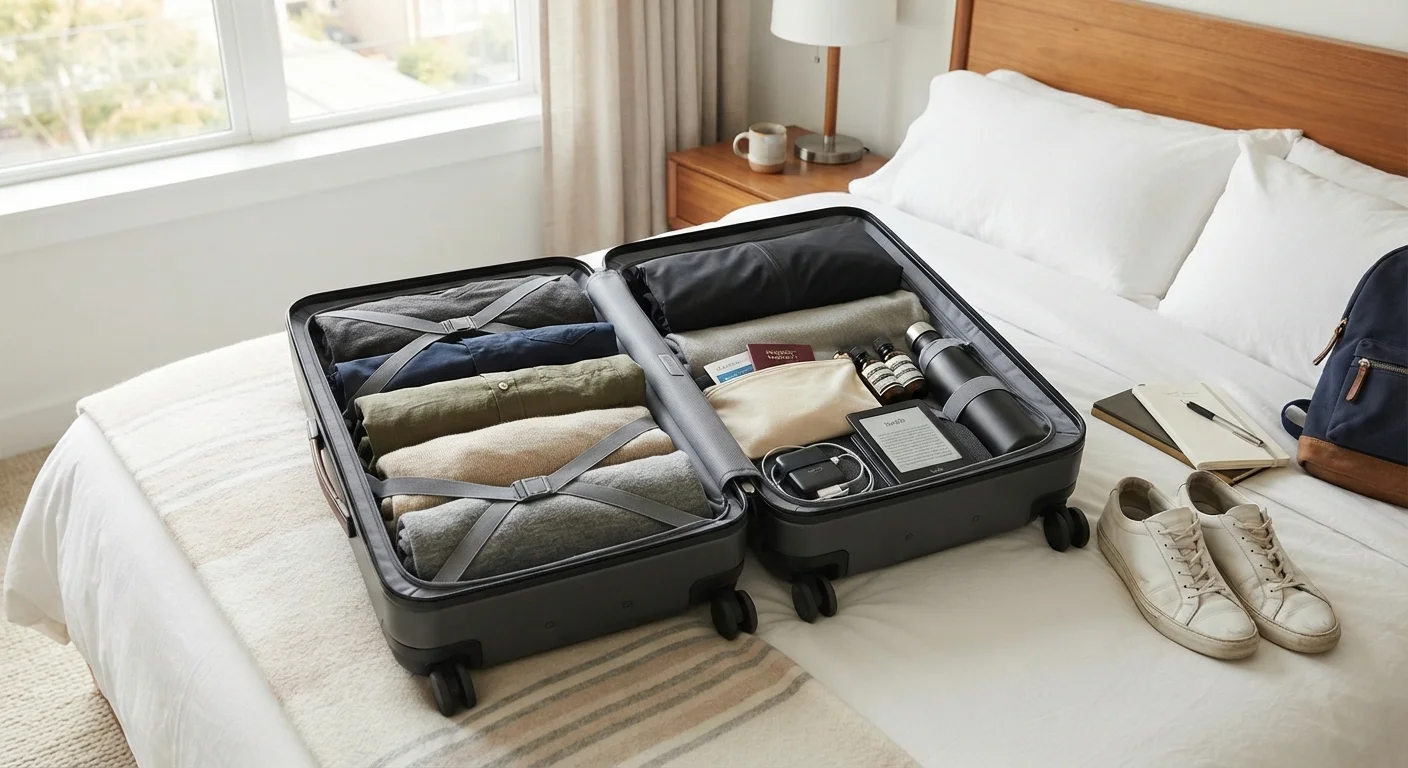
Frequent flyers often consolidate their go-to items into a small pouch kept in the seat pocket: earplugs, an eye mask, a reusable water bottle, a few electrolyte packets, hand sanitizer, an antibacterial wipe or two, lip balm, and eye drops. Keeping these accessible means you'll actually use them throughout the flight rather than digging through overhead bins mid-journey. Packing light for long trips more broadly? See our guide on living out of a carry-on.
This article provides general wellness information for educational purposes only and is not a substitute for medical advice. Consult a qualified healthcare professional before making changes related to your personal health, especially if you have pre-existing conditions or concerns about travel-related health risks such as deep vein thrombosis.