What You're Actually Paying to Check a Bag
The advertised fee is just the starting point. On most major US carriers, a first checked bag runs $30-$40 each way for domestic flights - meaning a round trip costs $60-$80 before you've booked a hotel. For a second bag or overweight luggage (over 50 lbs), that figure can jump to $100 or more per leg. On budget carriers, fees are often higher and applied more strictly.
But the monetary cost is only part of the picture. Checking a bag typically adds 20-40 minutes at the check-in counter or kiosk (most airlines require checked bags at least 45 minutes before departure), plus another 15-25 minutes waiting at baggage claim on arrival. On a short trip, that time cost can feel more significant than the dollar amount.
There's also the risk factor: US carriers mishandled approximately 3-5 bags per thousand passengers in recent reporting periods, according to the Department of Transportation's Air Travel Consumer Report. A delayed or lost bag mid-trip is a disruption that no fee reimbursement fully compensates.
| Criterion | Checking a Bag | Carry-On Only |
|---|---|---|
| Typical domestic fee (round trip) | $60-$80+ per bag | No fee (standard size) |
| Time at airport | 30-60 min added | Minimal, skip claim |
| Risk of lost/delayed luggage | Yes, ~3-5 per 1,000 bags | Very low |
| Packing flexibility | High (up to 50 lbs) | Limited by size/weight |
| Liquid/toiletry restrictions | None | TSA 3-1-1 rule applies |
| Best for trip length | 7+ days, gear-heavy trips | Up to 5-7 days |
| Gate-check risk | None (already checked) | Possible on regional jets |
The Hidden Costs of Going Carry-On Only
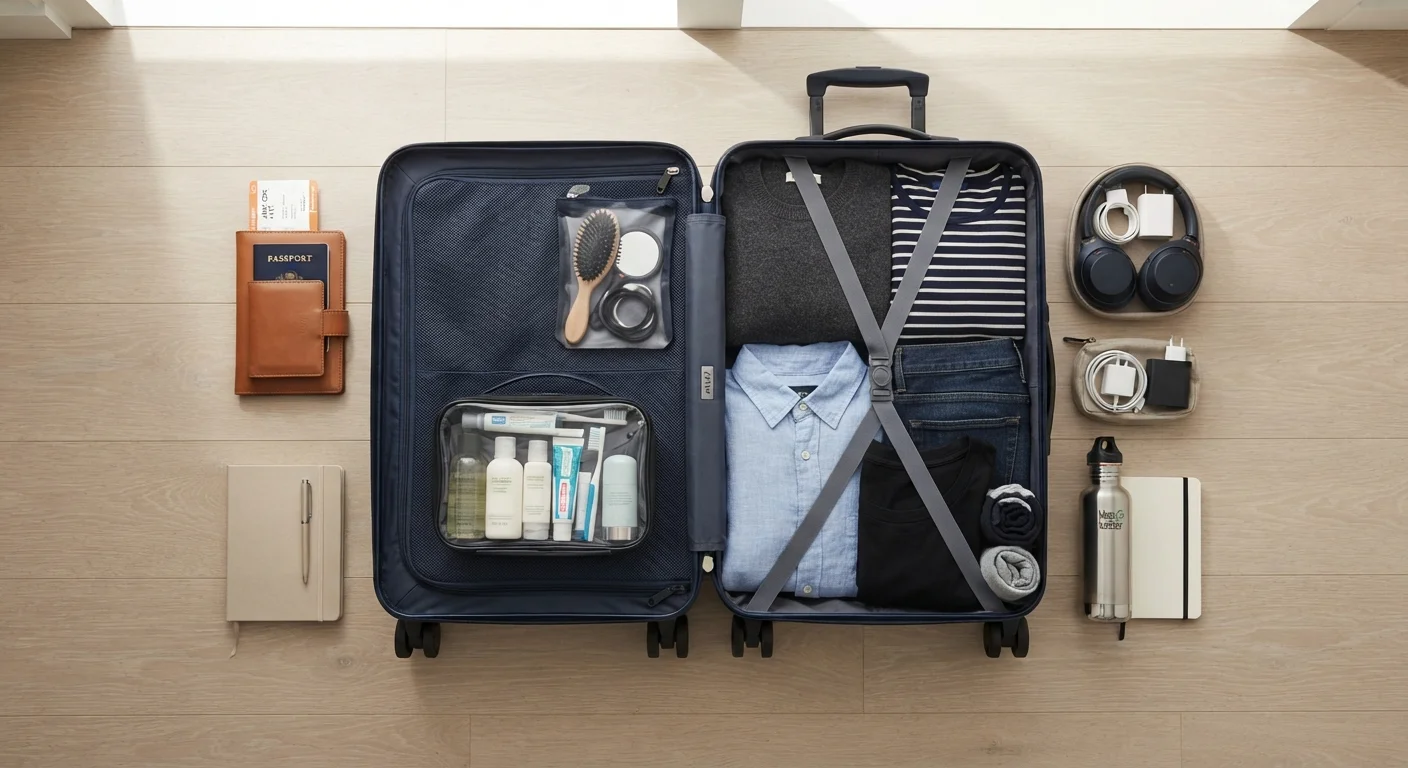
Carry-on travel isn't cost-free either. The constraints are real: most domestic airlines allow one carry-on (typically up to 22 x 14 x 9 inches) and one personal item. Size enforcement varies by airline and aircraft type - regional jets on connecting routes frequently require gate-checked bags, which are usually free but can still delay you.
Liquid restrictions under TSA's 3-1-1 rule mean toiletries over 3.4 oz must either be checked, shipped ahead, or purchased at the destination. For travelers who rely on specific products, this adds cost. Laundry at hotels or laundromats may be necessary on longer trips, which carries its own time and expense. For more on navigating these constraints strategically, see what actually fits in a carry-on and what the rules really mean.
Budget Airlines Change the Fee Structure
On carriers that charge for all bags including carry-ons (such as some ultra-low-cost airlines), the carry-on-only strategy may not save money unless you travel with only a personal item. Always check the specific airline's fee schedule - including when fees are lowest (typically at booking vs. at the gate) - before assuming carry-on is the cheaper route.
Travelers who master carry-on-only packing often find they pack better overall. Forced constraints tend to eliminate the "just in case" items that add bulk without value. For a practical framework, living out of a carry-on for multi-climate international trips offers a structured approach.
How to Make the Call for Your Specific Trip
The right answer depends on four variables: trip length, purpose, airline loyalty status, and destination logistics.
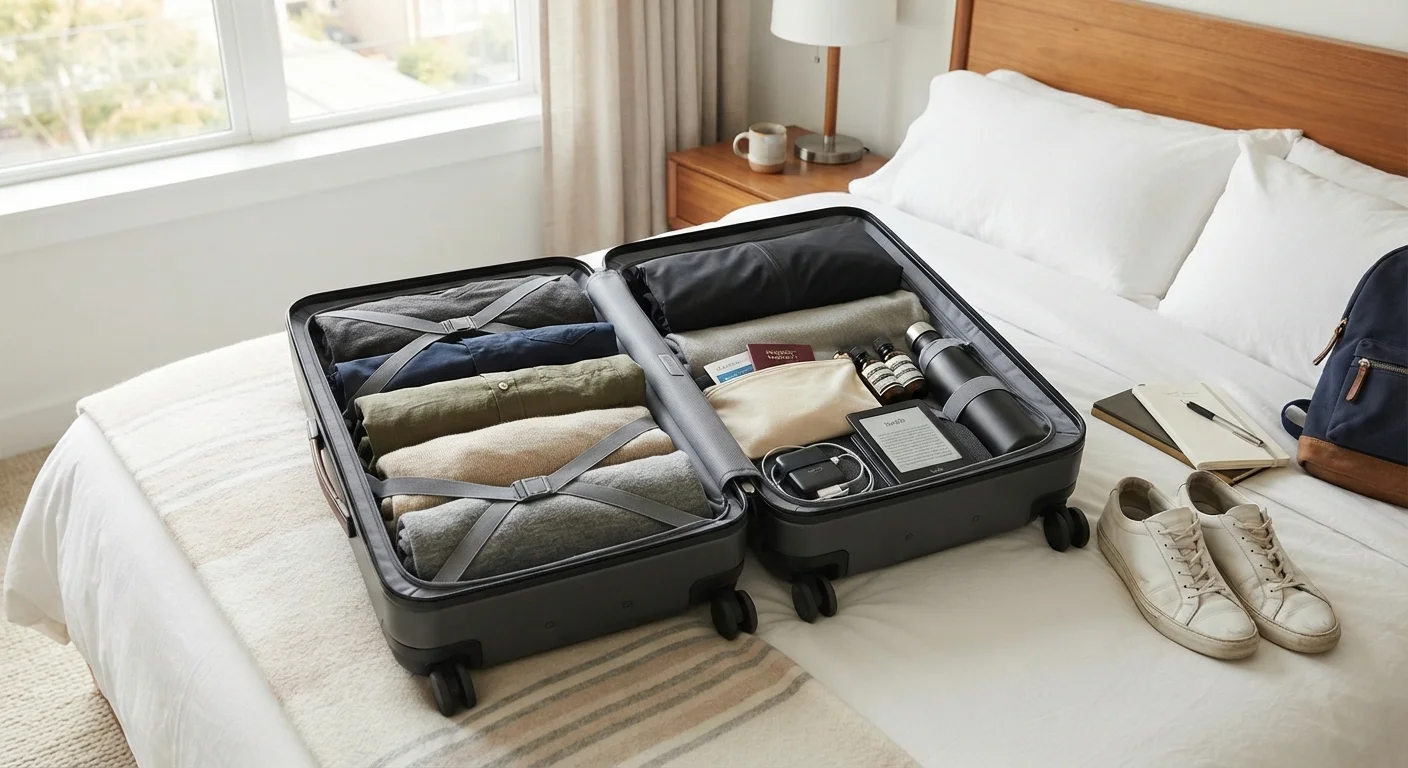
- Trip length: Most travelers can pack three to five days into a carry-on without difficulty. Beyond a week, the math shifts toward checking unless you're comfortable doing laundry en route.
- Purpose: Business trips with formal dress requirements, trips involving outdoor gear, or family travel with kids often make checking bags the practical choice regardless of cost.
- Airline status or credit cards: If an airline card waives your first checked bag, the $60-$80 round-trip savings disappears. Factor this in before defaulting to carry-on.
- Destination logistics: European city breaks with cobblestones and public transit favor smaller bags. A beach resort with a direct shuttle may not.
It's also worth noting that cost comparisons in travel are often more nuanced than they appear - what travelers miss when comparing destinations purely on cost applies just as readily to luggage decisions as destination choices.
$7.0B+
Annual US airline baggage fee revenue
US airlines collectively collected over $7 billion in baggage fees in 2023, according to the Bureau of Transportation Statistics.
3-5 per 1,000
Bags mishandled per thousand passengers
The US Department of Transportation's Air Travel Consumer Report tracks mishandled baggage rates across domestic carriers.
45 min
Typical bag check-in cutoff before departure
Most major US carriers require checked bags to be dropped no later than 45 minutes before domestic departure, adding to total airport time.