What the Monroney Sticker Is - and Why It Exists
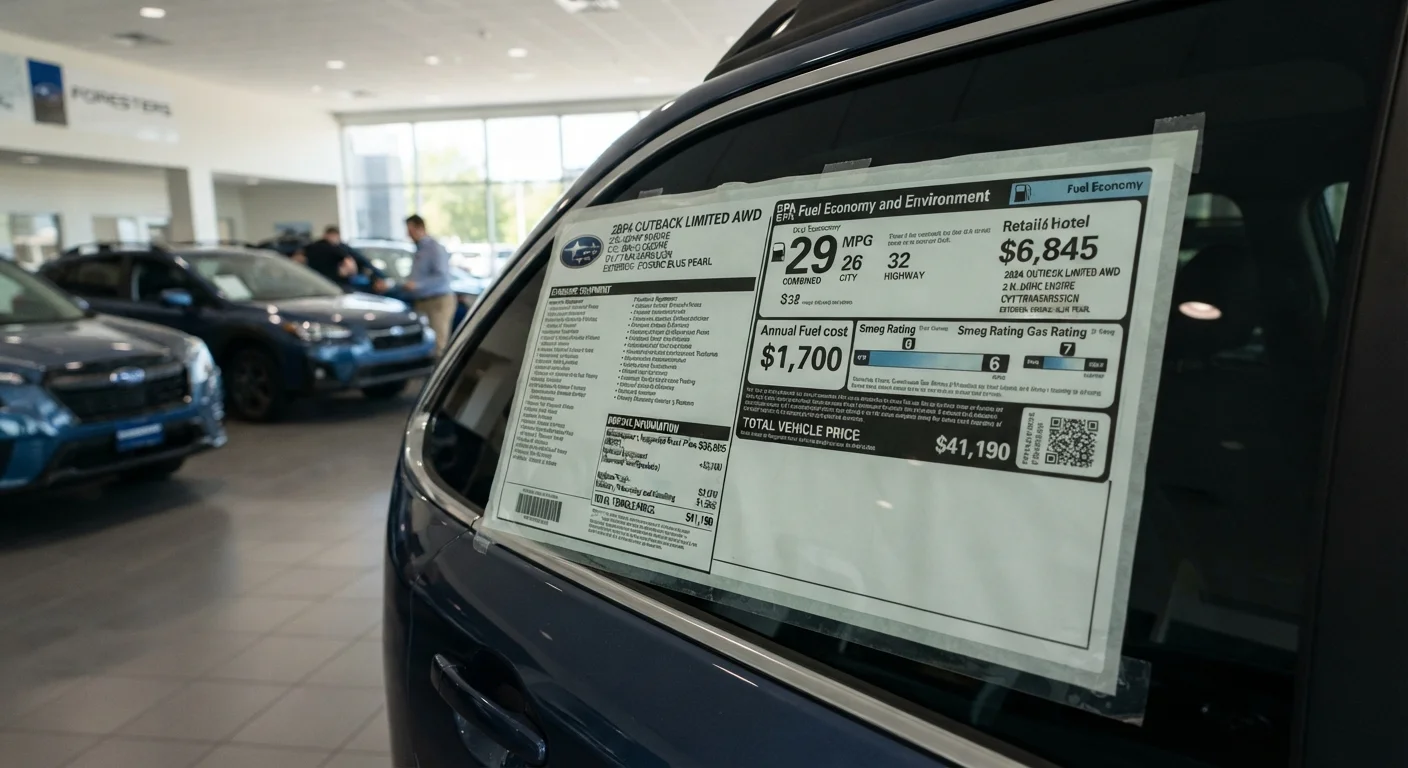
The label affixed to the window of every new car sold in the United States is formally called the Monroney sticker, named after the senator whose 1958 legislation made it mandatory. Federal law requires dealers to display it and prohibits anyone except the ultimate purchaser from removing it before the sale is completed.
Its purpose is straightforward: give buyers a standardized, at-a-glance summary of what they're paying for and what they're getting. Because every manufacturer uses the same format, you can compare stickers across makes and models without decoding different layouts. Understanding each section before you walk into a dealership is one of the simplest ways to negotiate from an informed position. If you're considering a purchase across state lines, also review what changes when buying out of state, since taxes and registration fees will differ from what the sticker reflects.
What you will need
How to Work Through the Sticker Section by Section
A Monroney sticker is divided into several distinct blocks. Following them in order - rather than skipping straight to the bottom-line price - reveals information that directly affects your negotiation and long-term ownership costs.
Locate the Manufacturer and Vehicle Identification Section
At the top of the sticker you'll find the manufacturer's name, the model, trim level, and the Vehicle Identification Number (VIN). Confirm the VIN matches the one on the dashboard (visible through the windshield) and any accompanying paperwork. This section also lists the country of assembly, which can affect parts availability and, in some cases, import-related costs.
Review the Standard Equipment and Factory-Installed Options
The next section lists everything included in the base trim as standard equipment, followed by any factory-installed packages or individual options the dealer ordered. Each package should have a line-item price. Add these to the base MSRP yourself to verify the manufacturer's subtotal - arithmetic errors are rare but worth checking.
Pay attention to whether a feature you want comes as part of a bundled package. Buying a package for one desired feature while paying for several others you don't need is a common way buyers overspend.
Decode the EPA Fuel Economy Estimates
The fuel economy section displays city, highway, and combined MPG (miles per gallon) ratings derived from EPA standardized testing. These figures are a useful baseline for comparison shopping, but real-world results vary based on driving habits, climate, load, and terrain. The sticker also includes an estimated annual fuel cost, calculated using a fixed fuel price and average mileage assumption - treat this as directional, not a guarantee.
For plug-in hybrids and EVs, look for both the electric range estimate and the MPGe (miles per gallon equivalent) figure, which lets you compare energy efficiency across powertrain types.
Check the Destination and Delivery Charge
Every Monroney sticker includes a destination and delivery charge - the cost of transporting the vehicle from the manufacturing plant to the dealership. This fee is set by the manufacturer and is the same regardless of which dealer you visit or how close that dealer is to the plant. It is not negotiable. Knowing this prevents you from wasting negotiating energy on a line item that will not move.
Confirm the Total MSRP and Identify What Is Negotiable
The bottom of the manufacturer's section shows the total MSRP (Manufacturer's Suggested Retail Price) - the sum of base price, factory options, and destination. The word "suggested" is key: this is a starting point, not a fixed transaction price. In most market conditions, buyers negotiate below MSRP, though high-demand models sometimes sell above it.
After you've read the manufacturer's section, identify any dealer-added accessories or fees listed below the MSRP subtotal. These are separate from the manufacturer's sticker and are subject to negotiation or removal. Document each one so you can address them individually during the negotiation process.
Request the Sticker Before Your Dealership Visit
Most manufacturers let you look up a vehicle's window sticker online using the VIN, which dealers typically list in inventory postings. Reviewing the sticker before you arrive gives you time to research each option and package without the pressure of an in-person negotiation. You'll walk in knowing exactly what you're evaluating.
Charges to Watch and Common Pitfalls
Two areas on the sticker deserve extra scrutiny because they're where costs can climb quickly without obvious justification.
Dealer-installed options appear as a separate block below the manufacturer's packages. These might include paint protection film, cargo liners, wheel locks, or window tinting - often priced well above what you'd pay elsewhere. Unlike factory options, these additions are negotiable and can sometimes be declined entirely.
Market adjustment fees are not part of the original Monroney sticker; they're a separate dealer document. Recognizing that distinction matters: if a dealer presents a supplemental sticker adding thousands of dollars, understand that this is a dealer pricing decision, not a manufacturer-set figure, and it carries no regulatory protection.
Supplemental Dealer Stickers Are Not Federally Regulated
A second sticker placed beside the Monroney is entirely the dealer's document and is not subject to the same federal disclosure requirements. Items like "market adjustments," "documentation fees," and pre-installed accessories on this secondary sticker can add hundreds or thousands of dollars. Always ask for an itemized breakdown and confirm which charges, if any, are mandatory before agreeing to a price.
For a deeper look at how documentation differs when evaluating a used vehicle instead of a new one, the questions to ask a used-car seller guide outlines what additional disclosures to request.