The Physics Problem Every Car Must Solve
When a vehicle strikes an object and stops suddenly, the occupants inside continue moving at the original speed until something stops them. That's basic physics - and it's the core problem every passive safety system is designed to solve. The goal isn't to prevent that deceleration from happening; it's to spread it over a longer distance and time so the forces transmitted to the human body stay within survivable limits.
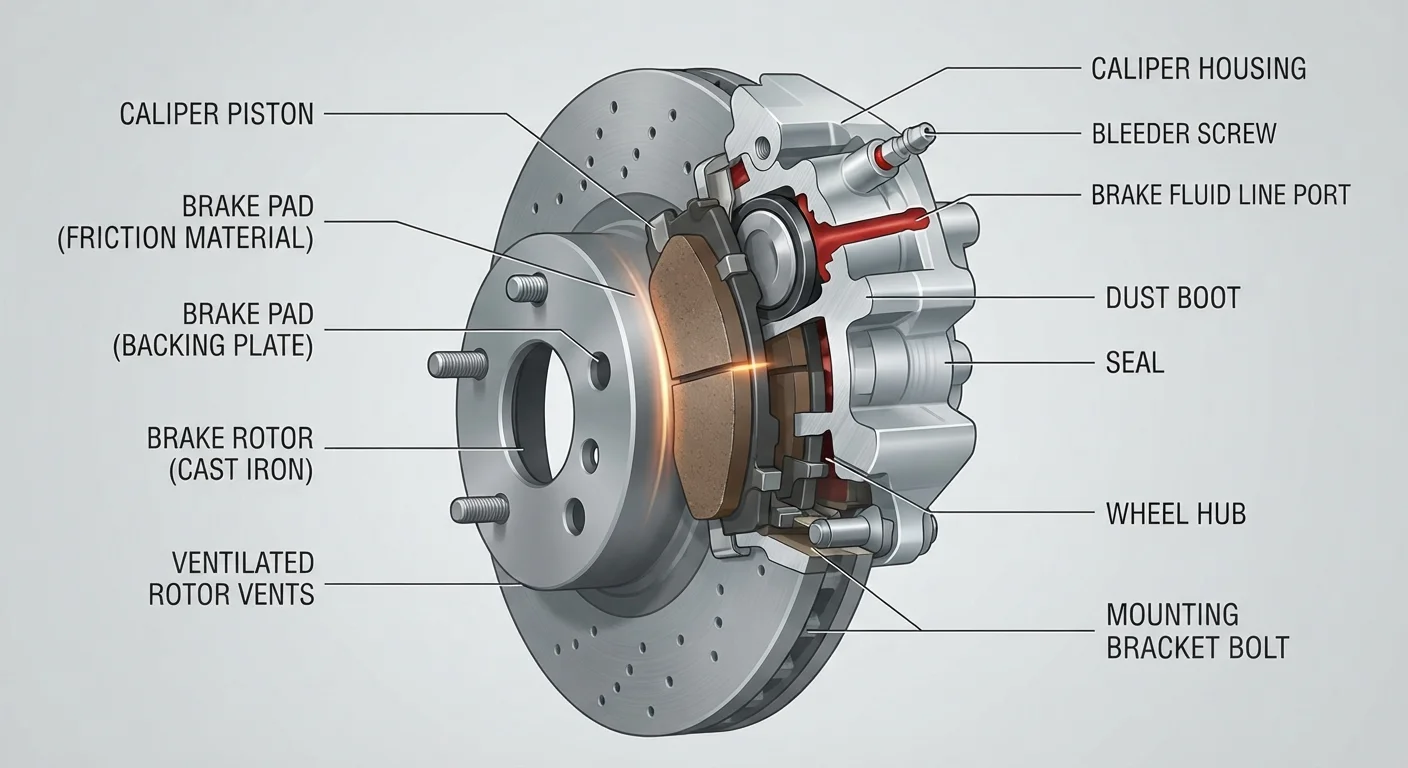
Modern vehicles accomplish this through three coordinated layers: the structure of the car itself, the seat belt that holds you in place, and the airbag that cushions the final impact. Each layer manages a different phase of the crash sequence. Understanding how they interact gives drivers a clearer picture of why proper seating position and belt use matter so much. For context on how braking systems work before a crash even occurs, see our guide to braking components.
Crumple Zones: Buying Time and Distance
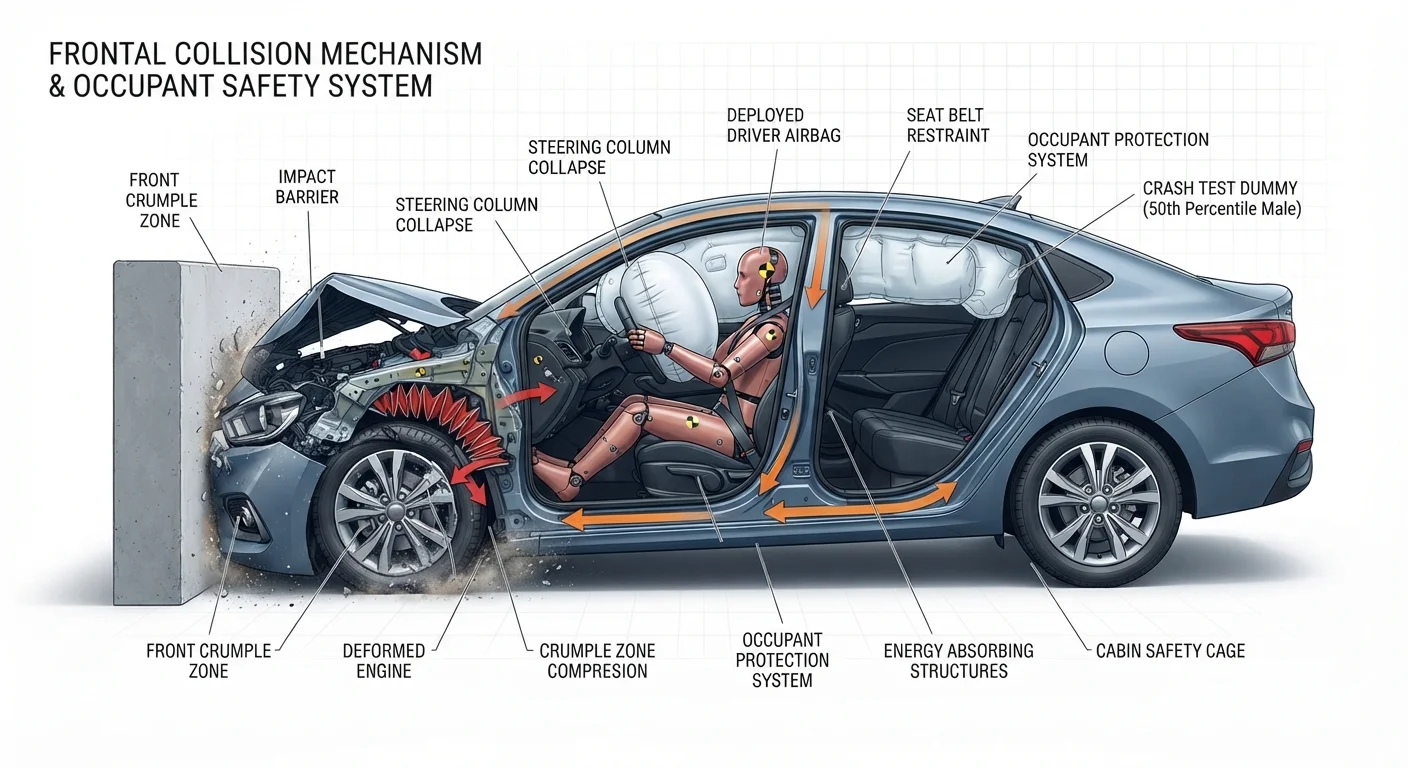
The front and rear sections of a modern vehicle are deliberately designed to collapse during a collision. This counterintuitive approach - making part of the car structurally weaker - actually protects occupants. When the front crumple zone deforms, it converts kinetic energy into the mechanical work of bending metal. That process takes time, and time translates into reduced peak deceleration forces on the passenger compartment.
The passenger cabin itself is built as a rigid "safety cage" - sometimes called a safety cell - that resists deformation while the zones around it absorb energy. Side-impact protection bars in the doors, reinforced A and B pillars, and rocker panels all contribute to keeping the cabin intact. Engineers design the collapse sequence carefully so that the steering column, dashboard, and firewall don't intrude into the occupant space.
~45%
Reduction in front-seat fatality risk from seat belts
The NHTSA estimates that seat belts reduce the risk of death for front-seat passenger vehicle occupants by approximately 45%.
30ms
Time for a frontal airbag to fully deploy
Airbag deployment is complete in roughly 30 milliseconds - well before an occupant's body moves significantly forward in a crash.
~50,000
Lives saved by airbags in the US since 1987
NHTSA data indicates frontal airbags saved an estimated 50,457 lives through 2017, when used alongside seat belts.
Seat Belts: The Foundation of Occupant Protection
The three-point seat belt - developed in the late 1950s - remains the most effective occupant protection device ever fitted to a production vehicle. It works by spreading deceleration forces across the strongest parts of the body: the chest, pelvis, and shoulder. A lap-and-shoulder belt worn correctly keeps an occupant positioned so that the airbag and seat can do their jobs in the right sequence.
Modern belts include two active features beyond the webbing itself. A pretensioner fires during a crash to instantly remove slack from the belt, pulling the occupant firmly back into the seat. A load limiter then allows a small, controlled amount of belt pay-out to prevent the webbing from applying excessive chest pressure. Together, these features tune the restraint force to the human body's tolerance limits.
Check Your Belt Routing Before Every Drive
Spend two seconds confirming the shoulder belt crosses the center of your shoulder and lies flat across your chest - not your neck. If the belt is uncomfortable at the shoulder, adjust the height of the shoulder anchor on the B-pillar rather than routing the belt behind your back. Correct positioning is what allows the pretensioner and load limiter to work as designed.
Belt fit matters significantly. A shoulder belt routed behind the back or under the arm provides almost no protection and can cause severe internal injury in a crash. The belt should cross the center of the shoulder and lie flat across the chest - never against the neck.
Airbags: Supplemental Cushioning, Not a Standalone Fix
Front airbags deploy from the steering wheel hub and dashboard in a frontal collision above a threshold speed. Side curtain airbags protect the head during side impacts and rollovers. Knee airbags reduce lower-leg intrusion forces. Each is triggered by accelerometer sensors that detect a sudden, severe deceleration event.
The critical word in airbag labeling is "Supplemental" - they are Supplemental Restraint Systems (SRS). An airbag deploys with enough force to cause injury to an unrestrained occupant who has slid forward. The seat belt holds the person in the correct position so the airbag meets them at the right moment, at the right distance, with the right force. Children in rear-facing seats should never be positioned in front of an active airbag - the deployment force poses a serious risk.
Why Seating Position Is Part of the Safety Equation
Passive safety systems are engineered around an assumed occupant position. Sitting too close to the steering wheel places a driver inside the airbag's deployment arc, increasing injury risk. Reclining a seat too far during a crash causes the occupant to submarine under the lap belt, redirecting crash forces to the abdomen. Both scenarios reduce the effectiveness of systems that were correctly designed.
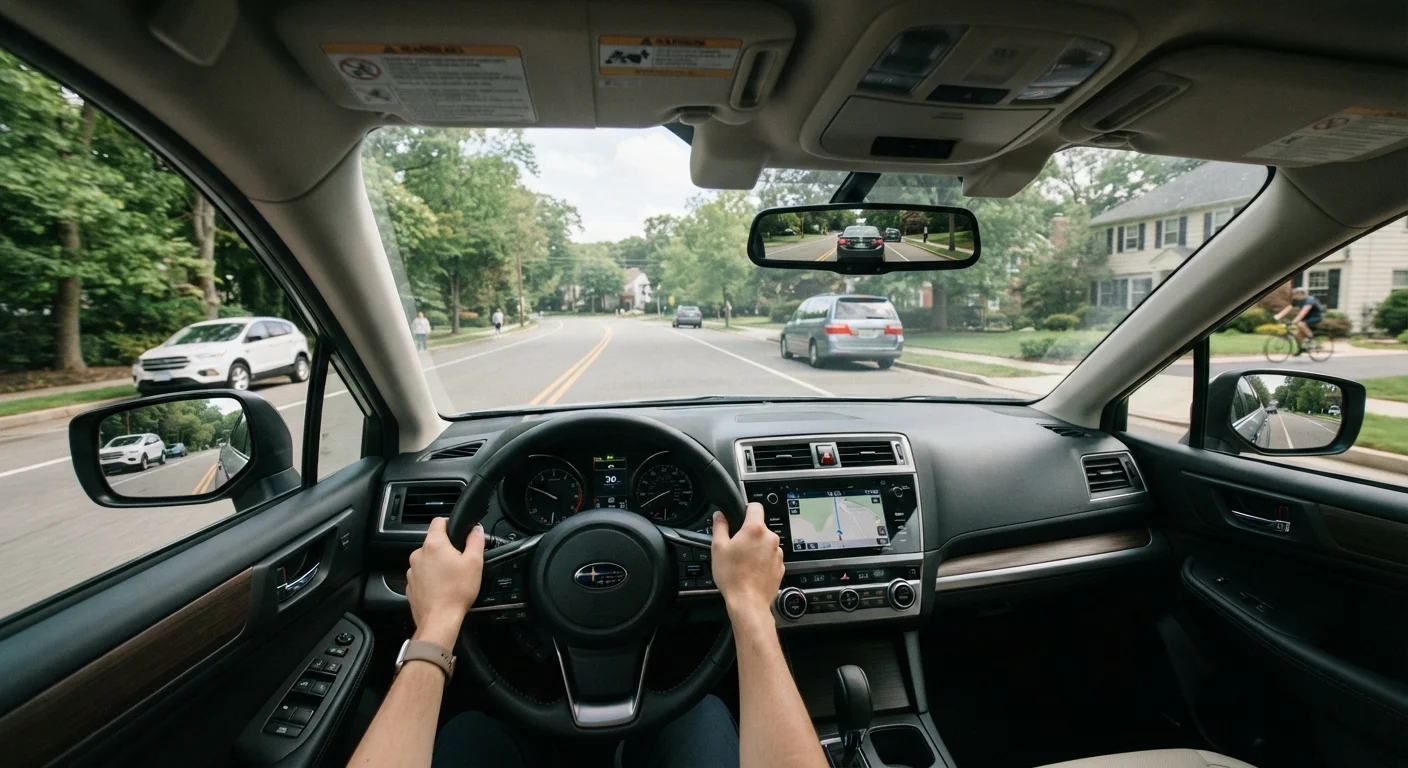
The general guidance from safety engineers: sit as far from the steering wheel as practical while still reaching the pedals comfortably. Keep the seatback roughly upright. Ensure headrests are positioned at ear level to reduce whiplash forces in a rear collision. Distracted or poorly-positioned passengers can also affect overall cabin safety - our article on passenger habits that affect driver safety covers related risks. Avoiding crashes in the first place through awareness - including understanding where blind spots form - remains the first line of defense.