What Is a Blind Spot?
A blind spot is any area around your vehicle that falls outside your direct line of sight and isn't captured by your mirrors. When another vehicle, cyclist, or pedestrian occupies that zone, they become effectively invisible to you - even when you're paying full attention to the road.
Blind spots are a normal, unavoidable feature of every vehicle's design. The A-pillars (the vertical supports beside your windshield), the vehicle's body, and the fixed angles of mirrors all create dead zones. Critically, blind spots are not static - they shift slightly depending on the driver's seat position, height, and how mirrors are set up.
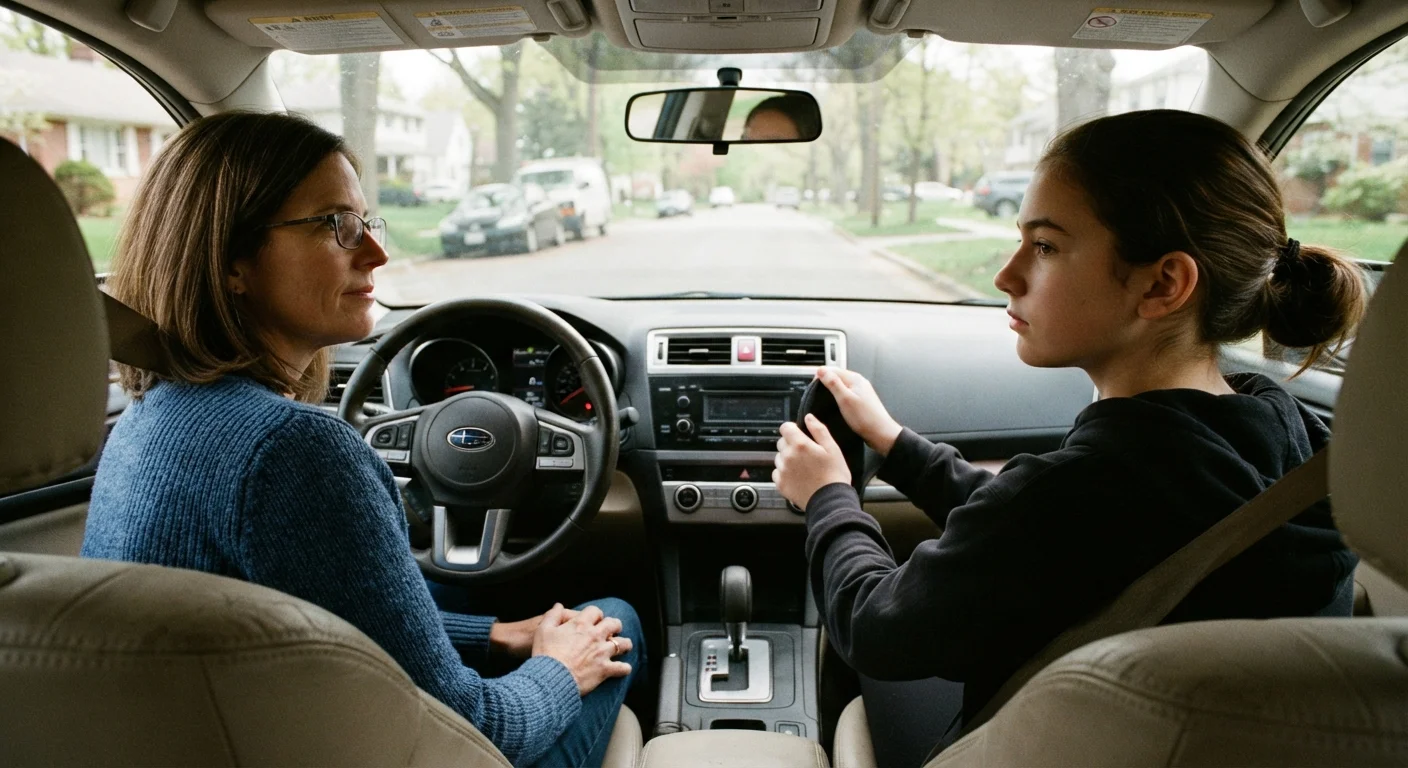
Understanding where these zones are is foundational to safe driving, and it's especially important when teaching a new driver who may not yet have internalized spatial awareness behind the wheel.
840,000+
Blind spot-related crashes per year in the U.S.
The National Highway Traffic Safety Administration (NHTSA) has attributed hundreds of thousands of annual lane-change crashes to inadequate blind spot checking.
20-25 ft
Rear blind zone typical of full-size pickup trucks
Vehicle safety researchers have documented that full-size trucks and SUVs can obscure pedestrians and small objects well beyond what drivers anticipate.
Where Blind Spots Form on Different Vehicles
The size and location of blind spots varies significantly by vehicle type:
- Sedans and hatchbacks: The most common blind spots sit diagonally at the rear-left and rear-right corners, just beyond the reach of side mirrors. The C-pillar (rear roof support) also creates a zone on each side.
- SUVs and crossovers: Taller rooflines and thicker pillars expand blind zones compared to sedans. The rear visibility is often worse when reversing, even with backup cameras.
- Pickup trucks: An extended cab or long bed creates a significant rear blind zone. The rear window's small size limits rearward vision considerably.
- Large trucks and commercial vehicles: Semi-trucks have four major blind zones - directly in front of the cab, directly behind the trailer, and wide diagonal zones on both sides. If you can't see the truck's mirrors, the driver almost certainly cannot see you.
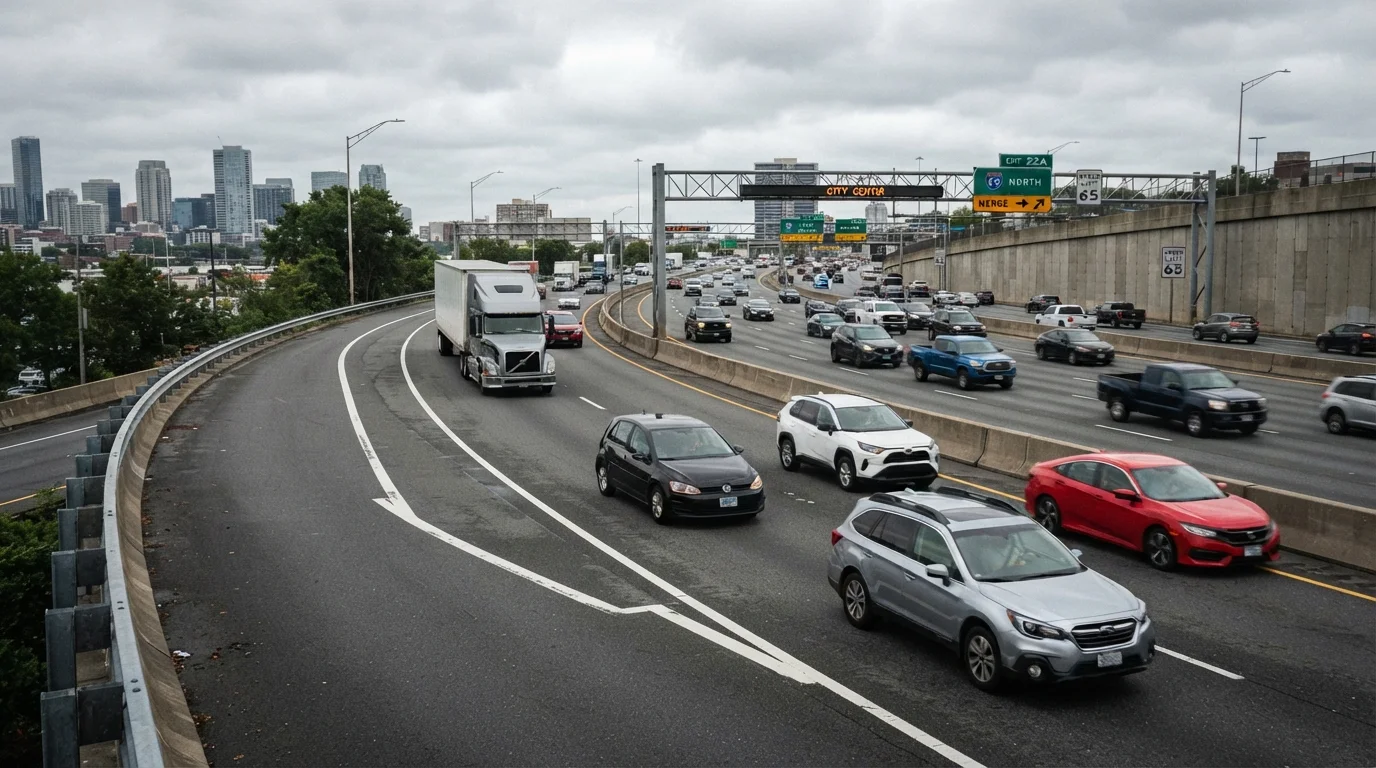
Motorcycles and bicycles are at heightened risk precisely because their smaller profiles make them easier to miss in these zones. When merging on the highway, a motorcycle can be completely hidden in a sedan's rear-quarter blind spot.
How to Check Your Blind Spots Correctly
Mirrors reduce blind spots - they don't eliminate them. The physical head check (also called the shoulder check) remains the only reliable way to confirm a lane is clear before moving into it.
- Signal first. Activate your turn signal to alert nearby drivers of your intent before you begin checking.
- Glance over your shoulder. Rotate your head roughly 45 degrees toward the direction you're moving. A quick, deliberate glance covers the rear-quarter zone your mirrors miss.
- Keep it brief. Your eyes should leave the road ahead for no more than one to two seconds. Anything longer diverts critical attention.
- Check, then move. Confirm the zone is clear before initiating the lane change - not during it.
This habit is particularly important in situations where distraction is already elevated. The cognitive load of phone use - even hands-free - can cause drivers to skip or rush blind spot checks without realizing it.
Before changing lanes, briefly check your mirror, then immediately follow with a shoulder glance - don't treat them as alternatives. The mirror tells you a lane looks clear; the shoulder check confirms it.
Mirrors and head checks cover different angles. Relying on one alone leaves meaningful gaps that combine to create crash risk.
When driving near large trucks, position yourself so you can see the truck's side mirrors. If you can't see their mirrors, assume the driver cannot see you - and increase your following distance or pass promptly.
Commercial vehicle blind zones extend far further than most passenger-car drivers expect, and lingering in those zones is one of the most preventable causes of truck-involved collisions.
Blind Spot Monitoring Technology: What It Does and Doesn't Do
Blind spot monitoring (BSM) systems use radar or ultrasonic sensors mounted in the rear bumper to detect vehicles in adjacent lanes. When a vehicle enters the monitored zone, a warning light typically illuminates in or near the corresponding side mirror. Some systems add an audible alert or steering resistance if you signal toward an occupied zone.
Don't Rely Solely on Technology
Blind spot monitoring systems are driver assistance tools, not substitutes for active checking. The NHTSA has noted that driver-assist technologies can create overconfidence, causing drivers to reduce the manual scanning habits that remain essential. Always perform a physical shoulder check before any lane change, regardless of whether your vehicle has BSM.
BSM systems are genuinely useful - they catch vehicles that drift into blind zones during highway cruising, which is when manual checks are least frequent. However, they have documented limitations:
- Most systems are calibrated for other cars and trucks at highway speeds; cyclists, motorcycles, and pedestrians may not trigger the alert reliably.
- Sensor performance can degrade in heavy rain, snow, or when sensors are obscured by dirt or ice.
- BSM typically monitors a fixed zone beside and slightly behind the vehicle - it doesn't cover the area created by A-pillars when turning at intersections.
Think of BSM as a useful backup layer, not a replacement for the shoulder check.
Situations Where Blind Spots Are Most Dangerous
Certain driving scenarios concentrate blind spot risk. Knowing them helps you prepare rather than react:
- Highway lane changes
- Speed compresses reaction time. A vehicle in your blind spot at 70 mph can be alongside you in under two seconds. See our related guide on common highway merging mistakes.
- Urban intersections
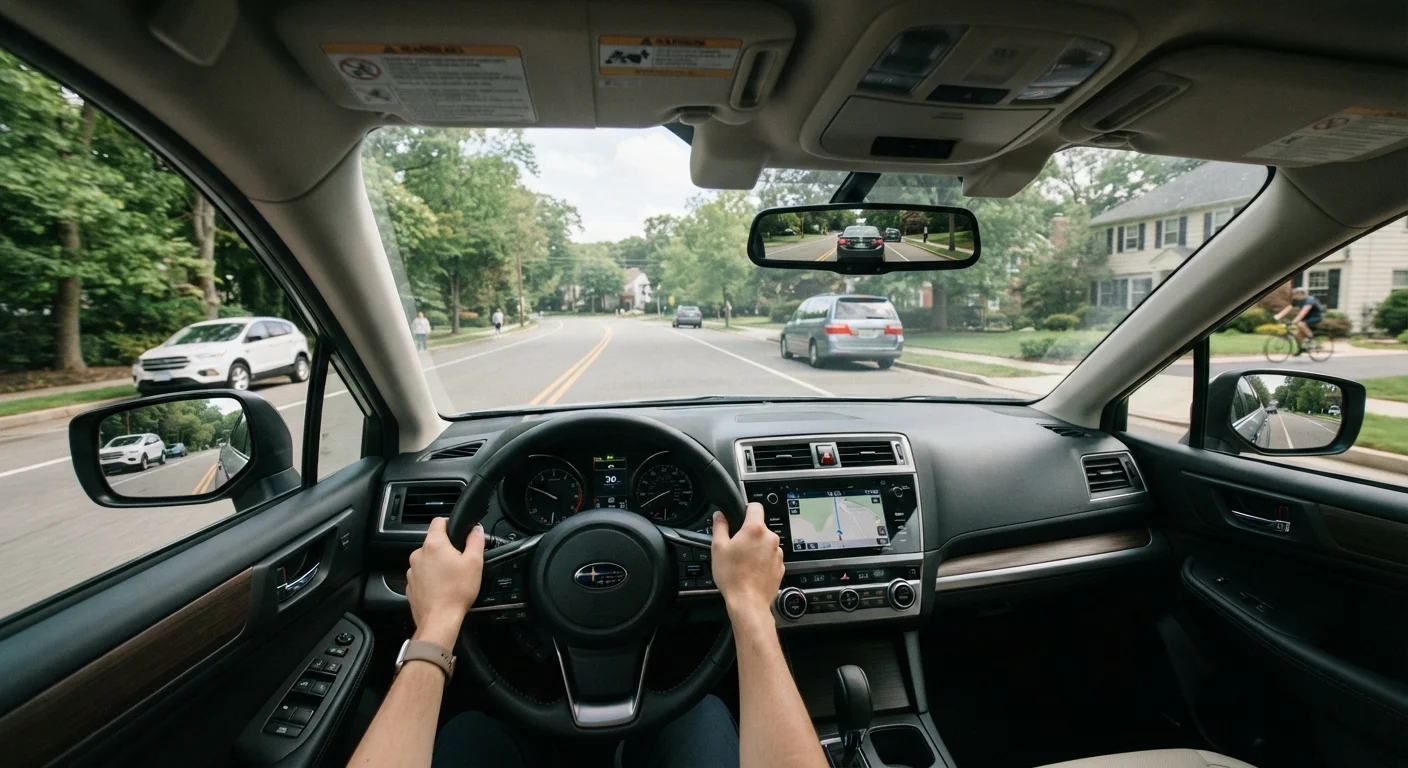
- The A-pillar can obscure pedestrians or cyclists positioned at corners, especially when turning. Lean forward slightly to look around the pillar before completing the turn.
- Reversing and parking
- Backup cameras show a wide-angle view directly behind the vehicle, but a narrow strip closest to the bumper and the areas directly beside the rear quarters remain hidden. Always check both mirrors before reversing.
- Night driving
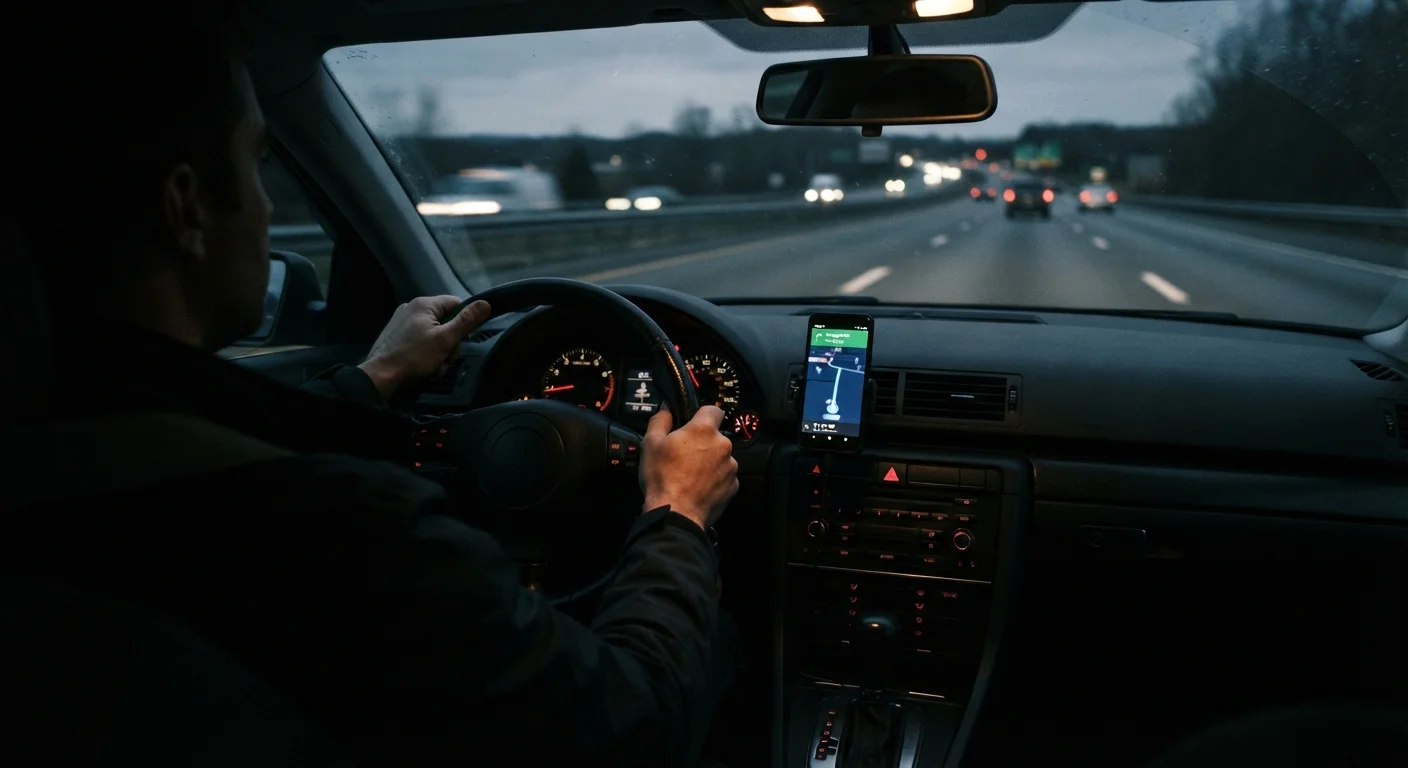
- Reduced ambient light makes it harder to spot a vehicle in your blind zone even during a shoulder check. Night driving demands extra vigilance in every scanning habit.
Pedestrians and Cyclists Are Often Missed
Most blind spot monitoring systems are optimized to detect other passenger vehicles and may not reliably alert to cyclists, motorcycles, or pedestrians. In urban environments and near crosswalks, do not depend on electronic alerts - slow down, look, and confirm visually before turning or changing lanes.
Adjusting Your Mirrors to Minimize Blind Zones
Most drivers set their side mirrors to show a sliver of their own vehicle - a habit that wastes mirror coverage on bodywork you already know is there. A more effective approach, often called the BGE method (named for the automotive engineers who popularized it), pushes the mirrors outward:
- Driver's side mirror: Lean your head toward the window until it nearly touches the glass, then adjust the mirror until you can just see the rear corner of your car. From your normal driving position, the mirror will now cover the lane beside you, not your own vehicle.
- Passenger's side mirror: Lean to the center of the cabin, then adjust until you can just see the passenger-side rear corner. Again, from your normal position, the mirror covers the adjacent lane.
- Rearview mirror: Adjust for maximum view through the rear window without any body parts obstructing it.
With this setup, a vehicle passing you should appear in your rearview mirror, transition to the side mirror, and briefly appear in your peripheral vision - nearly seamlessly. A full shoulder check still closes the remaining gap, but the gap is now much smaller.
Proper mirror configuration is also part of a sound pre-trip safety routine - something worth building into your habits before every drive.