Why Your First Month Is Different
Most budgeting guides treat month one as if you already know your numbers. You don't - and that's entirely normal. The real purpose of your first month on a budget isn't to spend perfectly. It's to learn how you actually spend money so you can make an informed plan going forward.
Think of month one as a financial baseline. You're collecting data, not passing a test. If you try to enforce tight limits before you understand your own patterns, you're likely to feel frustrated and quit. That's the most common reason first budgets fail - not lack of willpower, but unrealistic starting expectations.
For a broader foundation on how household budgets are built and sustained, see our complete budgeting resource.
Month One Is a Learning Phase
Financial professionals widely acknowledge that the first month of budgeting is rarely accurate - and that's expected. Your goal is to establish a habit of awareness, not to achieve a perfect outcome immediately. Give yourself permission to make mistakes and adjust; that process is the point.
Step 1: Know Your Take-Home Pay
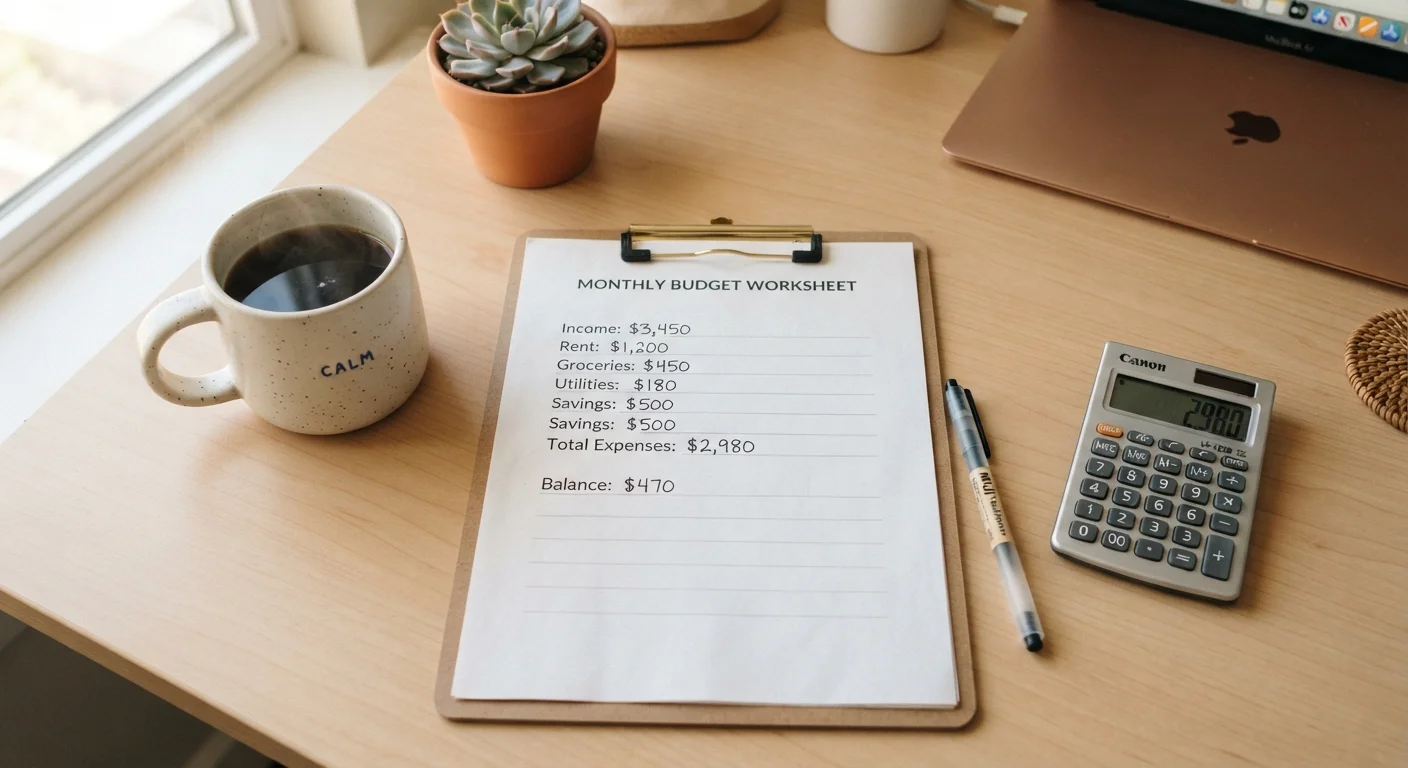
Every budget starts with one number: your net income, also called take-home pay. This is what lands in your bank account after taxes, Social Security contributions, and any pre-tax deductions like health insurance or a 401(k) are subtracted from your paycheck. It is not your salary or hourly rate multiplied out - those gross figures are misleading for budgeting purposes.
If your income is consistent each month, find this number on a recent pay stub or bank statement. If you're paid twice a month, multiply one paycheck by two. If you're paid biweekly (every two weeks), multiply one paycheck by 26 and divide by 12 to get a monthly figure.
Variable or freelance income requires a different approach. See our guide on budgeting on an irregular income for methods that account for fluctuating pay. For a detailed walkthrough of building a monthly budget from your net income specifically, the article Setting Up a Monthly Budget From Your Take-Home Pay covers each step in depth.
Net income
The amount of money you actually receive after taxes and deductions are taken out of your paycheck. This is the figure you use for budgeting - not your pre-tax salary.
Fixed expenses
Costs that stay the same every month, such as rent or mortgage payments, car payments, and most insurance premiums. These are predictable and don't vary with behavior.
Variable expenses
Spending that fluctuates month to month, like groceries, gas, dining out, and clothing. These are the categories where budgeting has the most immediate impact.
Discretionary spending
Money spent on non-essential wants - entertainment, hobbies, restaurants, subscriptions. This is typically the most flexible part of a household budget.
Emergency fund
A dedicated pool of savings set aside to cover unexpected expenses like car repairs or medical bills, so they don't derail your regular budget.
50/30/20 rule
A simple budgeting guideline that suggests directing 50% of take-home pay to needs, 30% to wants, and 20% to savings or debt payoff. It's a starting framework, not a strict prescription.
Step 2: Track Every Dollar You Spend
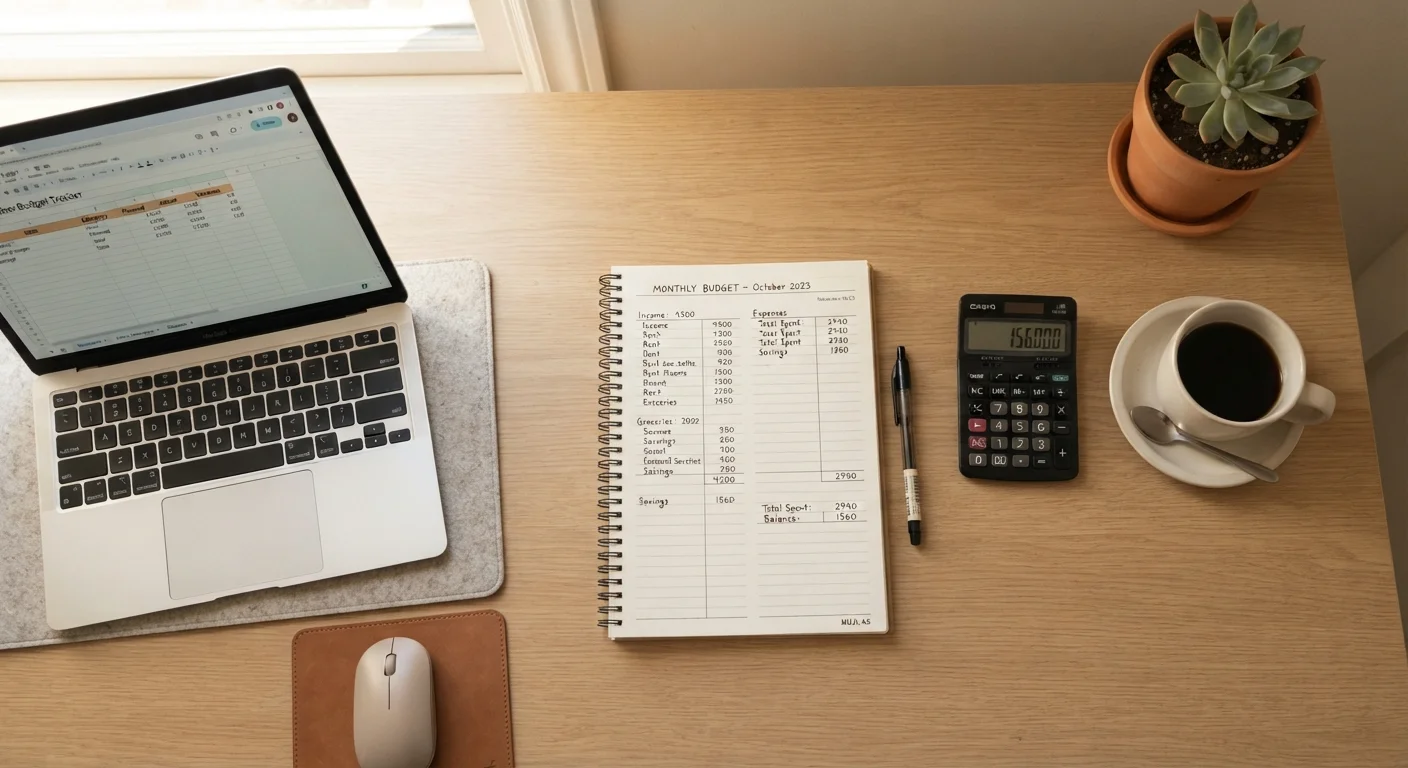
For the entire first month, record every purchase - rent, groceries, a $2 coffee, a streaming subscription. The goal is a complete picture of where money currently goes, not where you wish it went.
You can track using a simple notebook, a spreadsheet, or a personal finance app. Each approach has tradeoffs. Our article Tracking Spending by Hand vs. Using an App walks through those tradeoffs in detail so you can choose the method that fits how you actually work.
As you record, group purchases into broad categories: housing, food, transportation, utilities, subscriptions, personal care, dining out, and so on. Our reference on spending categories every household budget should include gives a practical list that covers both obvious and easily overlooked expenses.
Check Bank Statements for Forgotten Subscriptions
Scroll through three months of bank or credit card statements when setting up your categories. Many recurring charges - streaming services, gym memberships, app subscriptions - are easy to forget but show up reliably in your history. Catching these early prevents them from blowing your budget unexpectedly.
Step 3: Set Realistic Spending Limits
Once you've tracked for a full month, you have real data to work with. Now you can set spending limits that are grounded in your actual life rather than wishful thinking. Compare each spending category against your take-home pay and ask two questions: Is this essential? and Is this amount sustainable?
For non-essential categories where you'd like to spend less - dining out, entertainment, impulse purchases - set a limit that's meaningfully lower than your current spending but not so low it feels impossible. A 10-20% reduction in a discretionary category is often more sustainable than cutting it in half overnight.
Fixed expenses like rent and minimum loan payments don't have much flexibility in the short term; focus your adjustment effort on variable spending. Ensure that your planned spending across all categories does not exceed your take-home pay, and that you've reserved something - even a small amount - for savings or an emergency fund.
Don't Set Limits Before You Have Real Data
Setting strict spending caps before completing at least two to three weeks of tracking often leads to limits that don't match your actual life. Underestimating a category like groceries or gas by 30% will cause the plan to fail quickly. Use real spending data - even imperfect data - before finalizing your limits.
What to Do at the End of Month One
At month's end, sit down with your tracking records for 20-30 minutes. Compare what you planned (or guessed) against what you actually spent. Which categories ran over? Which came in under? Are there expenses you forgot entirely - an annual fee, a medical copay, a parking ticket?
This review is the most important habit you can build. It transforms budgeting from a one-time setup into a working system. Our monthly budget audit checklist gives you a structured way to do this review efficiently.
Carry your findings into month two with adjusted limits that reflect what you learned. If you struggled to stay on track, Why Your Budget Keeps Failing in Month Two identifies the most common patterns that derail progress - and practical ways to get past them.
This article is for general informational and educational purposes only and does not constitute personalized financial advice. Please consult a qualified financial professional for guidance specific to your situation.
Consumer Financial Protection Bureau (CFPB) Budgeting Tools
The CFPB offers free, government-produced worksheets and interactive tools for building household budgets. A reliable starting point with no commercial angle.
MyMoney.gov
A US government financial literacy portal covering budgeting, saving, and debt basics. Useful for beginners who want straightforward, unbiased foundational guidance.