How the Three Categories Break Down
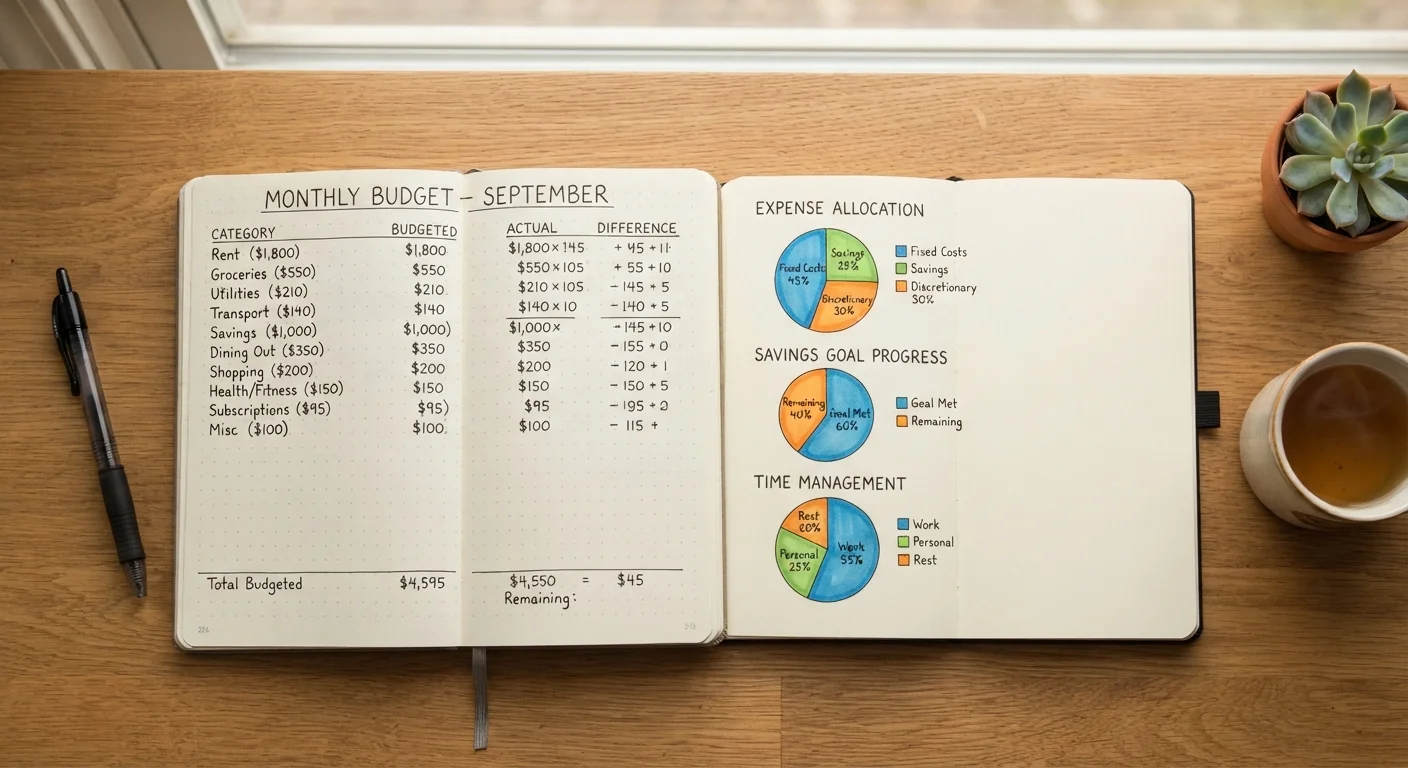
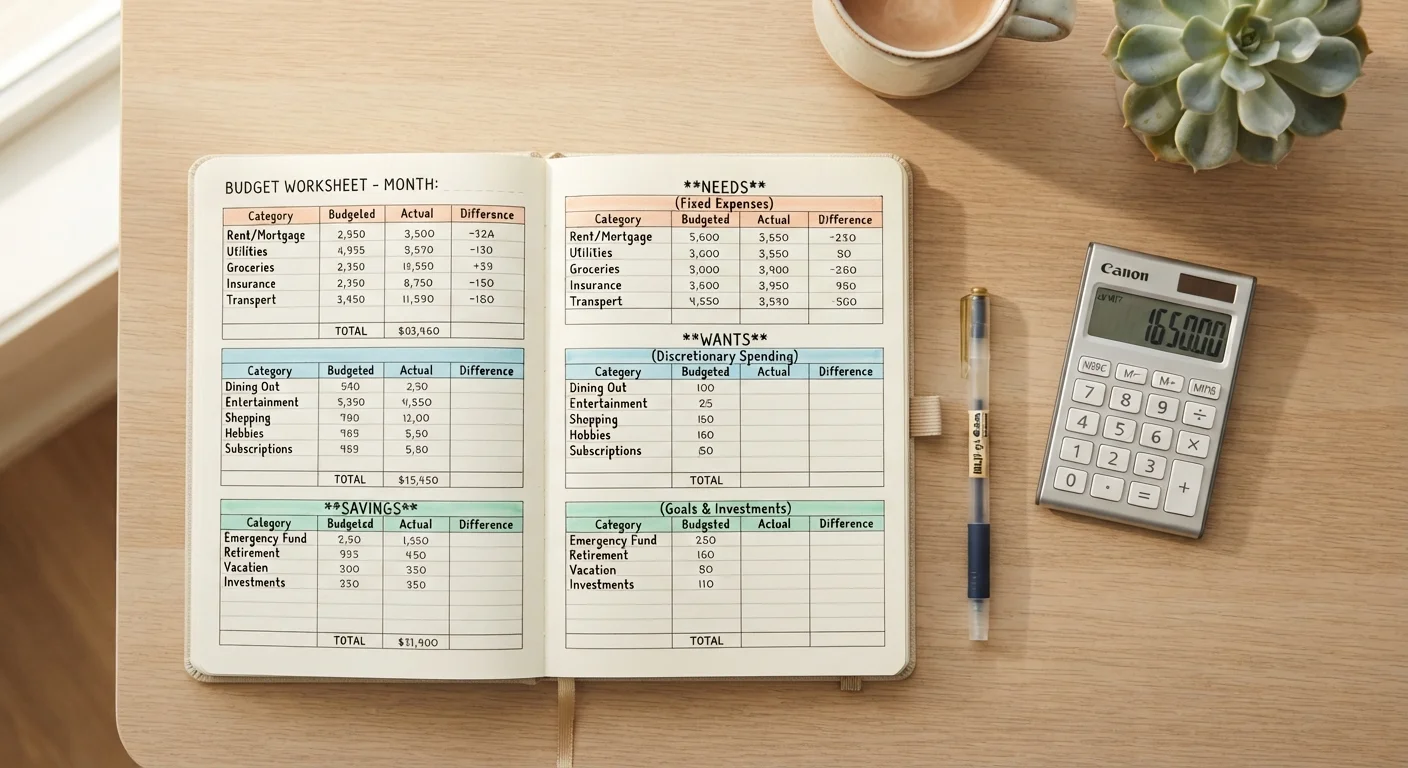
The 50/30/20 rule creates three broad buckets from your monthly take-home pay. Understanding what belongs in each one is essential before applying the framework.
Needs (50%)
This category covers expenses required for basic living and employment. Examples include rent or mortgage payments, utility bills, health insurance premiums, minimum loan payments, and grocery staples. A useful test: if cutting this expense would put your housing, job, or health at risk, it likely qualifies as a need.
Wants (30%)
Wants are discretionary expenses that improve quality of life but aren't essential for survival. Streaming services, restaurant meals, gym memberships, travel, and clothing beyond the basics all fall here. The distinction between needs and wants can sometimes feel blurry-a car might be a need in a rural area but a want in a city with robust transit options.
Savings and Debt Repayment (20%)
This slice covers building financial security: emergency funds, retirement accounts, and payments above the minimum on outstanding debt. Financial guidance generally suggests prioritizing high-interest debt before directing additional funds toward long-term savings, though individual circumstances vary.
Start With What You Actually Spend
Before applying any percentage targets, pull your last two or three months of bank and credit card statements and sort each transaction into needs, wants, or savings. This baseline audit often surfaces spending patterns that percentage targets alone won't reveal. It also makes adjusting the rule to your real numbers much easier.
Once you've mapped your current spending to these three categories, you'll quickly see where your money is going-and where you might have room to adjust. For a structured end-of-month review, see our monthly budget audit checklist.
Where the 50/30/20 Rule Works Well
The rule's greatest strength is its simplicity. Unlike systems that require categorizing dozens of individual expenses, the 50/30/20 framework reduces budgeting to three decisions per dollar. This low friction makes it realistic for people who have never budgeted before or who have struggled to maintain more detailed systems.
~37%
Median share of income spent on housing by U.S. renters
According to the U.S. Census Bureau's American Community Survey, many renters already allocate close to or above the standard threshold for housing burden.
$6,081
Median monthly household income (after tax) in the U.S.
Based on U.S. Bureau of Labor Statistics Consumer Expenditure Survey data, which provides context for how much the average household has to allocate across the three categories.
39%
U.S. adults who say they couldn't cover a $400 emergency
Federal Reserve Board data on economic well-being highlights that a significant share of households face barriers to reaching even a basic savings target.
It is also flexible by design. Because it works with percentages rather than fixed dollar amounts, the rule scales with income-a quality that makes it applicable whether someone earns $40,000 or $140,000 per year. And by dedicating a defined portion to savings from the outset, the framework nudges users toward financial security without requiring a separate savings plan.
The rule fits especially well for middle-income earners in moderate cost-of-living areas whose housing and transportation costs fall within a reasonable share of income. For these households, the 50% needs ceiling is achievable, leaving meaningful room for both discretionary spending and saving.
Where the Rule Falls Short
Despite its appeal, the 50/30/20 rule has real limitations that every user should understand.
High Cost-of-Living Areas
In cities like New York, San Francisco, or Boston, rent alone can consume 40-50% of a moderate income. When housing and utilities eat most or all of the needs allocation, there's nothing left for groceries, transportation, or health costs within that 50%-forcing people to either exceed the cap or sacrifice savings.
Low-Income Households
For households living paycheck to paycheck, the 50/30/20 framework can feel aspirational to the point of uselessness. When needs consume 70-80% of income-a reality for millions of Americans-the rule offers little practical guidance. In these cases, the immediate priority is stabilizing essential expenses, not conforming to a percentage model.
It Doesn't Distinguish Between Debt Types
Bundling savings and debt repayment into a single 20% bucket obscures important trade-offs. High-interest credit card debt and a low-interest federal student loan are not financially equivalent, yet the rule treats all debt repayment the same way.
“The 50/30/20 rule is a useful framework for thinking about money, but no rule survives first contact with a real household budget unchanged. The goal is the habit, not the perfect percentage.”
— Finance Editorial Team, Personal Finance Editors
For a head-to-head look at how the 50/30/20 rule compares to a more granular alternative, see our guide on zero-based budgeting vs. the 50/30/20 rule.
Adapting the Rule to Your Situation
The 50/30/20 framework is best understood as a starting point, not a final answer. Several practical adaptations can make it work for a wider range of circumstances.
- Adjust the percentages: There's nothing sacred about 50/30/20 specifically. A 60/20/20 or 70/20/10 split may be more realistic depending on your income and location. What matters is that savings and debt reduction receive a dedicated allocation.
- Use it as a diagnostic tool: Run your last three months of spending through the three categories. The output often reveals patterns-particularly how much of the wants bucket flows to subscriptions or food delivery-that are easy to overlook.
- Combine it with other approaches: Some households use the 50/30/20 framework as a high-level guide while applying more detailed tracking to specific problem categories. This hybrid approach captures simplicity at the macro level without sacrificing visibility where it counts.
Couples managing shared finances may find that aligning on these three categories is a useful first conversation before diving into specific line items. Our article on budgeting as a couple covers how to approach those conversations constructively.
For a broader foundation on household budgeting-from initial setup through sustaining the habit long term-the household budgeting complete resource offers a comprehensive starting point.
This article is for general informational and educational purposes only and does not constitute personalized financial, tax, or legal advice. Readers should consult a qualified financial professional before making decisions about their individual financial situation.