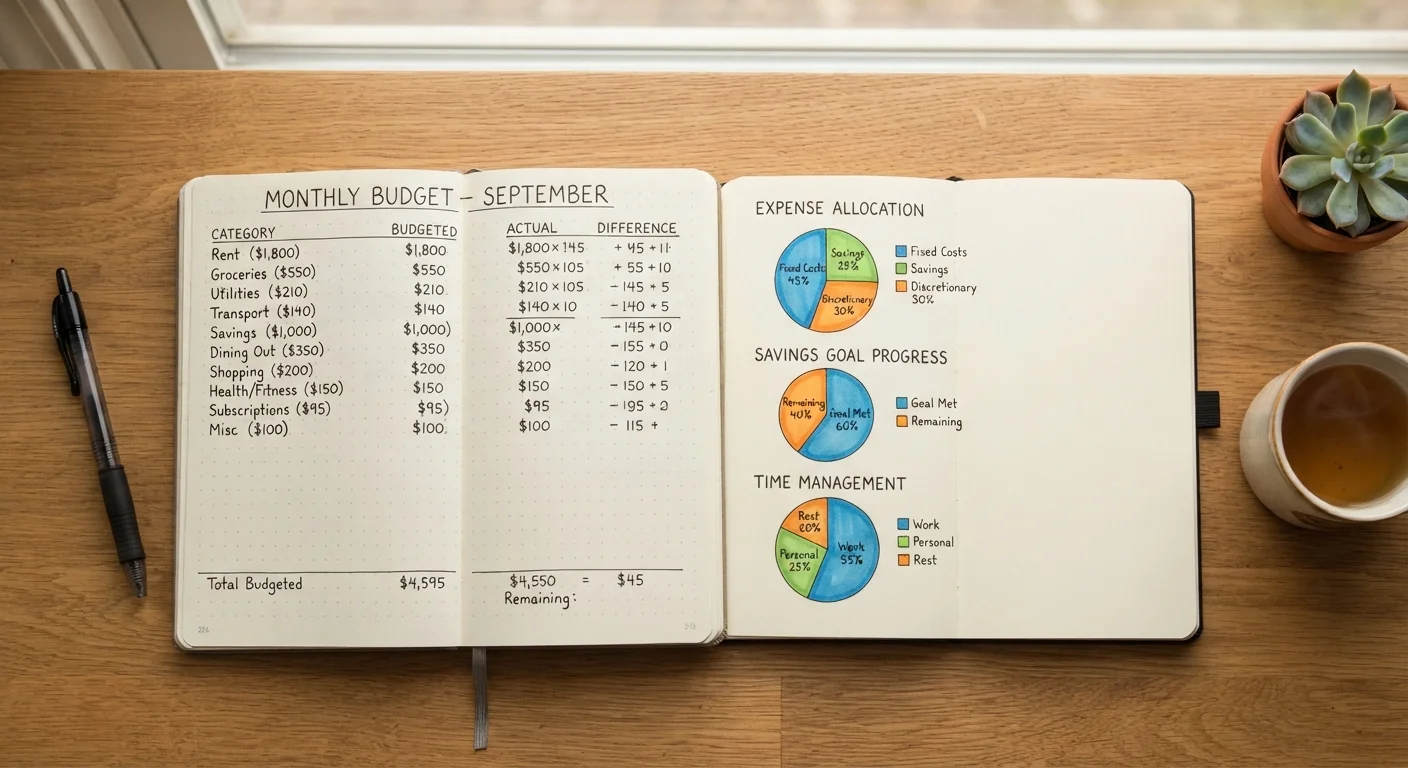

What 'Strict Budgeting' Actually Means
Strict budgeting means assigning a firm spending limit to every category-housing, groceries, transportation, entertainment-and holding to those limits each month with minimal deviation. Methods like zero-based budgeting, where every dollar of income is allocated before the month begins, represent the stricter end of the spectrum.
This is different from loose tracking, where you monitor spending after the fact. Strict budgets are proactive and prescriptive. For context on how different frameworks approach this, see our comparison of zero-based budgeting and the 50/30/20 rule-two methods that sit at opposite ends of the flexibility scale.
Understanding what you're signing up for before tightening your budget is essential. The gains are real, but so are the costs.
The Advantages: Why Strict Budgeting Works
A strict budget's primary strength is intentionality. When every spending category has a ceiling, impulse purchases face a natural barrier. Over time, this structure accelerates progress toward financial goals that might otherwise stall.
Accelerates debt repayment with focused allocation
Assigning surplus income directly to debt reduces the principal faster, cutting the total interest paid over the loan's life.
Builds emergency savings more reliably
Fixed savings line items are treated as non-negotiable expenses, making it harder to skip contributions during lower-priority months.
Creates clear visibility into spending patterns
Categorized limits force regular review of where money goes, often revealing habitual spending that wasn't previously obvious.
Reduces financial anxiety through predictability
Knowing exactly what is allocated to each category eliminates the end-of-month uncertainty that contributes to financial stress for many households.
Supports long-term goal planning
Whether saving for a home down payment or retirement contribution, a strict budget creates a measurable path with a realistic timeline.
Research consistently shows that people who track their spending in detail-the core habit in strict budgeting-are more likely to meet savings targets. The discipline also builds financial literacy: you learn exactly where your money goes, which often reveals surprising patterns.
65%
Adults who don't track their spending monthly
According to NFCC survey data, a significant share of American adults do not maintain any form of regular spending tracking, underscoring how rare consistent budgeting actually is.
3-6 months
Recommended emergency fund target
Financial guidance from bodies such as the Consumer Financial Protection Bureau consistently recommends three to six months of essential expenses as a baseline emergency reserve.
For households building a budget for the first time, our complete household budgeting resource covers how to structure categories and set realistic limits from the ground up.
The Disadvantages: What You Give Up
Strict budgeting is not costless. The same rigidity that makes it effective can make it brittle. Life doesn't follow a spreadsheet-unexpected expenses, social obligations, and shifting income all test fixed spending plans.
Leaves little buffer for irregular or surprise expenses
Car repairs, medical co-pays, and home maintenance costs don't follow a monthly schedule, and strict budgets often lack adequate flexibility to absorb them.
Can cause psychological deprivation and burnout
Consistently denying discretionary spending-even small pleasures-has been linked to budget fatigue, which often leads to abandonment of the plan entirely.
May create relational tension in shared households
When one partner wants stricter controls and another prioritizes flexibility, rigid budget rules can become a recurring source of conflict rather than a shared tool.
Difficult to sustain on variable or irregular income
Freelancers, gig workers, and seasonal employees face income swings that can make fixed monthly spending caps impractical without frequent revision.
Risk of focusing on small cuts while missing larger issues
Strict discipline on minor expenses like dining out can create a false sense of financial control while high-interest debt or inadequate insurance go unaddressed.
One underappreciated downside is relational friction. When budgeting as a couple or household, strict rules can create tension if partners have different spending values. Budgeting as a couple requires particular care to avoid turning financial discipline into a source of conflict.
There's also the risk of false frugality-cutting visible spending (coffee, dining out) while missing larger financial inefficiencies like high-interest debt or underinsurance. Strictness in the wrong categories can create a false sense of progress.
Strictness Is Relative to Your Situation
A budget that feels strict to one household may feel loose to another, depending on income, cost of living, and financial obligations. What matters is whether your plan covers essentials, addresses your goals, and remains realistic to maintain month after month. Consider revisiting your budget structure at least annually or whenever your income or major expenses change significantly.
Finding a Sustainable Middle Ground
The evidence on behavioral economics suggests that overly restrictive plans produce the same outcome as crash diets: short-term compliance followed by abandonment. A budget that accounts for real human preferences-including occasional discretionary spending-tends to last longer and deliver better results over a multi-year horizon.
Frameworks like the 50/30/20 rule build in a 30% 'wants' allocation precisely to prevent deprivation-driven derailment. Understanding how the 50/30/20 rule works and where it falls short can help you decide whether a more flexible structure fits your situation better than a strict zero-based approach.
Ultimately, the best budget is one you'll maintain. Calibrate strictness to your goals and income stability-and revisit the plan when circumstances change. For a grounding reminder that budgets don't require deprivation, see common budgeting myths debunked.
This article is for general informational and educational purposes only and does not constitute personalized financial advice. Consult a qualified financial professional before making decisions about your own financial situation.