How Utilization Is Calculated
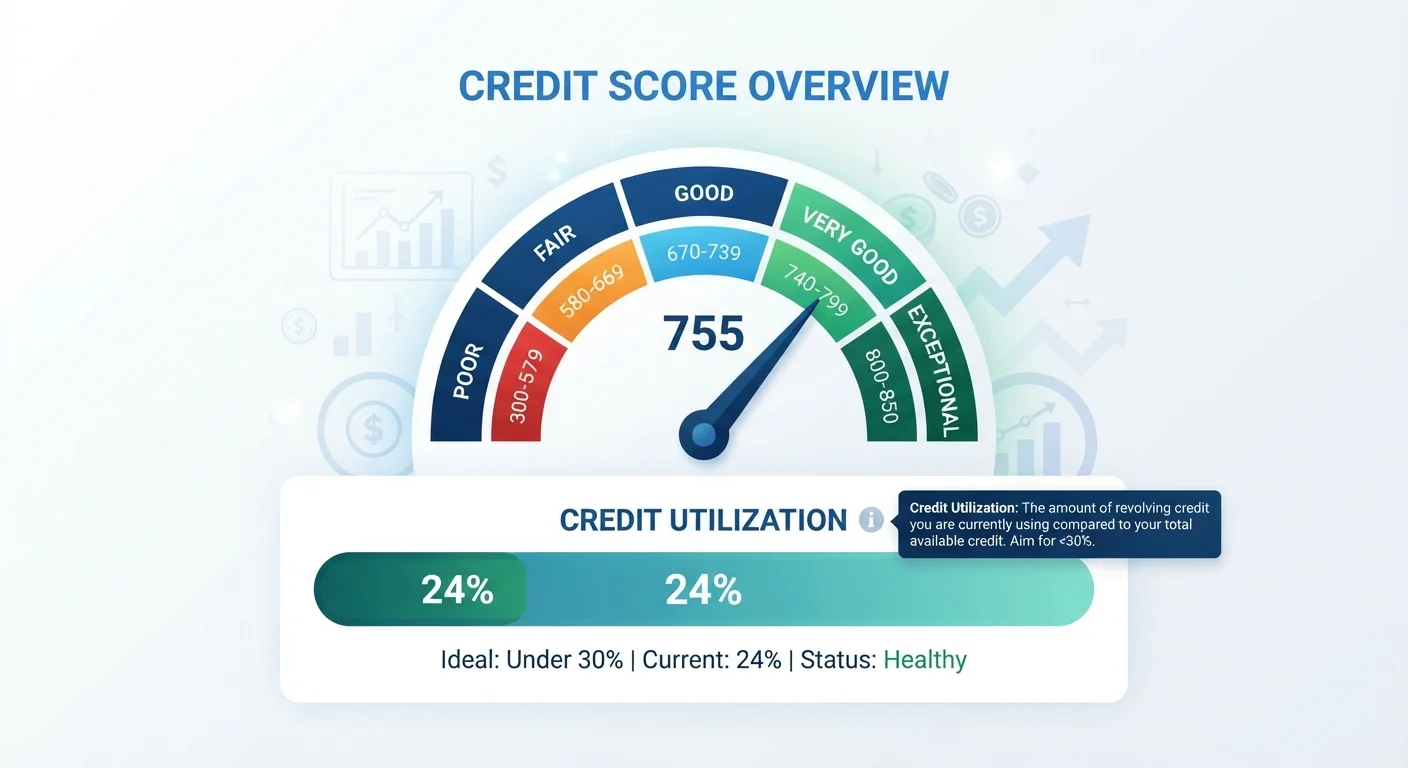
The math behind credit utilization is straightforward, but there are two layers to understand: aggregate utilization and per-card utilization.
Aggregate utilization adds up all your revolving balances and divides by your total credit limits. If you have three cards with a combined limit of $15,000 and carry $3,000 in total balances, your aggregate utilization is 20%.
Per-card utilization evaluates each account independently. If one of those three cards has a $2,000 limit and a $1,800 balance, that card's utilization is 90% - a red flag in scoring models - even if your overall ratio looks healthy.
This dual calculation is why spreading balances across cards rather than concentrating debt on one account generally produces better outcomes. For a broader foundation on how credit scores work, see our guide to credit and debt basics.
~30%
Share of FICO score from amounts owed
FICO's published score factor weightings identify 'amounts owed' - which includes utilization - as approximately 30% of a standard FICO score.
<10%
Utilization rate of highest-scoring consumers
FICO data indicates that consumers with scores above 800 carry an average utilization rate in the single digits.
1-2 cycles
Typical time for utilization changes to reflect
Because bureaus receive updated balance data after each billing cycle, score changes from utilization improvements typically appear within one to two months.
Why It Moves Scores So Fast
Credit utilization is unusual among scoring factors because it isn't a historical record - it's a snapshot. Payment history captures years of behavior; utilization reflects only what your balances look like when your card issuer reports to the credit bureaus, which typically happens once per billing cycle.
That dynamic cuts both ways. A large purchase that temporarily spikes your utilization can cause a noticeable score drop. Pay the balance down the following month and the score can recover just as quickly. This responsiveness distinguishes utilization from factors like hard credit inquiries, which linger on a report for up to two years.
Time Your Payments Strategically
To get credit for a lower balance, pay down your card before the statement closing date - not just before the payment due date. The statement closing date is when your issuer reports your balance to the credit bureaus. Check your card's billing cycle in your online account to find this date.
The key mechanism: card issuers send balance and limit data to Equifax, Experian, and TransUnion after each statement closes. Scoring models then recalculate your score using that fresh data. Because no memory of last month's high balance persists, consumers have a real opportunity to course-correct within weeks.
Practical Ways to Lower Your Ratio
There are several actionable strategies for reducing credit utilization, each working on a different part of the equation:
- Pay balances before the statement closing date. Your issuer reports the balance that appears on your statement. Paying it down before the statement closes means a lower number gets reported - even if you pay in full every month.
- Request a credit limit increase. Raising your limit without increasing spending directly lowers the ratio. Most issuers allow requests online, though approval isn't guaranteed.
- Make multiple payments per month. If you use cards heavily for everyday spending, mid-cycle payments prevent your statement balance from reflecting peak spending.
- Avoid closing unused cards. Keeping accounts open preserves available credit and helps maintain a lower aggregate ratio. Some habits that seem neutral - like letting an old card sit unused - can actually protect your score. Patterns that quietly damage credit scores covers this dynamic in detail.
Utilization Applies Only to Revolving Credit
Credit utilization is calculated using revolving accounts - primarily credit cards and lines of credit. Installment loans like auto loans, student loans, and mortgages are not included in the utilization ratio calculation, even though they appear on your credit report and affect other scoring factors.
This article is for general informational purposes only and does not constitute personalized financial or credit advice. Consult a qualified financial professional for guidance specific to your situation.