How Compound Interest Actually Works
The mechanics are straightforward. Suppose you deposit $1,000 into an account earning 5% annual interest. After year one, you earn $50 in interest, bringing your balance to $1,050. In year two, that 5% applies to $1,050-not the original $1,000-generating $52.50. Each year, the base grows, and so does the interest earned on it.
This self-reinforcing cycle is what separates compounding from simple interest. Over 30 years, that same $1,000 at 5% compounded annually grows to roughly $4,322-more than four times the original amount, without adding a single extra dollar. Add regular contributions, and the growth becomes substantially larger.
To understand the vocabulary behind this concept, our glossary of core investing terms covers APY, principal, and related concepts in plain language.
$4,322
Value of $1,000 after 30 years at 5% compounded annually
Illustrates how compounding multiplies a single deposit over time without any additional contributions.
72 ÷ Rate
Rule of 72: years to double your money
A widely used financial shortcut: at 6% annual return, money doubles approximately every 12 years.
10 years
Head start that can mean hundreds of thousands more at retirement
Financial educators frequently illustrate that starting contributions a decade earlier can produce dramatically larger balances, due to additional compounding cycles.
Why Time Is the Most Powerful Variable
Rate matters, but time matters more. Two savers investing the same amount at the same return will end up in very different places if one starts a decade earlier. This is because compounding is exponential-growth accelerates rather than proceeding in a straight line.
Consider two people: one begins contributing $200 a month at age 25; the other waits until 35. Assuming the same average annual return, the earlier saver doesn't just have 10 more years of contributions-they have 10 more years of compounding on every dollar already invested. The gap in final balances at retirement age can reach hundreds of thousands of dollars.
The Rule of 72 makes this intuitive: divide 72 by your expected annual return to estimate how many years it takes to double your money. At a 6% average return, your balance doubles approximately every 12 years. That means starting earlier adds entire doubling cycles to your outcome.
“Compound interest is the eighth wonder of the world. He who understands it, earns it; he who doesn't, pays it.”
— Commonly attributed to Albert Einstein, Widely cited in financial education literature (attribution is popular but not historically verified)
When Compounding Works Against You
Compound interest is not inherently a wealth-building tool-it depends entirely on which side of the equation you're on. On savings and investments, compounding multiplies your balance. On debt, it multiplies what you owe.
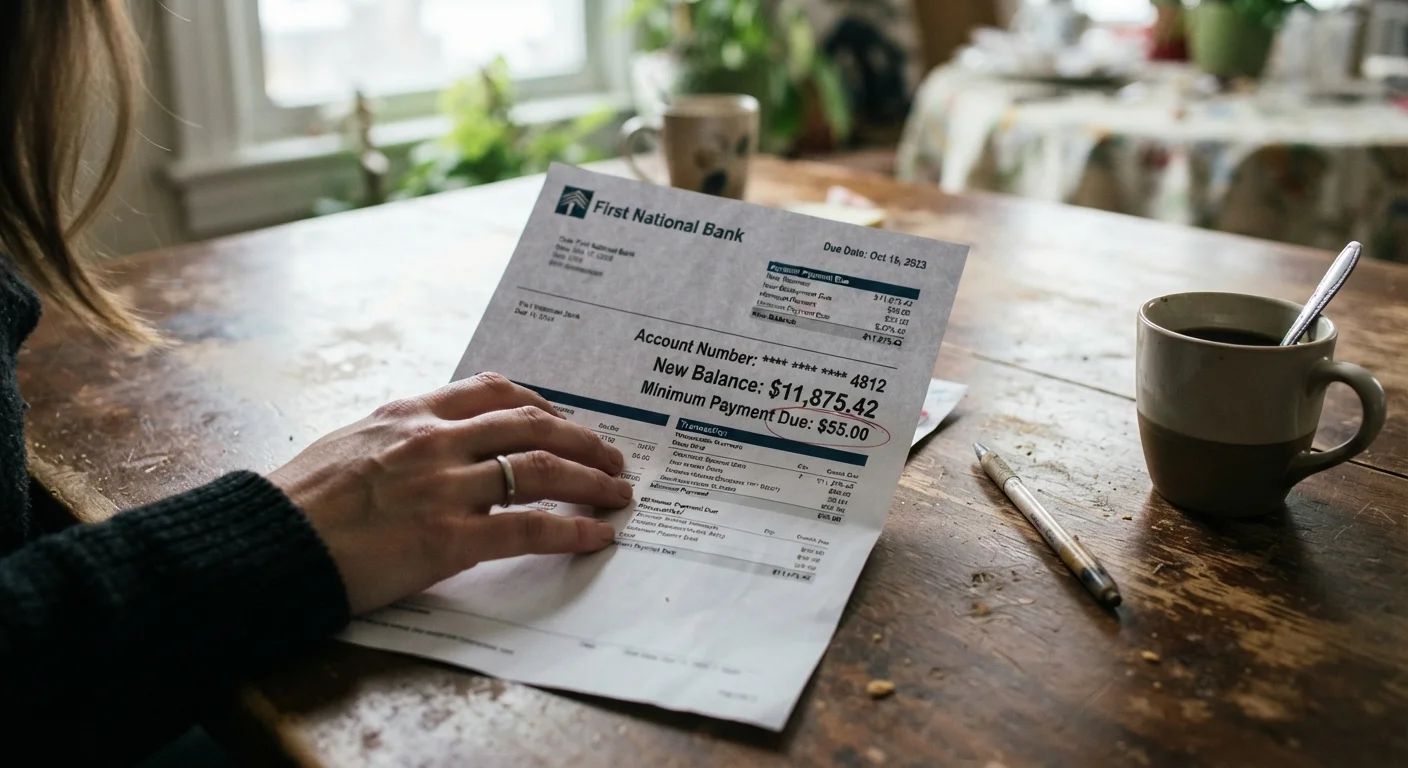
Credit card balances are a common example. When you carry a balance, unpaid interest is added to your principal. The next billing cycle, interest is charged on the new, higher balance. Over time, this significantly inflates the true cost of the original purchase. See how minimum payments interact with compounding interest to understand the full long-term math.
This is why financial educators generally recommend paying down high-interest debt before prioritizing additional investment contributions. The same force working for you in a retirement account is working against you on a credit card balance.
Prioritize High-Interest Debt First
If you're carrying high-interest credit card debt, compounding is working against you at a rate that likely exceeds any investment return you'd earn. Paying down that debt is often the highest guaranteed 'return' available. Once high-interest balances are cleared, redirect those same payments toward savings and investment contributions.
Putting Compounding to Work in Practice
Understanding compound interest is most useful when it shapes actual behavior. A few principles apply broadly:
- Start as early as possible. Even small, consistent contributions benefit more from time than large contributions made later.
- Use tax-advantaged accounts. In a 401(k) or IRA, compound growth accumulates without annual tax reduction, allowing the full balance to keep compounding.
- Reinvest dividends and returns. In investment accounts, automatically reinvesting earnings keeps the compounding engine running.
- Keep contributions consistent. Regular additions-monthly, for instance-add new principal that itself begins compounding immediately.
Building a broader savings framework around these habits is worth the effort. Our guide to building a personal savings plan walks through how to structure that foundation practically.
If you're new to investing and unsure where to start, investing with a small amount to start is a realistic entry point. And if common doubts are holding you back, separating investing myths from reality addresses the most frequent misconceptions.
This article is for general informational and educational purposes only and does not constitute personalized financial, investment, or tax advice. Consult a qualified financial professional before making decisions based on your individual circumstances.