
Why Most Savings Plans Fall Apart
The most common reason savings plans fail isn't lack of discipline - it's lack of structure. Without defined goals, a realistic contribution amount, and an account strategy to match, even well-intentioned savers tend to drift. Money that isn't directed somewhere specific tends to get spent.
A workable plan connects three things: what you're saving for, how much you can realistically set aside, and where that money should live. Each element depends on the others. Skipping any one of them creates gaps that compound over time - and not in the good way that compound interest describes.
For couples managing finances together, aligning on savings goals requires an extra layer of coordination. Our guide to budgeting as a couple addresses how to build shared financial plans without conflict.
This Is General Information, Not Financial Advice
This article provides general financial education for informational purposes only. It is not personalized financial, investment, or tax advice. Your situation is unique - consult a licensed financial adviser or planner before making significant decisions about your savings or investments.
What You'll Need Before You Start
Building a savings plan doesn't require sophisticated tools or a large income - it requires clarity. The prerequisites and tools below reflect what's genuinely useful at the outset. You can refine your setup over time.
What you will need
Budgeting worksheet or spreadsheet
Helps you map income against expenses to identify how much is realistically available to save each month.
High-yield savings account
Earns more interest than a standard savings account, useful for short- and medium-term goal funds.
Employer-sponsored retirement account (e.g., 401(k))
Tax-advantaged vehicle for long-term retirement savings, especially valuable if your employer offers matching contributions.
Savings goal tracker (app or paper)
Visualizes progress toward individual goals, which supports motivation over time.
For a broader look at how savings fits into overall household financial management, the household budgeting resource covers the full picture from setup through long-term habit.
Step-by-Step: Building Your Savings Plan
Follow these steps in order. Each one builds on the last. If your circumstances are more complex - irregular income, significant debt, or multiple competing goals - consider working through these steps with a licensed financial planner.
Avoid Skipping the Emergency Fund
Redirecting all available cash toward investments before building an emergency fund can backfire. An unexpected expense - medical bill, car repair, job loss - without a cash cushion often means taking on high-interest debt. Most financial guidance suggests building three to six months of essential expenses in liquid savings before increasing investment contributions.
Clarify what you're saving for
Vague intentions like "save more money" rarely stick. Instead, name each goal specifically - an emergency fund covering three months of expenses, a car down payment of $5,000, or a retirement contribution target. Assign a rough timeline and dollar amount to each. This gives your plan a measurable destination rather than an open-ended aspiration.
Establish your actual saving capacity
Before deciding how much to save, you need to know what's genuinely available. Review your monthly take-home pay and subtract your non-negotiable expenses - housing, utilities, groceries, debt payments, and transportation. What remains is your discretionary income. From that, decide on a realistic saving amount. If you haven't built a detailed monthly budget yet, see our step-by-step monthly budget guide for a structured starting point.
Match each goal to the right account
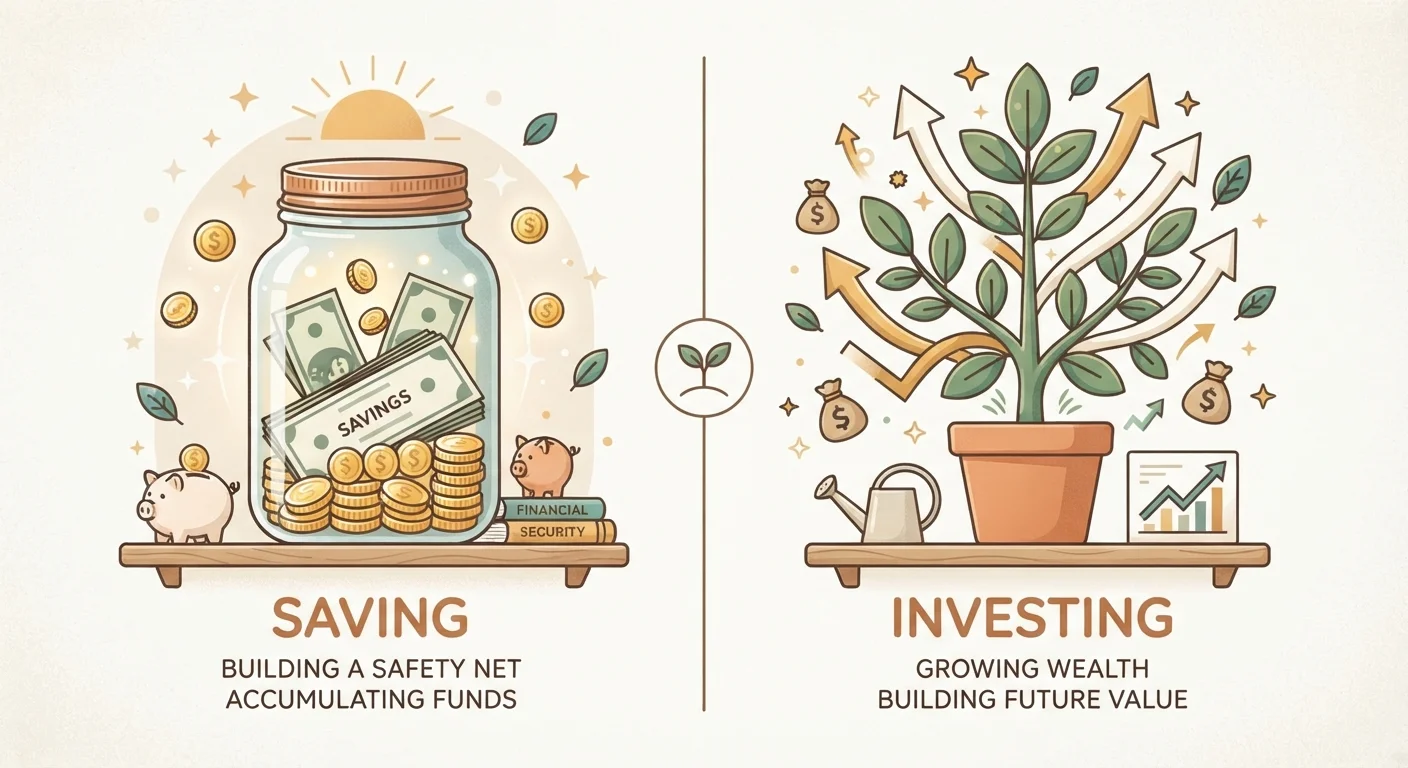
Not every savings goal belongs in the same place. Emergency funds need to stay liquid and accessible - a high-yield savings account generally fits. Medium-term goals might benefit from a certificate of deposit if you won't need the funds immediately. Long-term retirement savings often belong in tax-advantaged accounts like a 401(k) or IRA. Understanding the difference between saving and investing helps you make these distinctions clearly.
Automate your contributions
Manual transfers depend on remembering and feeling financially comfortable in the moment - both unreliable. Set up automatic transfers from your checking account to each savings or investment account on or shortly after your payday. Treat these like fixed expenses. Automation is one of the most consistently cited behaviors among people who successfully build savings over time.
Prioritize your emergency fund first
Before ramping up investment contributions, most financial guidance suggests establishing a liquid emergency fund - typically three to six months of essential living expenses. This buffer prevents a single financial shock from derailing everything else. Read more about whether to prioritize an emergency fund or investment account for a deeper look at the trade-offs.
Review and adjust your plan regularly
A savings plan is a living document. Review it at least every six months - or whenever your income, expenses, or goals change significantly. Raises, new expenses, completed goals, and life events all shift what makes sense. Adjust contribution amounts or reallocate between goals as needed. The goal isn't rigidity; it's sustained direction.
Automate Early, Adjust Later
Setting up automatic transfers on payday - even a modest amount - dramatically improves follow-through. You can always increase the amount later. The habit of saving consistently matters more than the initial sum.
Once your emergency fund is in place and contributions are automated, you may want to explore getting started with investing on a small budget as a next step. For those closer to retirement age, the cost of delaying retirement savings is worth understanding before making any changes to contribution timing.
This article is for informational purposes only and does not constitute personalized financial or investment advice. Consult a qualified financial professional before making decisions based on your individual circumstances.