How Each System Works
Understanding the mechanics of each system makes the trade-offs much clearer before you invest time or money.
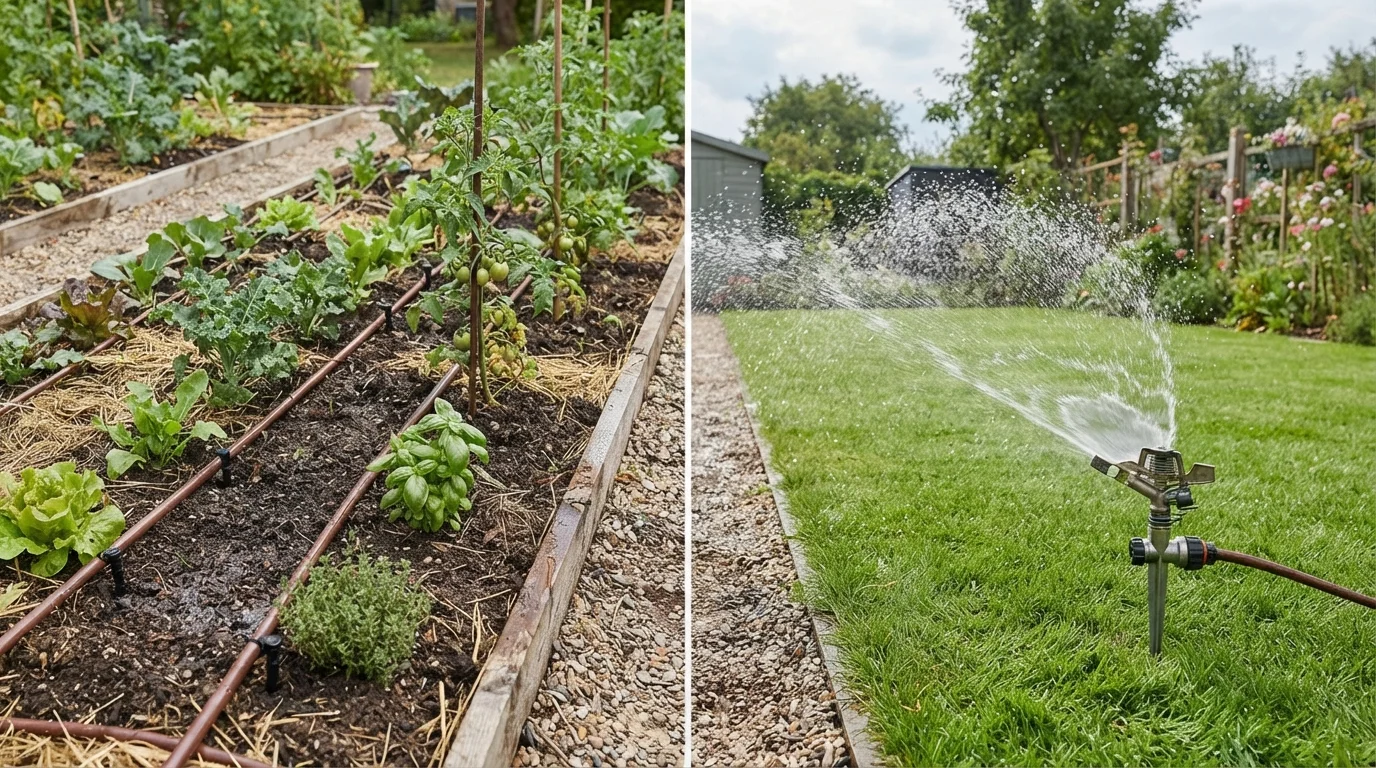
Drip irrigation uses a network of tubing and small emitters placed near plant bases. Water seeps out slowly - typically measured in gallons per hour rather than per minute - going straight to the root zone. Systems can run on a timer and be adjusted to different flow rates for different plants. Soaker hoses operate on the same slow-release principle and are considered part of the drip family.
Sprinkler systems distribute water through rotating heads, oscillating arms, or fixed pop-up nozzles that broadcast water over a wide area. They water plants from above, mimicking rainfall. In-ground systems connect to your home's water supply and can be zoned and automated; above-ground hose-end sprinklers are simpler but require manual repositioning.
The core distinction is delivery point: drip targets soil at the root, while sprinklers target the air above the canopy. That difference drives everything else - water use, disease risk, installation complexity, and long-term cost.
| Criterion | Drip Irrigation | Sprinkler Systems |
|---|---|---|
| Water efficiency | High - minimal evaporation | Moderate - wind and heat losses |
| Best coverage area | Beds, rows, containers | Lawns, large open areas |
| Installation complexity | Moderate to high | Low to moderate |
| Upfront cost | Moderate (DIY); higher with automation | Low (hose-end) to high (in-ground) |
| Foliage disease risk | Low - leaves stay dry | Higher - overhead wetting |
| Weed suppression | Good - targeted soil wetting | Poor - broad soil wetting |
| Maintenance needs | Regular emitter checks needed | Head/nozzle inspection; winterizing |
| Automation compatibility | Easy with timer and valve | Easy with in-ground systems |
Water Efficiency and Plant Health
Water efficiency is where drip systems have a clear, research-supported advantage. Because water is applied slowly at ground level, there is far less opportunity for evaporation or wind drift. Overhead sprinklers, by contrast, lose a meaningful portion of their output before it ever reaches roots - particularly in hot or windy conditions.
30-50%
Water savings with drip vs. sprinklers
The EPA's WaterSense program estimates drip irrigation can use 30-50% less water than conventional overhead sprinkler watering for the same landscape areas.
50%
Outdoor water use from irrigation
According to EPA estimates, roughly half of all residential outdoor water use goes to landscape irrigation, making system choice a significant conservation decision.
There's a plant health dimension too. Wet foliage from sprinklers creates conditions that can encourage fungal diseases such as powdery mildew and leaf spot, especially on vegetables and roses. Drip irrigation keeps leaves dry entirely. That said, some plants - notably lawns - are well-adapted to overhead watering and don't suffer the same foliar risks.
Drip systems also suppress weeds more effectively. Because only the area directly around cultivated plants receives moisture, surrounding soil stays drier and less hospitable to weed germination. This is a genuine time-saver in garden beds. See our guide to watering myths for more on how delivery method affects plant outcomes.
Cost, Installation, and Ongoing Maintenance
Setup costs vary considerably. A basic hose-end sprinkler can cost under $20, while a drip irrigation kit for a medium garden bed typically runs $30-$80 depending on coverage area and components. Professional in-ground sprinkler systems for a full lawn can run into the hundreds or thousands of dollars depending on yard size and zoning complexity.
Drip systems are more labor-intensive to lay out initially. Each emitter must be placed near a plant, tubing must be routed without kinking, and pressure regulators and filters are often needed to protect the emitters. However, once installed, they require relatively little day-to-day attention when connected to a timer.
Ongoing maintenance is where drip systems require vigilance. Emitters can clog with mineral deposits or debris, and tubing can be damaged by garden tools, pests, or UV exposure. Regular inspection - ideally at the start of each watering season - keeps systems running properly. Sprinklers are generally more durable but can develop clogged or broken heads, and in-ground systems need winterizing in freeze-prone climates to prevent pipe damage.
Check Local Water Restrictions First
Many municipalities in drought-prone states have tiered water pricing or seasonal irrigation restrictions that may influence which system makes the most sense. Some areas actively offer rebates for installing drip systems as a water conservation measure. Before installing any irrigation system, it's worth checking your local utility or water district's website for current rules and any available incentives.
Choosing the Right System for Your Yard
The honest answer is that most yards benefit from a combination rather than one system applied everywhere. Turf areas genuinely need sprinkler coverage - it's impractical to run drip lines through lawn grass. Garden beds, raised planters, shrub borders, and container groupings are natural fits for drip.
A few questions help clarify the choice:
- What are you watering? Grass needs sprinklers. Vegetables, herbs, and perennial beds favor drip.
- How much time can you invest? Drip setup is more involved but saves effort over time. Sprinklers are faster to start using.
- What's your water situation? In drought-prone regions or areas with water restrictions, drip's efficiency may not be optional - it may be required.
- What's your soil type? Sandy soils drain quickly and can benefit from drip's slow application rate. Dense clay soils sometimes pond under drip emitters; wider sprinkler coverage can perform better.
If you're also weighing where to plant - such as raised beds versus in-ground - the irrigation system you choose is part of that broader decision. Our raised beds vs. in-ground planting guide covers how drainage and soil control factor into your setup.