
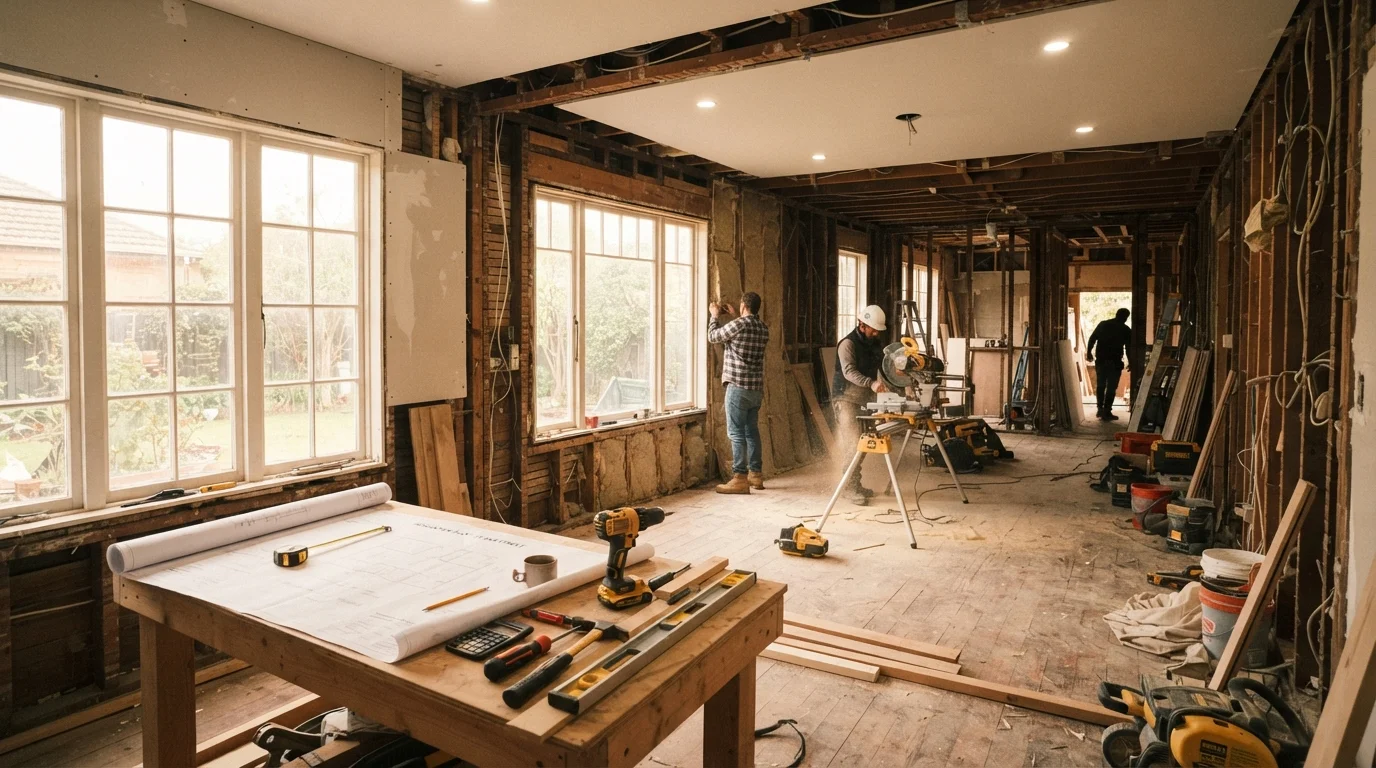
Why Renovations and Insurance Are More Connected Than You Think
Most homeowners call their insurer after a renovation wraps up - if they call at all. But the relationship between home improvements and insurance coverage is more nuanced than a simple post-project update. Renovations can change your home's replacement cost, introduce new liabilities, affect your eligibility for certain coverages, and in some cases create gaps that leave you exposed when you least expect it.
Understanding what a standard policy actually protects is the essential first step. From there, knowing how specific types of work interact with your coverage helps you renovate confidently - without accidentally undermining the protection you're paying for.
The list below covers seven commonly overlooked ways a renovation can affect your homeowners insurance, along with what to do about each one.
Increasing Your Home's Replacement Cost
When you add a room, renovate a kitchen with high-end finishes, or finish a basement, you're increasing how much it would cost to rebuild your home from scratch. Most standard policies cover your home at a set dwelling coverage limit - the maximum payout if your home is destroyed. If your renovation pushes the actual replacement cost above that limit, you could face a significant out-of-pocket gap after a total loss.
After any major renovation, ask your insurer to reassess your dwelling coverage amount. Some policies include an extended replacement cost provision that offers a buffer, but it's not universal. Don't assume your existing limit is still accurate.
A kitchen remodel with premium finishes can quietly push your home's rebuild cost above your policy's dwelling coverage limit.
Adding a Pool or Outdoor Structure
A swimming pool is considered an attractive nuisance under insurance and legal frameworks - a feature that draws visitors, including children, who may be injured. Adding a pool typically raises your liability exposure significantly. Some insurers will increase your premium, require a fence or lockable gate, or request an umbrella liability policy before extending coverage.
The same logic applies to detached garages, sheds, and guest houses, which are usually covered under other structures coverage - typically around 10% of your dwelling coverage limit. A large detached structure may exceed that sublimit entirely.
Pools are classified as attractive nuisances, meaning your liability exposure increases the day construction finishes.
Running Unpermitted or Unlicensed Work
DIY projects and unlicensed contractor work that aren't up to local building codes can complicate or void a claim. If a fire starts due to improperly installed wiring - work that was never inspected or permitted - your insurer may argue the loss resulted from negligence or code violation and reduce or deny the payout.
This doesn't mean you can't do any work yourself. Cosmetic projects like painting, flooring, or cabinet replacement generally carry low risk. But electrical, plumbing, gas line, and structural work typically require permits and licensed contractors in most US jurisdictions. Check your local requirements and keep records of all inspections. See common renovation myths for more on where DIY assumptions break down.
Unpermitted electrical or plumbing work can give insurers grounds to limit or deny a claim tied to that work.
Leaving the Home Vacant During Renovation
Many standard homeowners policies include a vacancy clause - if a home is unoccupied for a set period (often 30 to 60 days), certain coverages like vandalism, glass breakage, or water damage from burst pipes may be suspended. Extended renovations where you're living elsewhere temporarily can trigger this clause without you realizing it.
If your project requires you to vacate, ask your insurer about a vacancy permit endorsement or a builder's risk policy to maintain coverage during the construction period. Don't assume the standard policy holds simply because you still own the home.
Vacancy clauses can suspend key coverages after just 30 days - a timeline many renovation projects quietly exceed.
Converting Space Into a Rental Unit
Finishing a basement suite, converting a garage, or adding an accessory dwelling unit (ADU) changes how your home is classified for insurance purposes. A standard homeowners policy is written for owner-occupied, single-family residences. The moment you rent out a portion of your home, you may be introducing a business activity that requires either a landlord endorsement or a separate dwelling policy.
Failing to disclose rental use can leave you without coverage if a tenant is injured on the property or if damage occurs in the rental unit. Insurers generally don't cover liability arising from undisclosed commercial or rental activity.
Renting out an ADU or basement suite without updating your policy can void your liability coverage for that space entirely.
Upgrading Systems That Affect Risk Ratings
Not all renovation-related insurance changes are negative. Upgrading your roof to impact-resistant materials, replacing old knob-and-tube wiring with modern circuits, or installing a whole-home security or fire suppression system can actually lower your premium. Insurers price risk, and a home with newer, safer systems is a better risk profile.
However, these upgrades only benefit you if your insurer knows about them. Proactively document system replacements and report them - your insurer may require photos, receipts, or a professional inspection to apply any discount.
Roof and electrical upgrades can reduce your premium - but only if you tell your insurer they've been done.
Open-Concept Remodels and Load-Bearing Wall Removal
Removing walls - particularly load-bearing walls - is among the higher-risk structural changes a homeowner can make. If this work isn't done correctly and with proper permits, it can affect the structural integrity of your home. From an insurance standpoint, any claim related to structural failure may be scrutinized closely to determine whether prior modifications contributed to the loss.
Beyond structural risk, open-concept renovations can affect fire compartmentalization - removing walls can allow fire and smoke to spread faster, which is a factor some insurers consider in risk evaluation. Always use a licensed structural engineer and obtain required permits.
Removing load-bearing walls without permits or professional oversight can expose you to denied claims if structural issues arise later.
Making Sure Your Coverage Keeps Up With Your Home
Renovations are investments - and like any investment, they deserve protection. The good news is that keeping your coverage current isn't complicated. A brief conversation with your insurer or agent before work begins and another once it's complete is usually sufficient for smaller projects. For larger additions or structural changes, you may need a formal policy review or a re-inspection.
Notify Your Insurer Before and After
Don't wait until the renovation is complete to loop in your insurance company. For major projects, notify your insurer before work begins so you understand how coverage applies during construction. A second call after completion - with updated square footage, photos, and permit records - ensures your policy accurately reflects what you now own.
Before your next project, work through the renovation planning checklist to make sure insurance review is built into the process - not tacked on as an afterthought.
This article is for general informational purposes only and does not constitute insurance or legal advice. Coverage terms vary by insurer, policy, and state. Always consult a licensed insurance professional regarding your specific situation.