How Each Mortgage Rate Structure Works
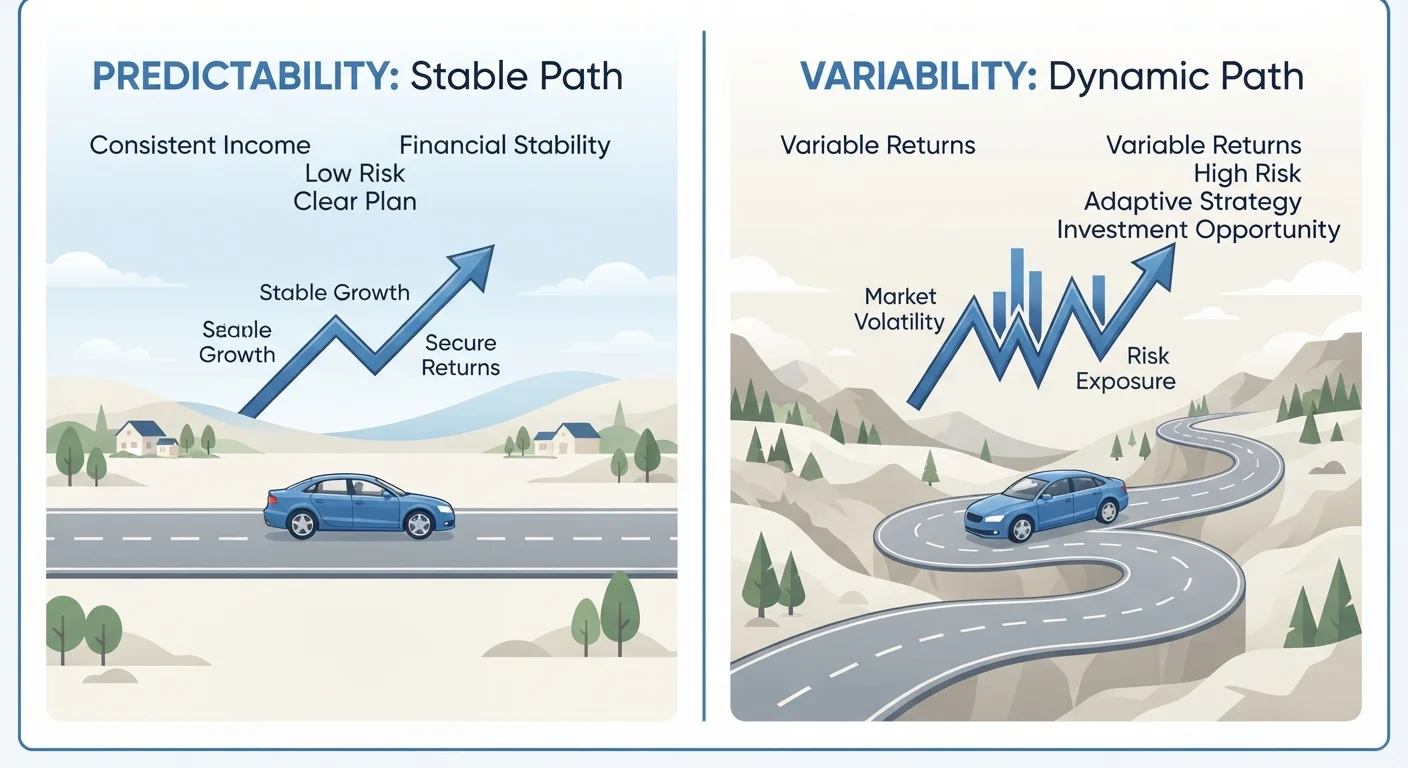
A fixed-rate mortgage sets your interest rate at closing and keeps it unchanged for the entire loan term - typically 15 or 30 years. Your principal and interest payment stays identical from month one through your final payment, no matter what happens to broader interest rates in the economy. This predictability is the defining feature and primary appeal of the fixed-rate structure.
An adjustable-rate mortgage (ARM) works differently in two distinct phases. The loan begins with a fixed introductory period - commonly 5, 7, or 10 years - during which the rate does not change. After that initial window closes, the rate adjusts periodically (often annually) based on a published market index, such as the Secured Overnight Financing Rate (SOFR), plus a set margin determined by the lender. The resulting rate can rise or fall depending on where that benchmark sits at each adjustment date.
ARM products are typically labeled with a two-number shorthand. A 5/1 ARM means the rate is fixed for 5 years, then adjusts once per year. A 7/6 ARM is fixed for 7 years, then adjusts every 6 months. Understanding this notation helps homeowners assess how long their initial stability window actually lasts. For a deeper look at how these structures compare side by side, see how fixed and adjustable mortgage rates are structured.
| Criterion | Fixed-Rate Mortgage | Adjustable-Rate Mortgage (ARM) |
|---|---|---|
| Interest rate over time | Locked for entire loan term | Fixed initially, then adjusts periodically |
| Monthly payment predictability | Completely stable | Stable during intro period; variable after |
| Typical initial rate | Generally higher at origination | Generally lower during intro period |
| Rate-change risk | None | Subject to index movement after reset |
| Consumer rate protections | N/A - rate never changes | Adjustment and lifetime caps apply |
| Best loan term length | 15 or 30 years typical | Often used as short-to-medium term bridge |
| Refinancing need over time | Only if rates fall significantly | Often considered before first adjustment |
How Costs Evolve Over the Life of Each Loan
With a fixed-rate mortgage, total interest paid is entirely a function of your rate and loan term. A borrower with a 30-year fixed loan at a higher rate will pay more interest over the life of the loan than someone who locked in at a lower rate - but both borrowers know their exact payment from day one. There are no surprises. Early payments are weighted heavily toward interest (due to amortization), with the balance gradually shifting toward principal over time.
With an ARM, cost behavior is less predictable after the introductory period. Rate caps are built-in consumer protections that limit how aggressively the rate can move. There are typically three cap values: a first-adjustment cap (limits the change at the first reset), a periodic cap (limits changes at each subsequent adjustment), and a lifetime cap (limits how far the rate can ever move from the original rate). A common cap structure is 2/2/5 - meaning the rate can rise no more than 2% at the first adjustment, 2% at each later adjustment, and 5% total over the loan's life.
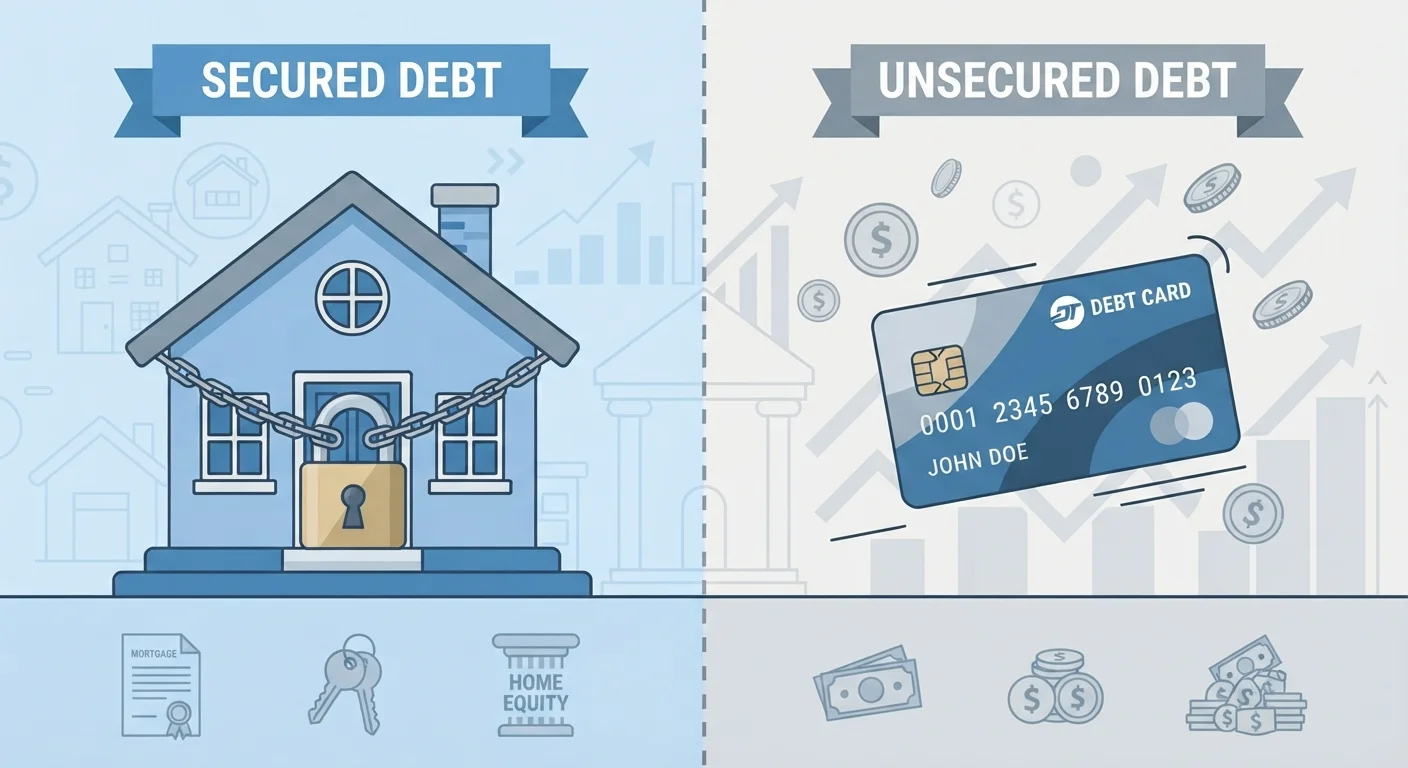
This means an ARM borrower who starts at 6% could eventually see a rate as high as 11% under a 2/2/5 structure. Whether that scenario materializes depends on future market conditions, which no one can reliably predict. Because a mortgage is secured debt tied to your home, the consequences of being unable to afford a higher adjusted payment are serious - up to and including foreclosure.
~$200+
Potential monthly payment increase per adjustment
On a mid-sized loan, a 2% rate increase at an ARM's first reset can add over $200 per month in principal and interest costs, depending on the remaining balance.
5%
Maximum lifetime rate increase under common ARM caps
A typical 2/2/5 cap structure limits the total rate increase over the loan's life to 5 percentage points above the original starting rate.
30 years
Standard fixed-rate mortgage term in the US
The 30-year fixed-rate mortgage remains the most widely used home loan structure among US buyers, according to the Mortgage Bankers Association.
Choosing Between Stability and Flexibility
Neither mortgage structure is universally superior. The right choice depends on your individual timeline, financial cushion, and tolerance for uncertainty. A homeowner who bought with a 5/1 ARM intending to sell within five years and actually does so has likely saved money on interest relative to a fixed-rate product. A homeowner in that same ARM who unexpectedly stays in the home faces potentially rising payments at each adjustment cycle.
If you currently hold an ARM and are approaching the end of your fixed period, you have options: you can allow the loan to adjust, refinance into a fixed-rate product, or refinance into a new ARM with a fresh introductory period. Each path has costs and tradeoffs that a licensed mortgage professional or HUD-approved housing counselor can help you evaluate for your specific situation.
The concept of fixed versus variable costs isn't unique to mortgages - it appears across many financial decisions. Renters face a similar tension when weighing month-to-month flexibility against the rate certainty of a fixed-term lease.
What Happens When an ARM Resets
At each adjustment date, your lender recalculates your rate using the current index value plus your loan's margin. If the index has risen since your last adjustment, your rate - and payment - will increase up to the periodic cap. If the index has fallen, your rate may decrease. Your lender is required to send advance notice before any rate change takes effect, giving you time to evaluate your options.
This article is for general educational purposes only and does not constitute personalized financial, mortgage, or legal advice. Consult a licensed mortgage professional or HUD-approved housing counselor for guidance specific to your situation.