
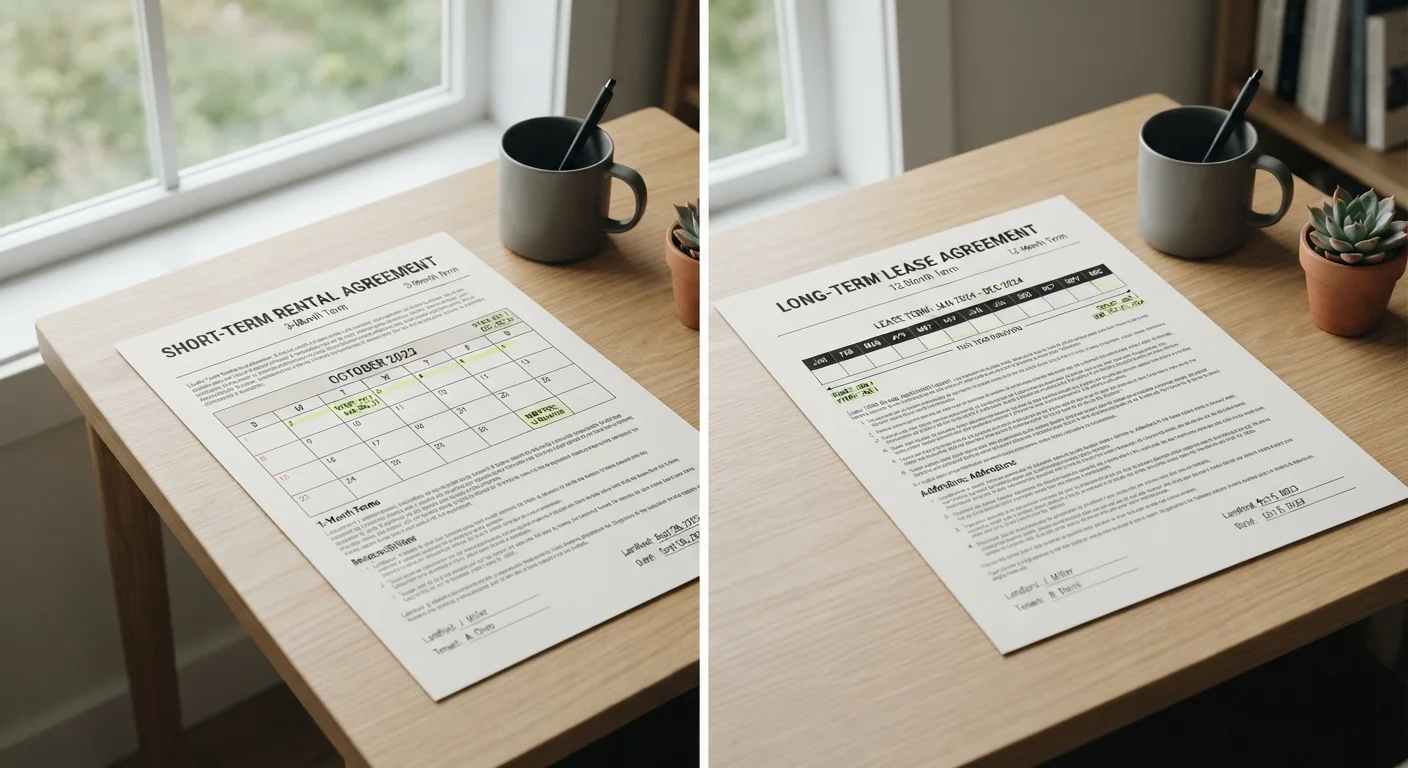
How Each Lease Type Works
A month-to-month lease is a rental agreement without a fixed end date. It renews automatically each month unless the tenant or landlord provides written notice to terminate - typically 30 days in advance, though some states require more. Because there is no long-term commitment baked in, either party has significantly more flexibility to end or adjust the arrangement.
A fixed-term lease sets a defined rental period - most commonly 12 months - during which both the rent amount and the terms of occupancy are locked in. Once signed, neither party can unilaterally change the rent or end the tenancy early without consequences, unless specific clauses in the lease or applicable law permit it.
Both lease types should be written contracts that specify rent amount, payment due dates, security deposit terms, maintenance responsibilities, and rules governing the property. Before signing either, it is worth understanding which clauses carry the most legal weight - see our guide on reading a lease agreement without missing the fine print for a closer look at key provisions.
| Criterion | Month-to-Month Lease | Fixed-Term Lease |
|---|---|---|
| Lease duration | Rolls over monthly, no fixed end date | Set term, typically 12 months |
| Rent stability | Can change with proper notice | Locked in for the full term |
| Exit flexibility | End with ~30 days' notice | Early exit triggers penalties |
| Typical monthly cost | Often higher due to flexibility premium | Generally lower for same unit |
| Landlord's ability to end tenancy | Can terminate with short notice | Cannot displace tenant mid-term without cause |
| Best for | Transitional or uncertain situations | Stable, longer-term housing plans |
Flexibility vs. Stability: The Core Trade-Off
The central tension between these two lease structures comes down to what you are prioritizing: flexibility or stability.
Month-to-month leases are well suited to renters navigating transitions - a new job offer pending, a pending home purchase, or a temporary relocation. The ability to move without incurring early-termination fees is a genuine financial benefit. The trade-off is exposure: landlords can also end the tenancy with relatively short notice, and they can raise rent more frequently - usually with 30 days' written notice between billing cycles, depending on state law.
Fixed-term leases offer a different kind of security. Your rent cannot increase until the lease expires, which is especially valuable in high-demand rental markets. You also have more legal footing against eviction during the lease period as long as you comply with the terms. The constraint is that leaving early typically triggers an early-termination fee - often one to two months' rent - or liability for the remaining balance until a new tenant is found.
~30 days
Typical notice period to end a month-to-month tenancy
Most US states require 30 days' written notice, though some - including California and New York - require longer notice periods depending on tenancy length.
1-2 months
Common early-termination fee range on fixed leases
Early-termination clauses vary widely; some leases hold tenants liable for the full remaining balance until a replacement tenant is secured.
If you are weighing whether renting under any structure is the right move for your situation, our framework for the rent vs. buy decision can help you think through the broader financial picture.
Cost Implications You Should Know
Monthly rent on a month-to-month lease is frequently higher than on a fixed-term lease for the same unit. Landlords price in the uncertainty - if a tenant leaves on short notice, the landlord faces vacancy and re-leasing costs. This premium can range from modest to substantial depending on the local rental market.
On a fixed-term lease, you benefit from rate certainty for the full term. If market rents rise during your lease period, your rate stays the same. That said, when your lease comes up for renewal, landlords may adjust rent to reflect current market conditions.
State and Local Law Governs Key Protections
Tenant rights around notice periods, rent increases, and lease termination differ significantly by state and municipality. Cities with rent stabilization ordinances may limit how much landlords can raise rents even on month-to-month agreements. Always verify the rules that apply in your specific location through your state's tenant rights agency or a local housing advocacy organization.
Before signing either type of agreement, it is worth exploring whether there is room to negotiate. Negotiating rent and lease terms before signing can help you secure better pricing, more favorable notice periods, or other concessions regardless of which lease structure you choose.
This article is for general informational purposes only and does not constitute legal or financial advice. Rental laws and tenant protections vary by state and locality. Consult a qualified attorney or tenant advocacy organization for guidance specific to your situation.