Why Medication Documentation Matters at Borders
Carrying prescription medications across international borders without proper documentation can lead to confiscation, delays, or in rare cases, legal trouble - even when the medication is completely legal in your home country. Customs rules vary significantly by destination, and what's routine in the US may be controlled or outright prohibited elsewhere.
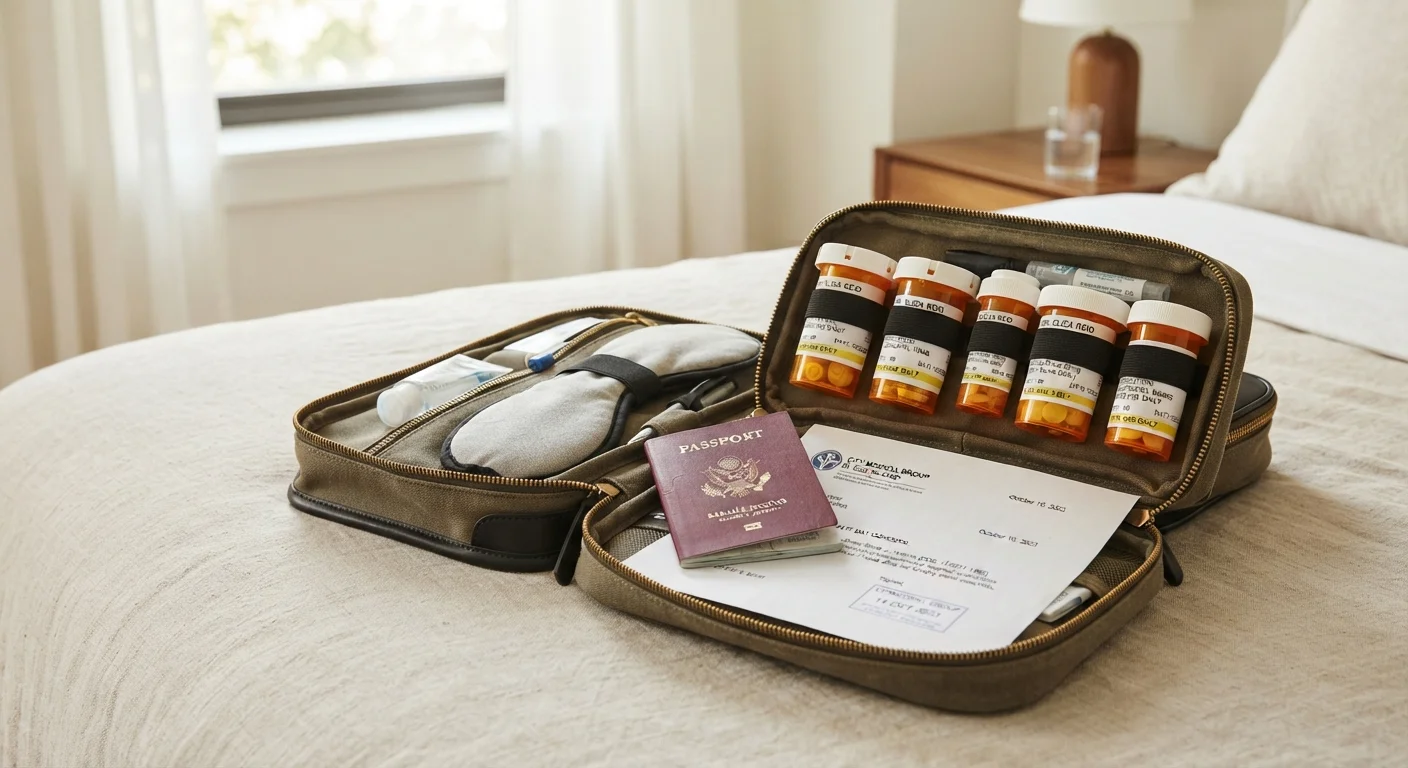
The foundational rule: always carry medications in their original, pharmacy-labeled containers. Labels should show your name, the prescribing physician's name, the drug name, and dosage. For controlled substances - such as opioids, benzodiazepines, or stimulants like those used for ADHD - a letter from your prescribing physician is strongly advised and sometimes required. The letter should be on official letterhead and include your diagnosis (or a general medical justification), the medication name and dosage, and the duration of your trip.
See our pre-trip planning checklist for a broader overview of documentation to prepare before any international departure.
Customs Rules: What Changes Country to Country
No single global standard governs which medications travelers may bring - each country sets its own rules. Some widely used US prescription drugs, including certain codeine-based pain relievers, pseudoephedrine decongestants, and anxiety medications, are classified as controlled substances in Japan, the UAE, and several other countries and may require an advance import permit.
Controlled substance
A drug or chemical regulated by government law due to its potential for abuse or dependency. Controlled substances often require additional documentation when crossing international borders and may be restricted or prohibited in some countries.
Physician's letter
An official letter written on a doctor's letterhead confirming that a patient has been prescribed a specific medication, the dosage, and the medical necessity. Often required - or strongly recommended - for controlled substances at international customs.
Import permit
A formal authorization issued by a destination country allowing a traveler to bring a specific controlled medication across the border. Some countries require this to be obtained weeks in advance of travel.
Travel medicine clinic
A specialized medical practice that advises travelers on health risks, vaccinations, and medication management for international trips. Particularly useful for travelers with complex medical needs or plans to visit high-risk destinations.
Before travel, check the destination country's embassy website or its ministry of health for current rules. The US Embassy network and the International Narcotics Control Board (INCB) publish reference information, but official destination-country sources are the authoritative guide. Rules can change, so verify close to your departure date.
Quantity limits also apply. Many countries permit only a 30-day supply for personal use; some set the threshold at 90 days. Carrying more than permitted - even inadvertently - can trigger customs scrutiny. For controlled substances, some countries require travelers to declare the medication upon arrival, regardless of quantity.
For context on navigating entry requirements more broadly, see our guide on passport, visa, and entry requirements.
Practical Logistics: Packing, Storage, and TSA Rules
Within the United States, the Transportation Security Administration (TSA) allows prescription medications in both carry-on and checked bags. Liquids - including liquid medications - are exempt from the 3-1-1 rule when they are medically necessary, though TSA officers may ask to screen them separately. Declare liquid medications at the checkpoint proactively.
For temperature-sensitive medications such as insulin, biologic injectables, or certain eye drops, carry-on storage is essential - checked baggage holds can experience extreme temperature fluctuations. Insulated medication cases with ice packs or gel packs are widely available; confirm that any cooling solution complies with airline and TSA guidelines. Insulin and related diabetic supplies receive special TSA accommodations.
Split Your Supply Between Bags
If you carry enough medication, dividing it between your carry-on and checked luggage reduces risk. If one bag is delayed or lost, you won't be left entirely without your medication. For controlled substances with strict quantity limits, confirm that splitting doesn't conflict with import restrictions at your destination.
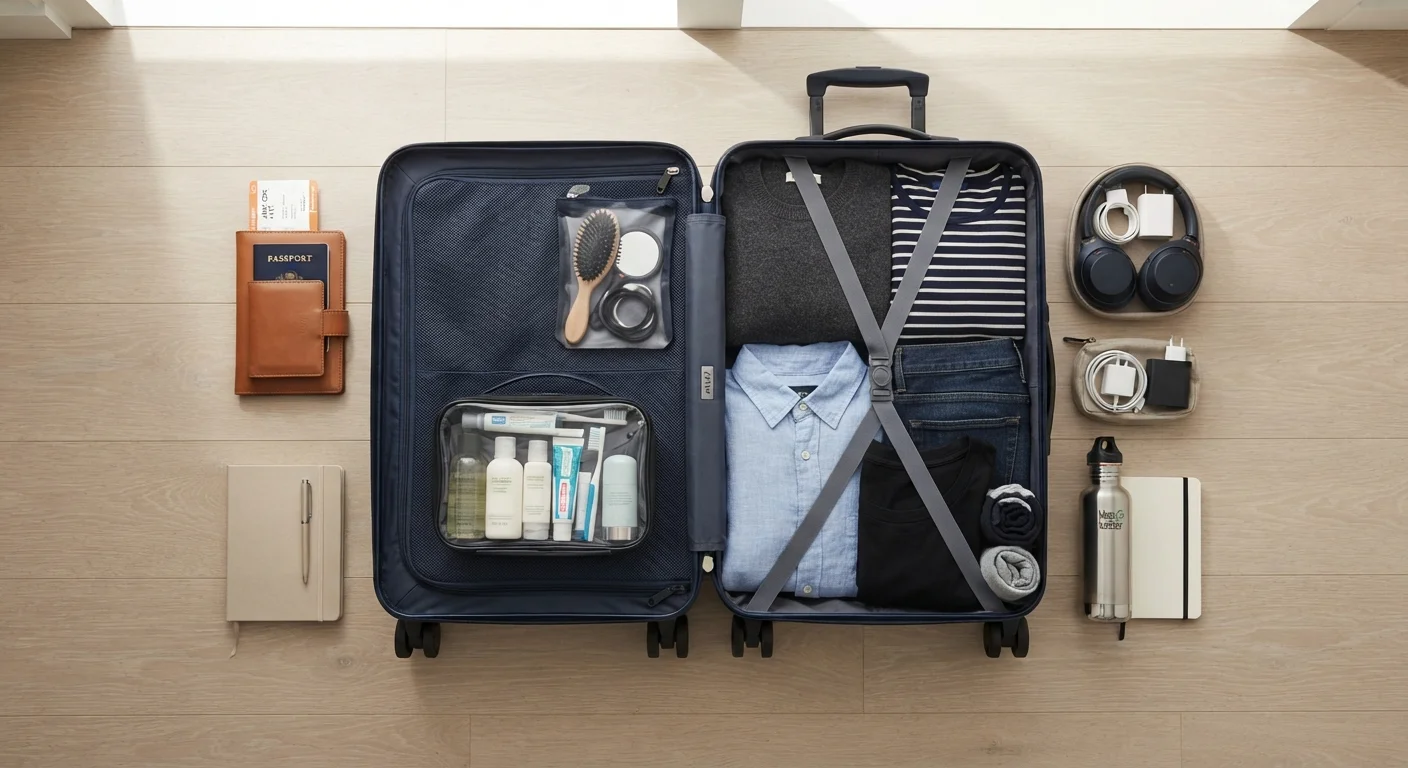
Carry-on packing rules can affect how you organize medications alongside other essentials - planning your bag layout in advance avoids last-minute checkpoint stress.
Always pack more medication than you expect to need. A reasonable buffer - typically three to five extra days' supply - accounts for delays, lost luggage, or an extended trip. Keep a portion of your supply in your carry-on and, if you have sufficient quantity, split the remainder between bags so a single lost bag doesn't leave you without medication.
When to Consult Your Healthcare Provider Before You Travel
Planning a trip that involves crossing time zones, changing climates, or visiting areas with limited pharmacy access makes a pre-travel appointment with your prescribing physician worthwhile. Your provider can write a physician's letter, adjust dosing timing for time zone shifts, supply an emergency prescription, and flag any destination-specific health considerations relevant to your condition.
If your medication requires refrigeration or carries complex customs requirements, your provider or a travel medicine clinic can help you navigate logistics specific to your regimen. Travel medicine clinics - often affiliated with hospitals or university health systems - specialize in exactly these situations. The complete framework for international trip planning covers when and how to schedule health-prep appointments as part of the broader planning process.
Contact your health insurance provider before departure as well: coverage for prescriptions filled abroad varies widely, and understanding your options in advance avoids unexpected out-of-pocket costs.
This article provides general travel and health information for educational purposes only. It is not medical or legal advice. Always consult a qualified healthcare professional about your specific medications and a qualified legal or regulatory source about destination-country rules before you travel.