Start with Destination Research
Every well-executed international trip begins with honest, practical destination research-not just Instagram inspiration. Before committing to any booking, consider four core factors: entry complexity (visas, vaccinations, travel advisories), seasonality (weather patterns, peak crowds, local holidays), cost of travel (flight duration and pricing, accommodation range), and personal fit (language accessibility, dietary options, mobility requirements).
Start by checking the U.S. Department of State's travel advisory system at travel.state.gov, which rates destinations on a four-level scale from normal precautions to "Do Not Travel." Cross-reference with the CDC's destination-specific travel health notices. Neither source should be treated as a final verdict on whether to go-but both are essential inputs.
Once a destination clears those filters, dive into practical logistics: What's the local currency? What languages are spoken? Is tap water safe to drink? How reliable is public transport? The Destinations Guide offers helpful overviews of popular international locations to anchor your early research.
When researching a destination, cross-reference at least three independent sources: the U.S. State Department, the destination country's tourism authority, and recent firsthand accounts from traveler communities. Each surface different blind spots.
Official sources capture safety and entry data; tourism boards provide logistical detail; traveler accounts reveal on-the-ground realities that neither official source typically covers.
Book your travel medicine appointment before locking in flights. Vaccine requirements or recommended prophylactics for a destination may influence your departure timing.
Some vaccines, like those for rabies or Japanese encephalitis, require multiple doses spread over weeks, and departing too soon after booking can mean incomplete protection.
For travelers with specific needs, accessibility considerations deserve early attention-not an afterthought. See Trip Planning with Accessibility Needs in Mind for a practical framework.
Documents, Visas, and Entry Requirements
Documentation is the backbone of any international trip, and errors here can derail everything else. At minimum, confirm the following well in advance:
- Passport validity: Many countries require six months of validity beyond your planned departure date. Renew early-U.S. passport processing can take 8-11 weeks under standard service.
- Visa requirements: Use the destination country's official embassy or consulate website to determine whether U.S. citizens need a visa, an electronic travel authorization (ETA), or can enter visa-free. Rules change; don't rely on travel blogs alone.
- Entry conditions: Some destinations require proof of onward travel, sufficient funds, or specific health documentation. Verify each requirement directly with official sources.
Always Verify Entry Requirements Directly
Visa rules, vaccination requirements, and entry conditions change with little notice. Always verify current requirements through the official embassy or consulate of your destination country and through travel.state.gov before booking and again closer to your departure date. Third-party travel sites may not reflect the most recent changes.
Make two physical copies and two digital copies (stored in email or cloud) of your passport, visa, travel insurance policy, and any vaccination certificates. Store one physical set separately from your passport while traveling.
Consult the Pre-Trip Planning Checklist to ensure no document category goes unverified before departure.
Health Preparation and Travel Insurance
Health preparation for international travel is not one-size-fits-all-it depends heavily on your destination, trip length, and personal medical history. Schedule a travel medicine consultation ideally 6-8 weeks before departure; some vaccines require a series of doses over several weeks.
Common considerations include destination-specific vaccinations (such as those for typhoid, hepatitis A/B, or yellow fever), malaria prevention strategies for affected regions, and ensuring routine vaccines are up to date. Always consult a licensed healthcare provider for personalized guidance-this article provides general information only, not medical advice.
Don't Skip Travel Insurance for International Trips
Medical evacuation from a remote destination can cost tens of thousands of dollars without insurance coverage. Many standard U.S. health insurance plans offer limited or no coverage abroad. Review policy exclusions carefully-pre-existing conditions, adventure activities, and certain destinations may not be covered by default.
Travel insurance is equally non-negotiable for international trips. At minimum, look for policies that include medical evacuation coverage, trip cancellation/interruption protection, and coverage for emergency hospitalization abroad. Standard U.S. health insurance often provides limited or no coverage outside the country.
Consult a licensed travel medicine provider or your primary care physician before making any health decisions related to international travel.
Budgeting and Financial Logistics
A workable international travel budget covers six categories: flights, accommodation, local transportation, food and activities, communications, and an emergency reserve (generally 10-15% of your total estimated spend). Research average daily costs for your destination using traveler forums and government tourism boards rather than relying on a single source.
6-8 weeks
Recommended lead time for travel health consultation
The CDC advises seeing a travel medicine provider at least 4-6 weeks before departure, with 6-8 weeks preferred for complex itineraries requiring vaccine series.
8-11 weeks
Standard U.S. passport processing time
The U.S. State Department publishes current processing timeframes at travel.state.gov; expedited processing options are available for an additional fee.
10-15%
Recommended emergency travel budget reserve
Travel finance guides broadly recommend setting aside 10-15% of your total trip budget as an emergency buffer for unexpected costs.
On the financial logistics side:
- Notify your bank and credit card providers of your travel dates and destinations before you leave.
- Carry a mix of payment options-one credit card with no foreign transaction fees, one debit card for ATM withdrawals, and a small amount of local currency for arrival.
- Avoid exchanging currency at airport kiosks, which typically offer poor rates. Use a local ATM at your destination or arrange currency through your bank beforehand.
The Travel Tips hub covers budgeting strategies and financial logistics in greater detail across a range of trip types.
Packing and Pre-Departure Checklist
Packing for international travel is less about fitting everything in and more about packing the right things. Key principles: pack for the activities you've actually planned, account for climate variation if you're visiting multiple regions, and research baggage allowances for every flight segment-budget carriers often have strict limits.
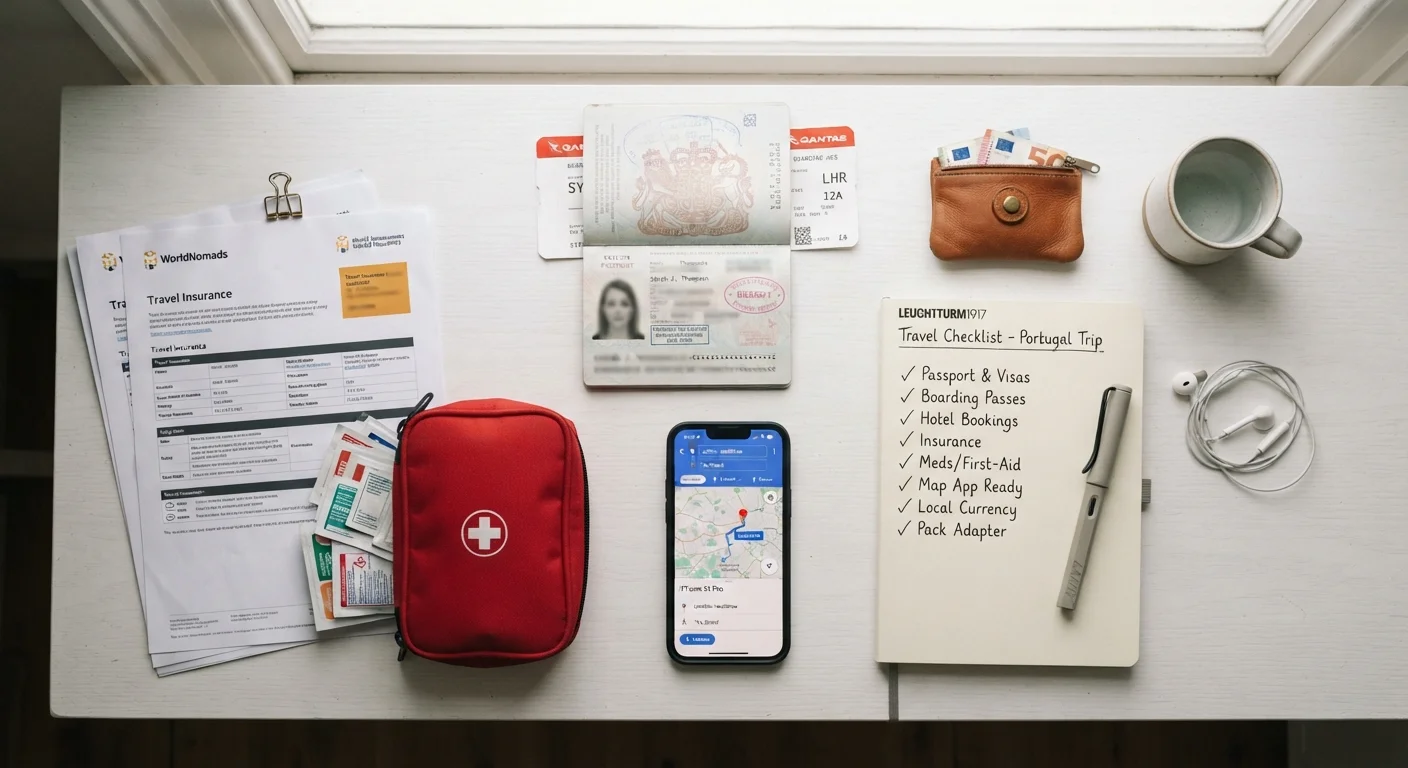
Essentials that travelers routinely forget: power adapters (plug types vary by region), a portable battery pack, a small first-aid kit, photocopies of all documents, and any prescription medications in original labeled containers with enough supply for the full trip plus extra days. For a structured approach, the pre-departure checklist covers every category systematically.
In the final 48-72 hours before departure, run through the pre-trip checklist every traveler should run, which addresses home security, finances, and last-minute logistics.
Pack Medications in Your Carry-On
Always keep prescription medications, travel documents, and one change of clothes in your carry-on rather than checked luggage. If your checked bag is delayed or lost, you'll still have the items you absolutely cannot replace on arrival. Carry a written list of all medications with generic names, since brand names vary internationally.
Contingency Planning and In-Trip Safety
No itinerary survives first contact with reality unchanged. Flights get canceled, wallets get lost, and plans shift. Building contingency into your planning is what separates a stressful disruption from a manageable inconvenience.
Before departure, complete these steps:
- Register your trip at travel.state.gov/STEP (the Smart Traveler Enrollment Program), which allows the U.S. embassy to contact you in an emergency.
- Save your country's U.S. embassy address and phone number in your phone and on paper.
- Share your full itinerary-hotels, flight numbers, contact numbers-with a trusted person at home.
- Know your travel insurance's 24-hour emergency line number by heart or saved in your phone.
For first-time international travelers especially, the First International Trip guide walks through how to handle common unexpected situations from lost documents to medical issues abroad.
Planning an itinerary that's realistic-not overpacked-also reduces the pressure that leads to poor decisions in the field. The guide to building your first travel itinerary can help you strike the right balance between structure and flexibility.
STEP Enrollment Is Free and Takes Minutes
The Smart Traveler Enrollment Program (STEP) at travel.state.gov is a free service run by the U.S. Department of State. Enrolling allows the nearest U.S. embassy or consulate to contact you during emergencies and keeps you informed of safety updates in your destination country. It is especially valuable for extended or remote-region travel.